Episode 1602: Eagle Rays: Soaring on Spotted Wings
Catching a glimpse of a majestic eagle ray is a highlight for boaters and divers alike. These elegant fish are the birds of the sea – gracefully batting their wings as they glide through the water. Found mostly in tropical and subtropical waters, eagle rays use a variety of habitats from reefs to lagoons.
There are five species of pelagic eagle rays that occur around the world. The whitespotted eagle ray, listed as endangered by the International Union for Conservation of Nature, is found in the Atlantic and Gulf of Mexico. Despite its designation as globally “endangered,” relatively little is known about the whitespotted eagle rays’ ecology and life history.
Thanks to the species’ protection in Florida and Bermuda, whitespotted eagle rays are doing well there, making these locations great study sites for the animals. Florida scientists are combining cutting-edge technology with creative approaches to gain deeper insight into the movement and diet of this elegant fish - allowing them to experience the world from a ray’s point of view for the first time.
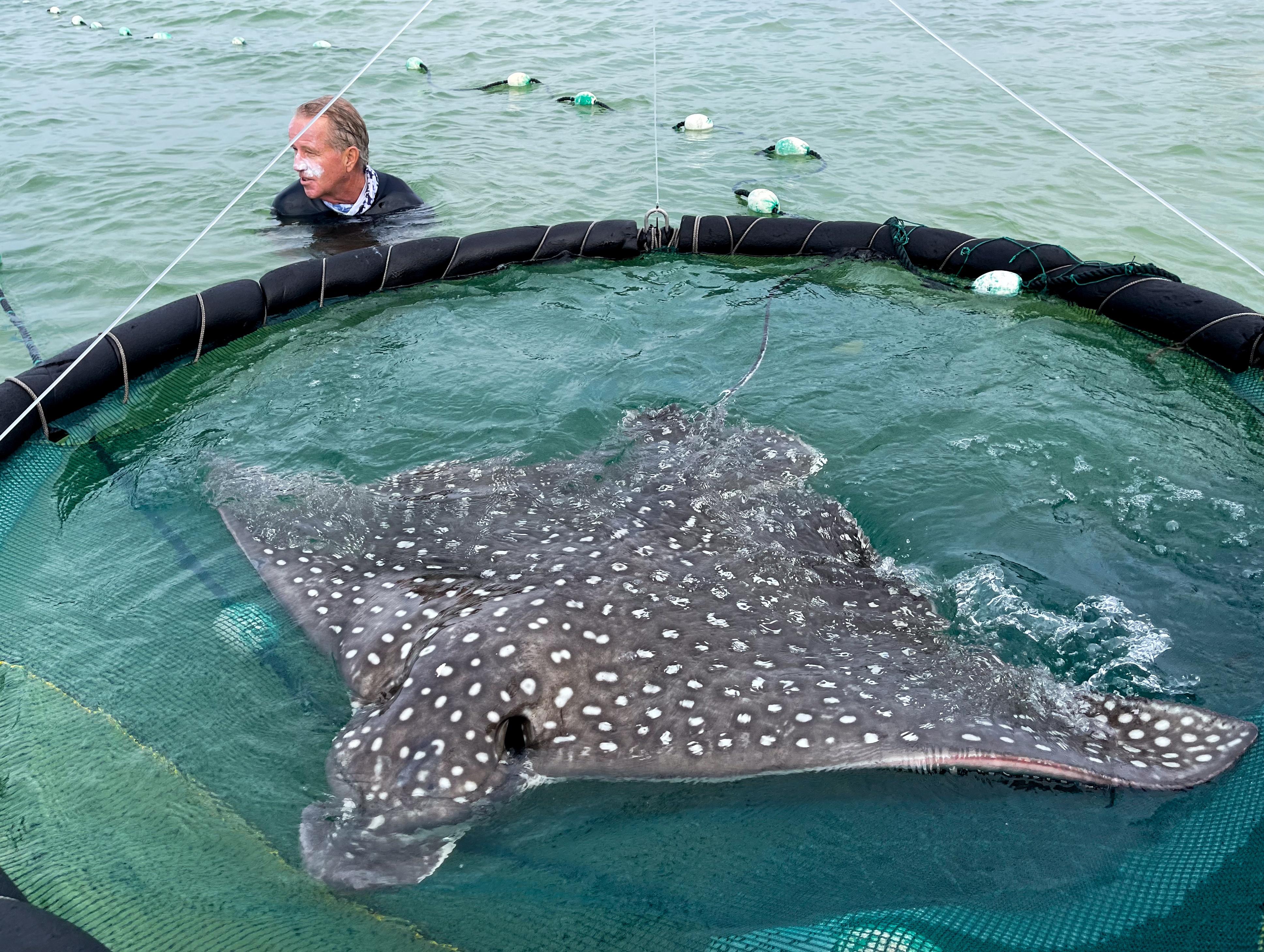
Experts at Mote Marine Laboratory in Sarasota capture a very large eagle ray in their net.
2 / 28
Share This Gallery
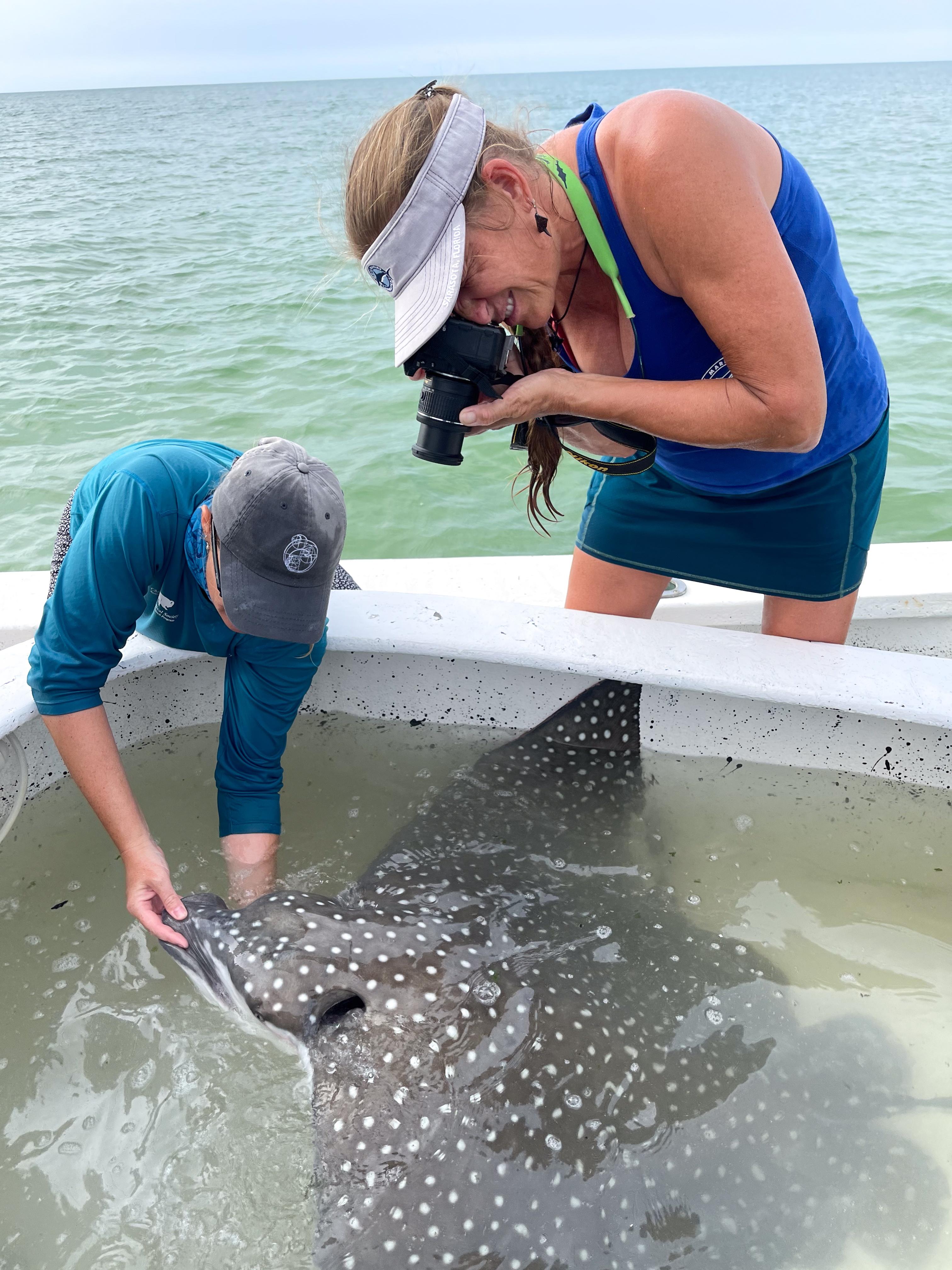
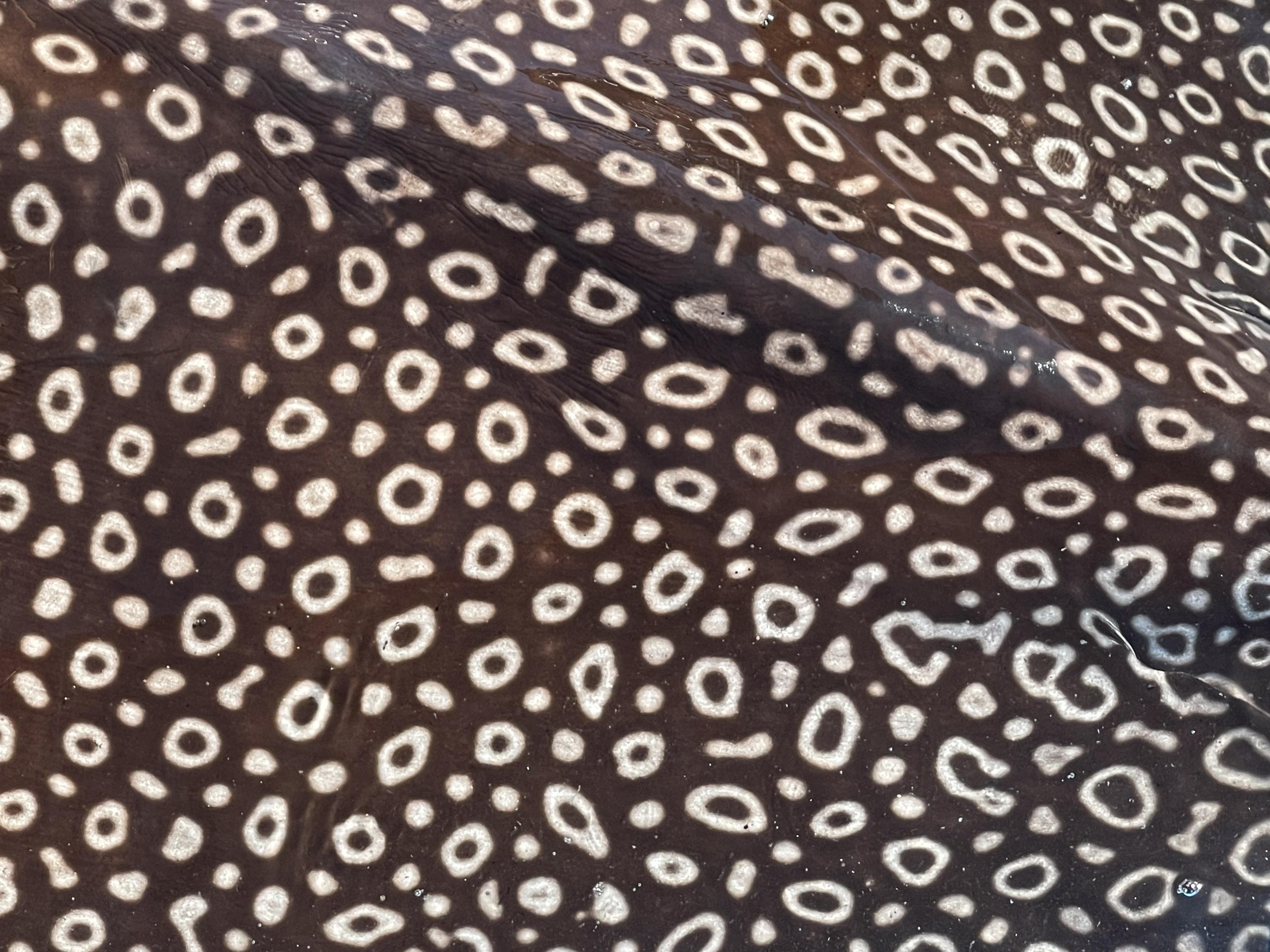
Mote Marine Laboratory Senior Biologist Kim Bassos-Hull takes photos of an eagle ray’s spot pattern.
3 / 28
Share This Gallery
Whitespotted eagle rays have unique spot patterns which allow scientists to identify individual animals using photo ID studies.
4 / 28
Share This Gallery
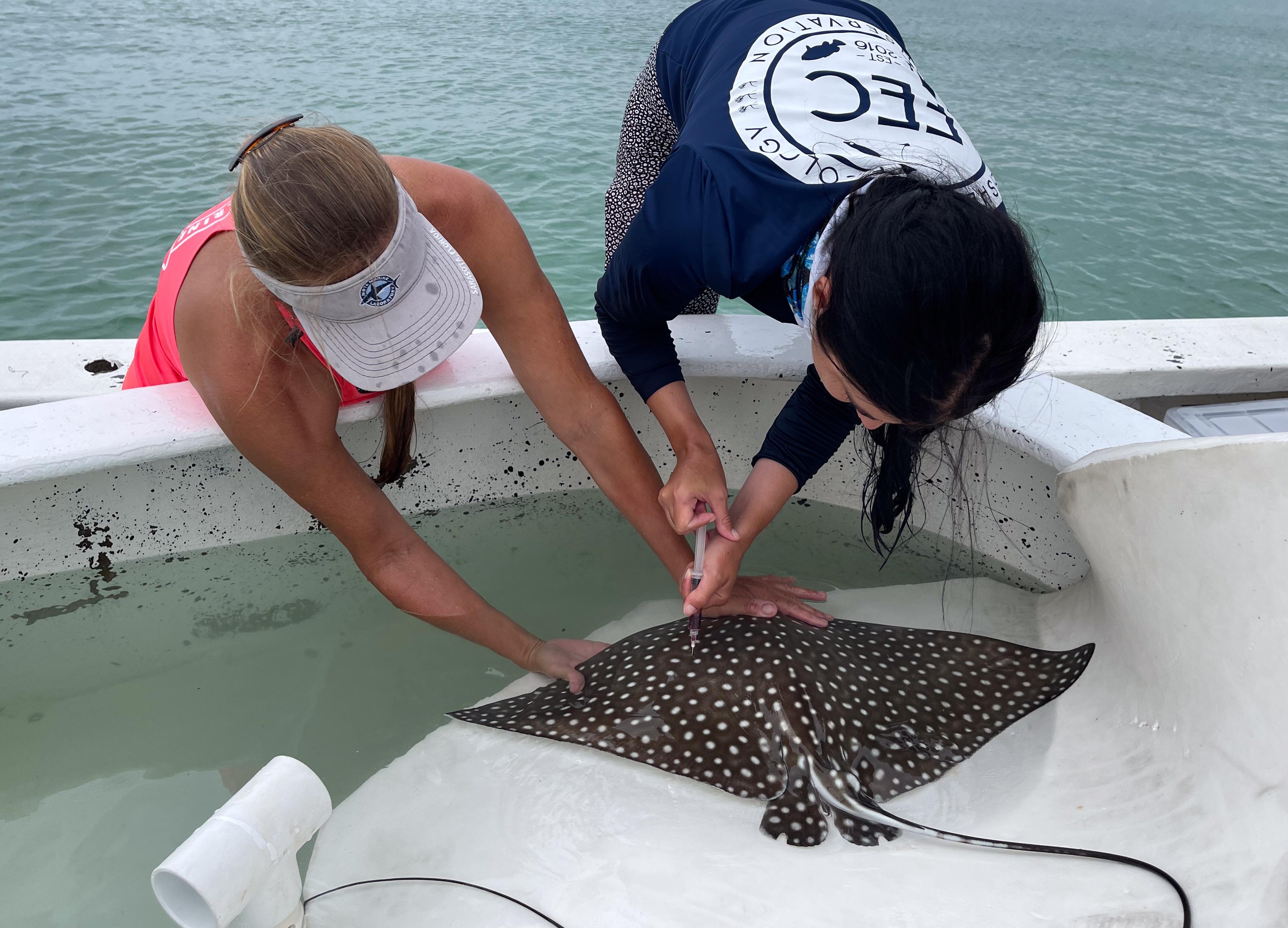
Mote Marine Laboratory Senior Biologist Kim Bassos-Hull (left) assists as FAU Harbor Branch Ph.D. Candidate Ariadna Rojas Corzo (right) takes a blood sample.
5 / 28
Share This Gallery
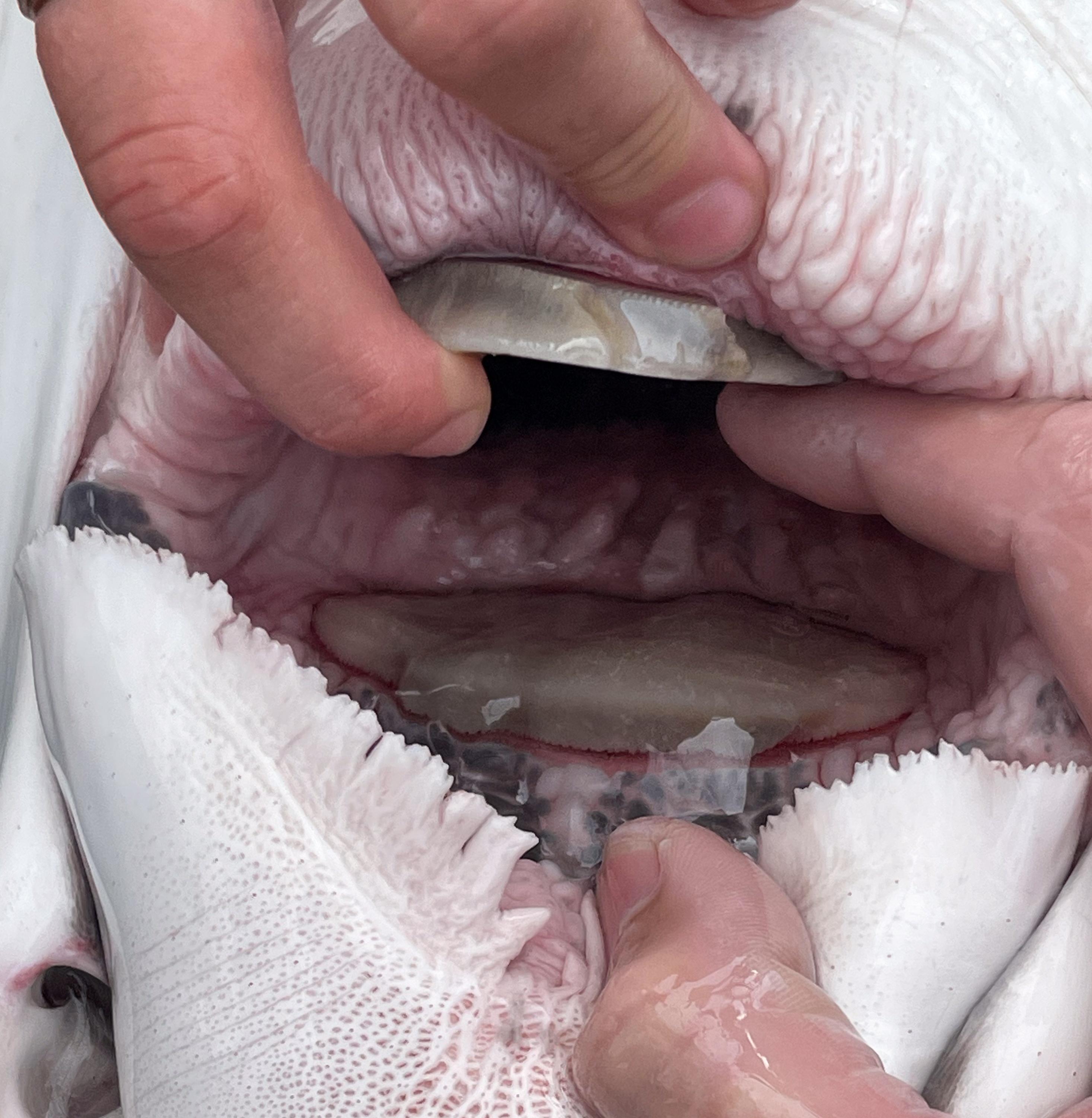
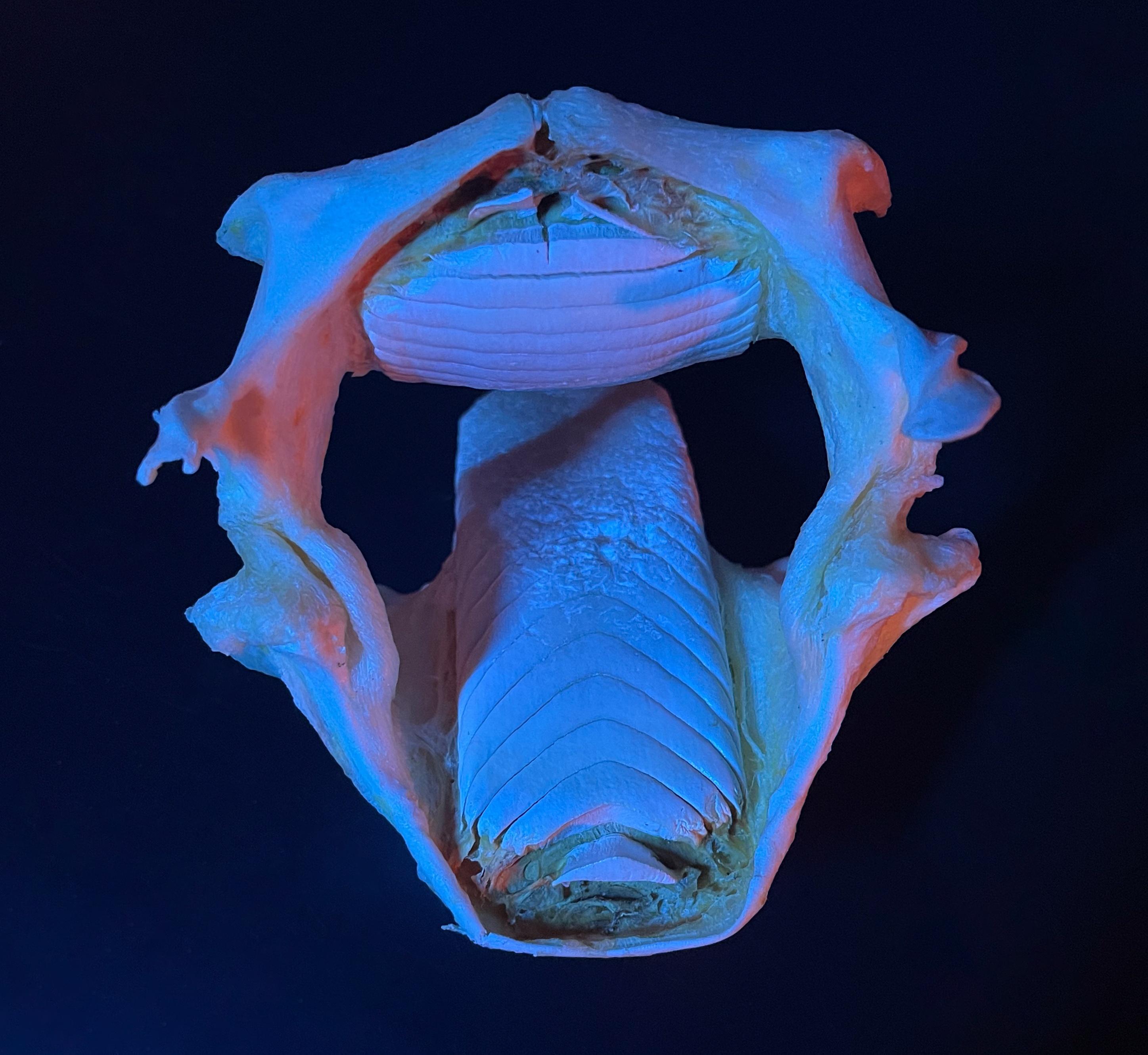
Eagle rays feed on clams and snails that live on the seafloor. To get at the meat they crunch the shells like a nutcracker. The animals’ teeth are fused together into two plates that make this possible.
6 / 28
Share This Gallery
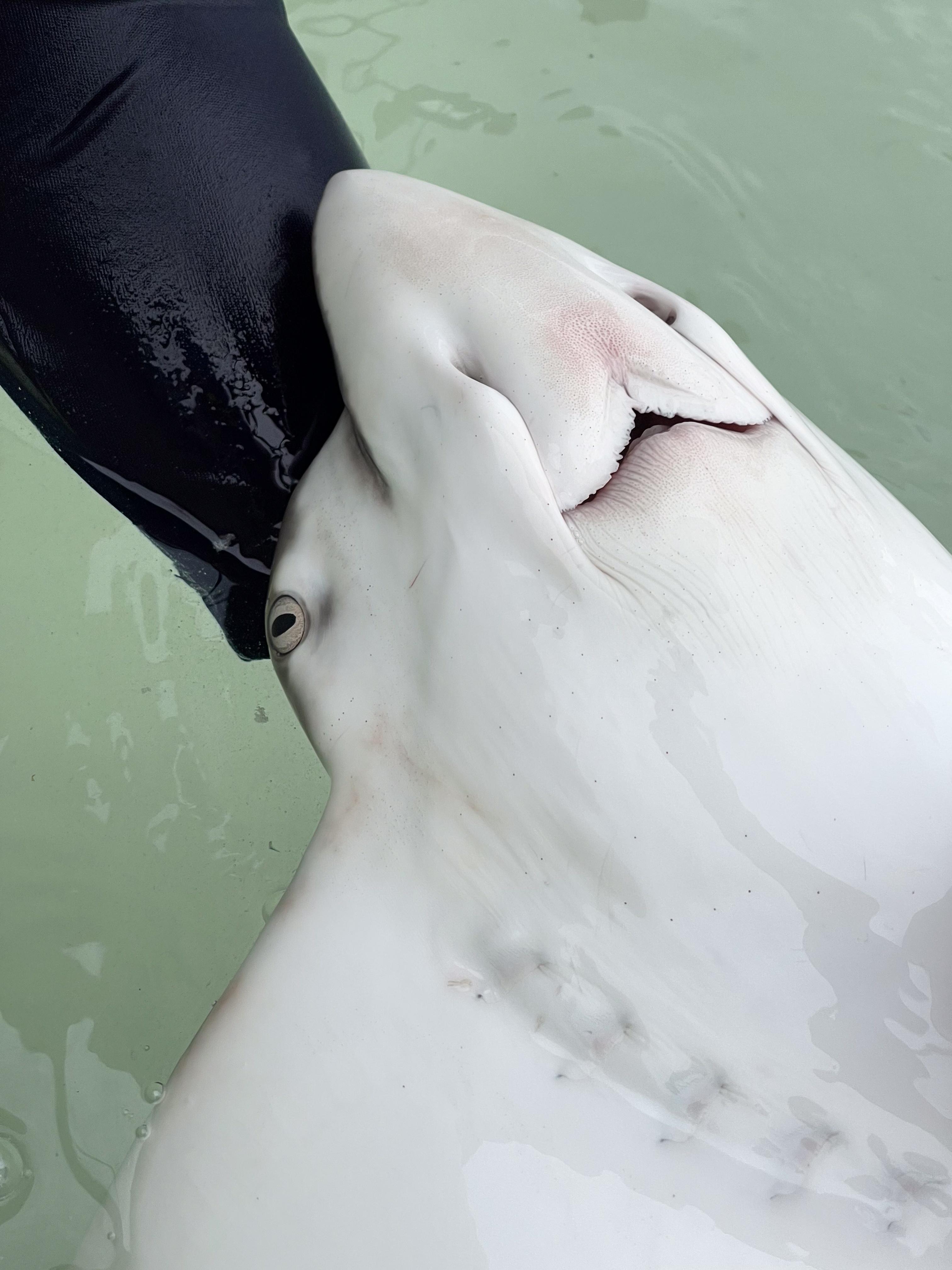
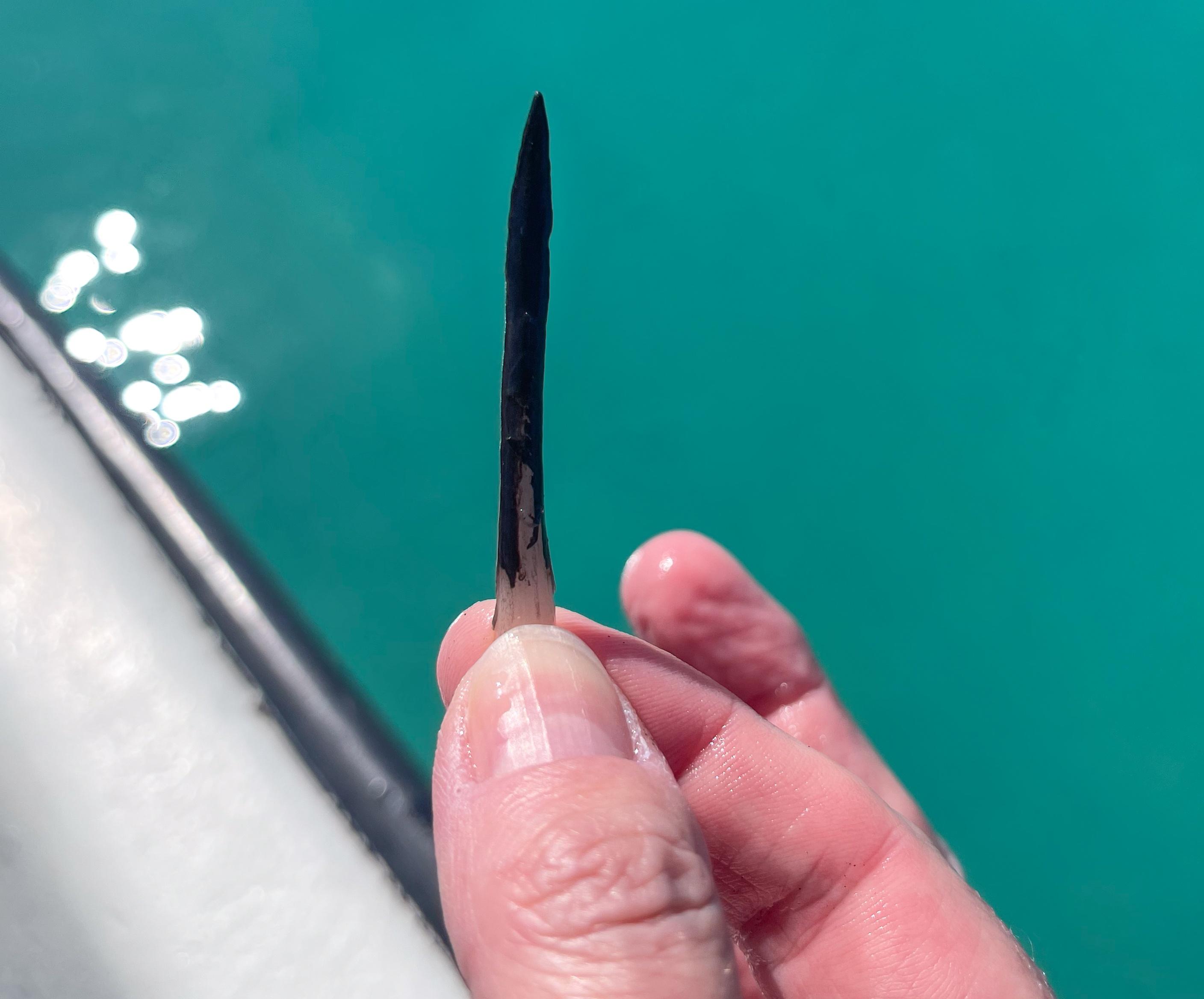
The jaw of an eagle ray, looking towards the mouth. The plates regrow from the back as they become worn, similar to a conveyor belt. The bottom tooth plate has a pointed spade tip at the end, which allows the rays to dig for prey.
7 / 28
Share This Gallery
Eagle rays, just like many sharks, go into a trans-like state called “tonic immobility” when they are turned upside down. This allows scientists to conduct surgical procedures without the use of an anesthetic.
8 / 28
Share This Gallery
Volunteers with Sarasota Bay Watch work closely with researchers at Mote Marine Laboratory to study the rays’ diet and feeding behaviors at their clam restoration sites.
9 / 28
Share This Gallery
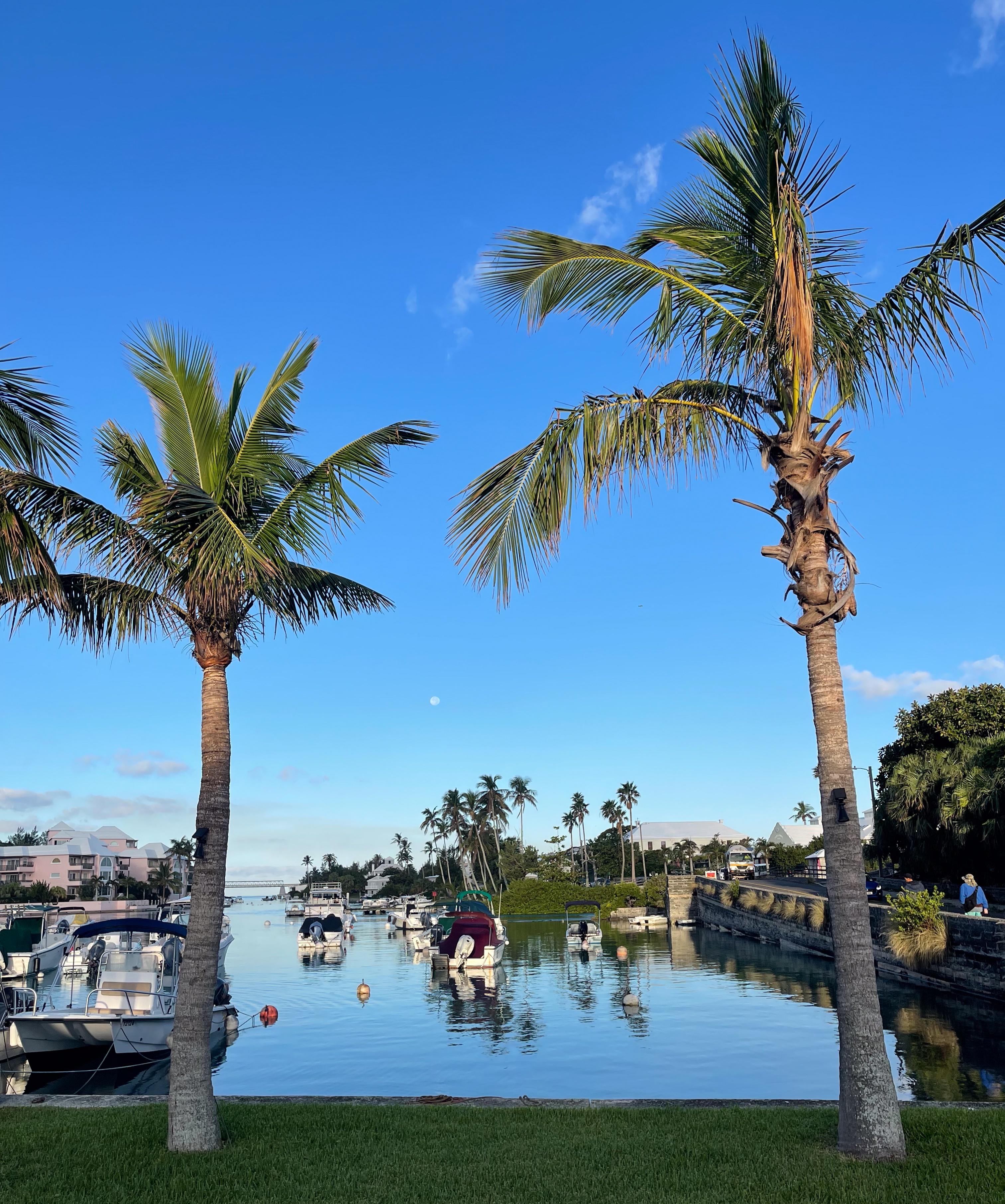
The inlet to Harrington Sound in Bermuda. Whitespotted eagle rays are known to frequent the sound.
10 / 28
Share This Gallery
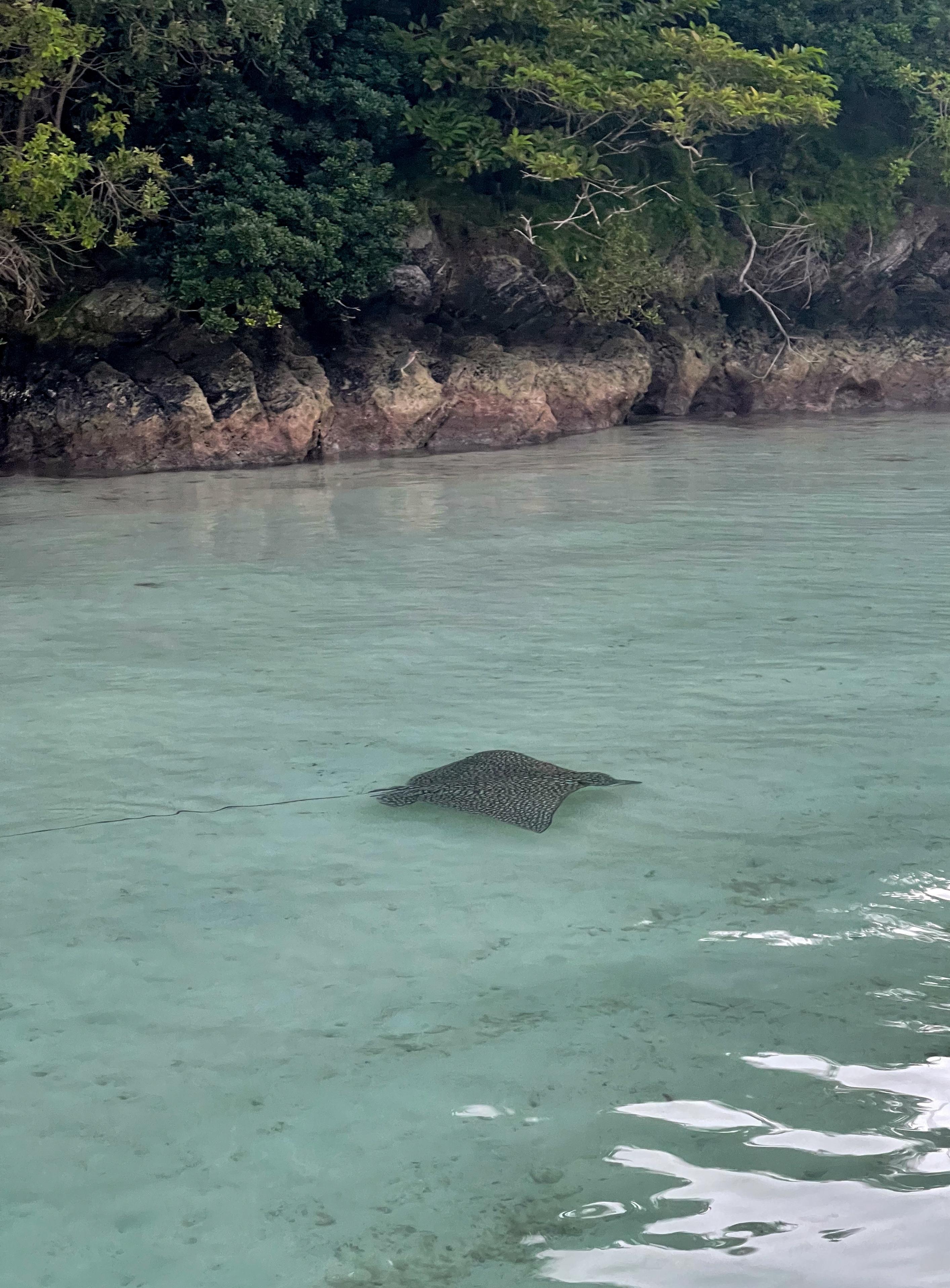
A small whitespotted eagle ray cruises along the inlet’s shallows.
11 / 28
Share This Gallery
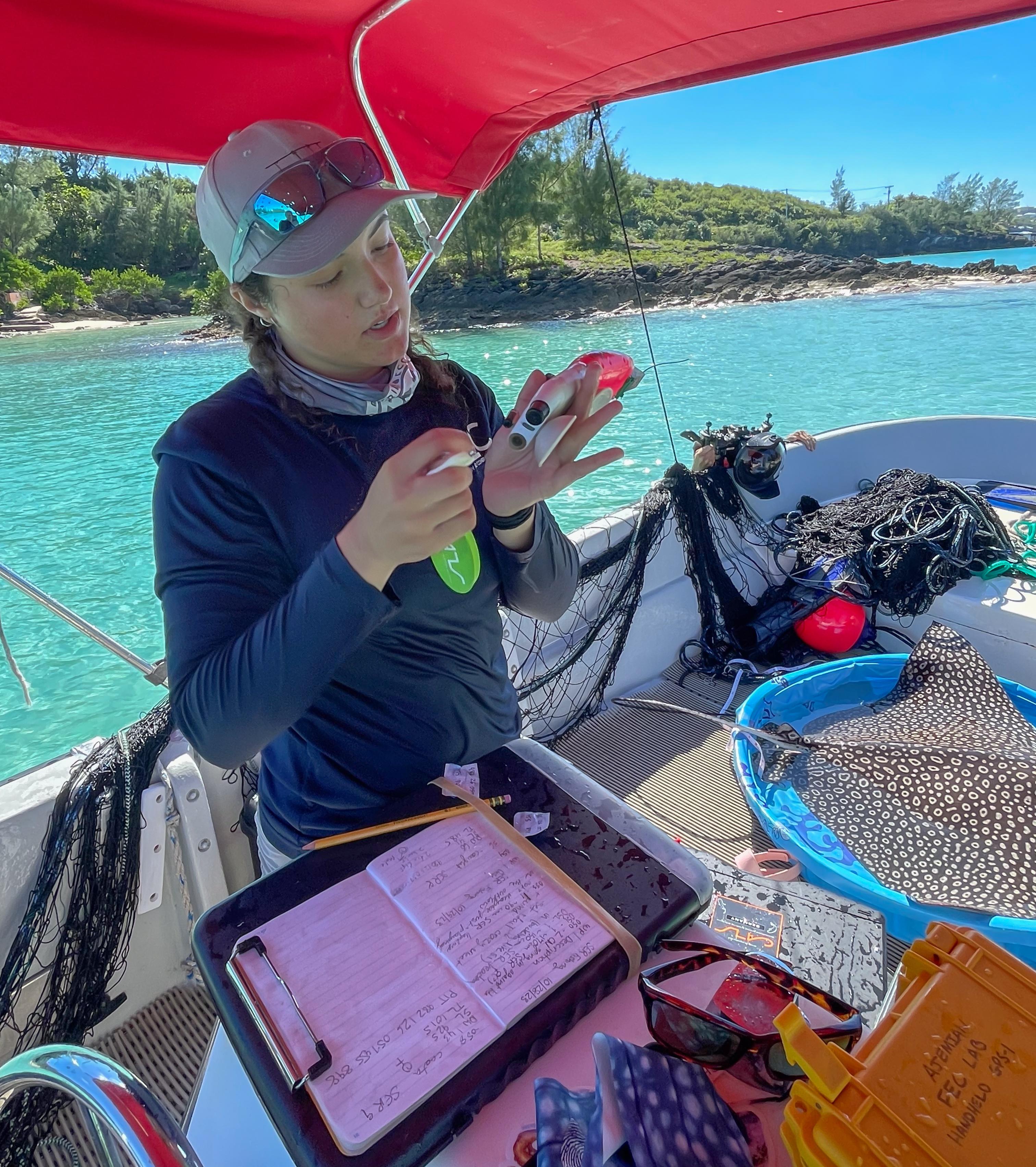
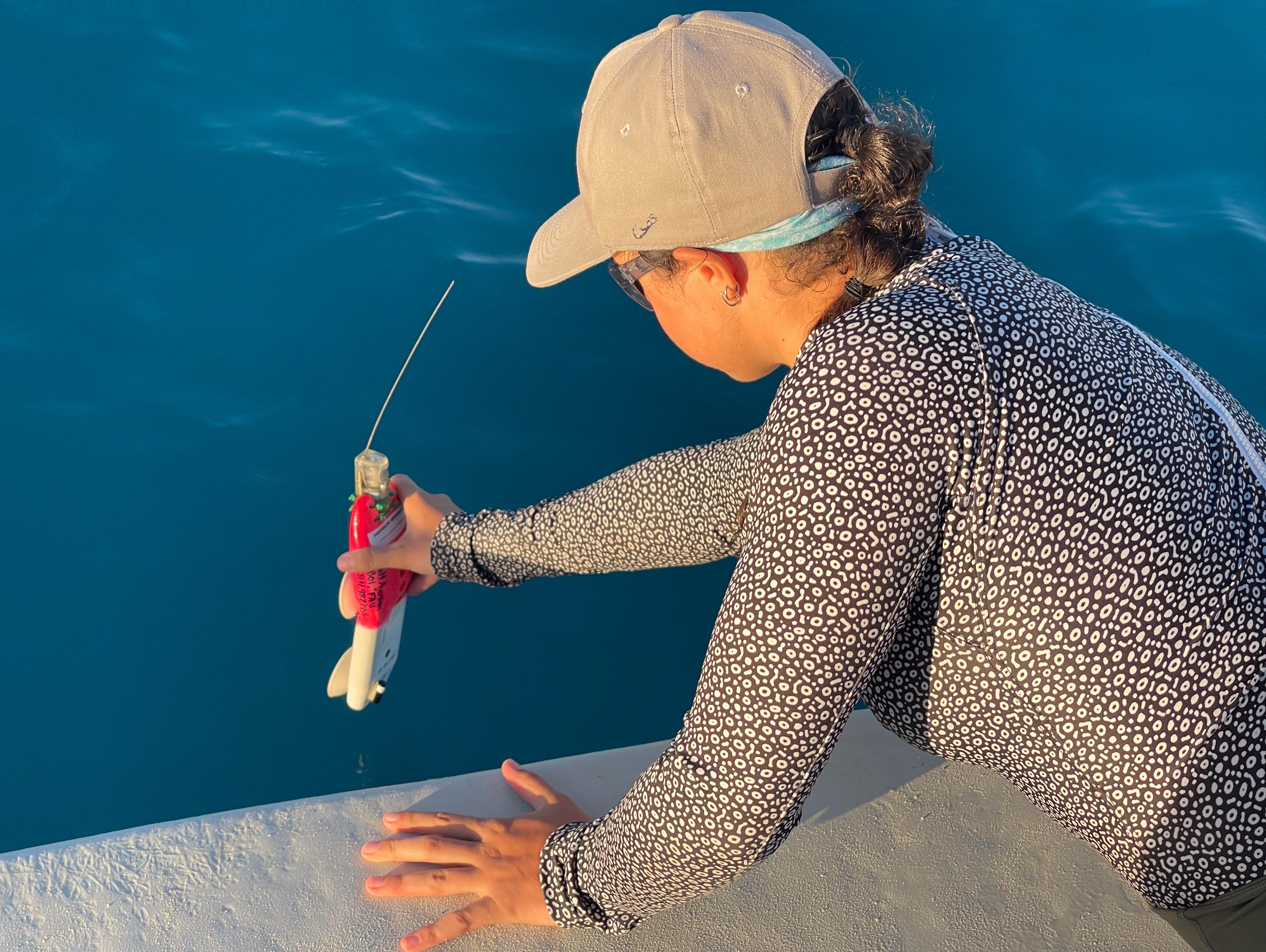
FAU Harbor Branch Ph.D. Student Cecilia Hampton preps a highly specialized suction cup tag which is placed on large rays in Bermuda to collect data.
12 / 28
Share This Gallery
Extra care needs to be taken by the research team to avoid an accidental sting by one of the venom-coated barbs near the animal’s tail.
13 / 28
Share This Gallery
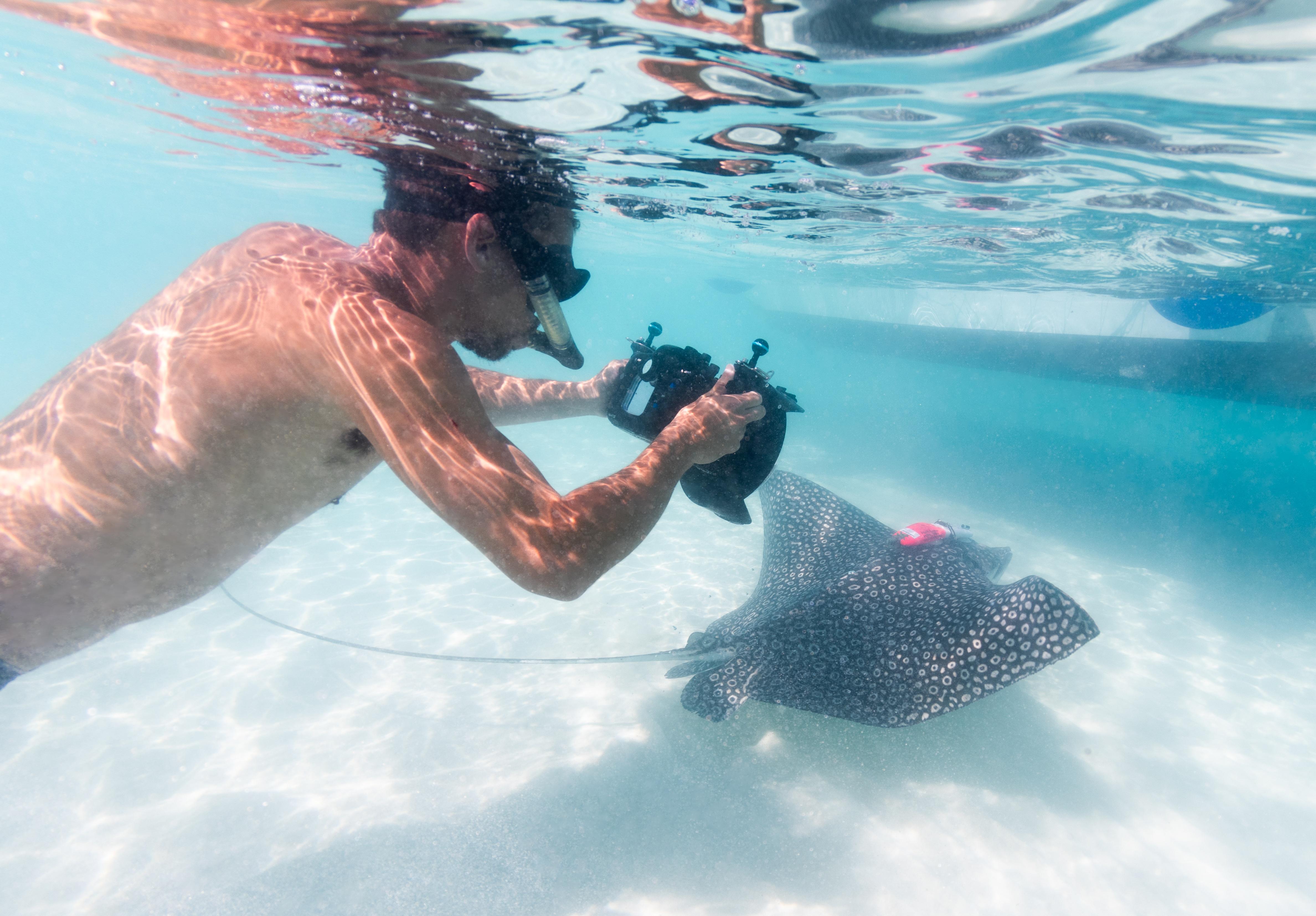
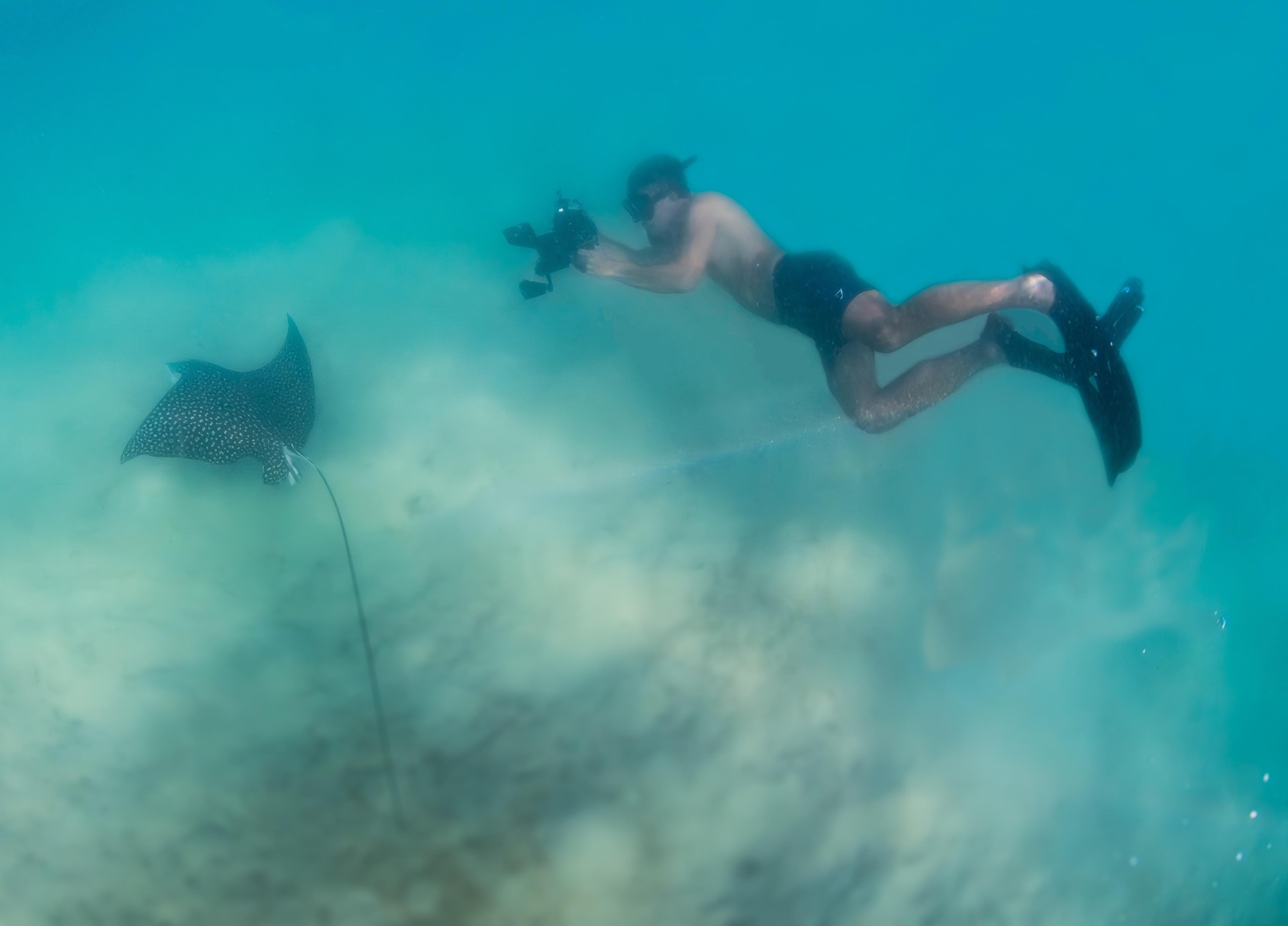
Videographer David Diez captures footage of an eagle ray with a suction cup tag after it has been released from the boat.
14 / 28
Share This Gallery
Once a suction cup tag comes off the animal, the research team locates the floating tag using satellites and a ground interception antenna.
15 / 28
Share This Gallery
FAU Harbor Branch Ph.D. Student Cecilia Hampton retrieves a floating tag. The data it contains includes never before seen information about the animal’s movements and feeding behaviors.
16 / 28
Share This Gallery
Videographer David Diez films a whitespotted eagle ray in Bermuda.
17 / 28
Share This Gallery
FAU Harbor Branch Ph.D. Student Cecilia Hampton downloads data from stationary receivers that had been placed in Harrington Sound and its inlet. Each time a tagged ray swims by one of these receivers that information is recorded.
18 / 28
Share This Gallery
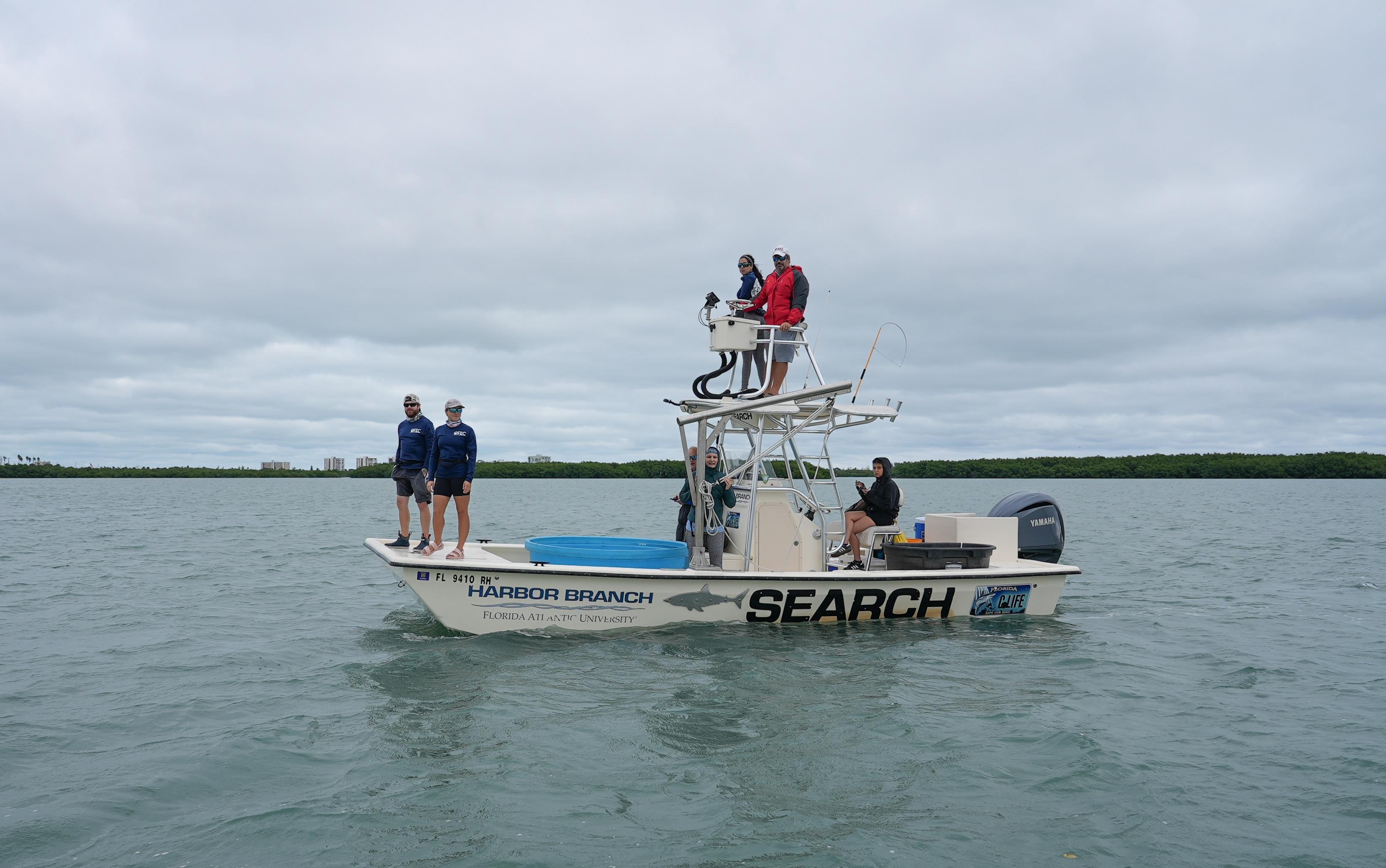
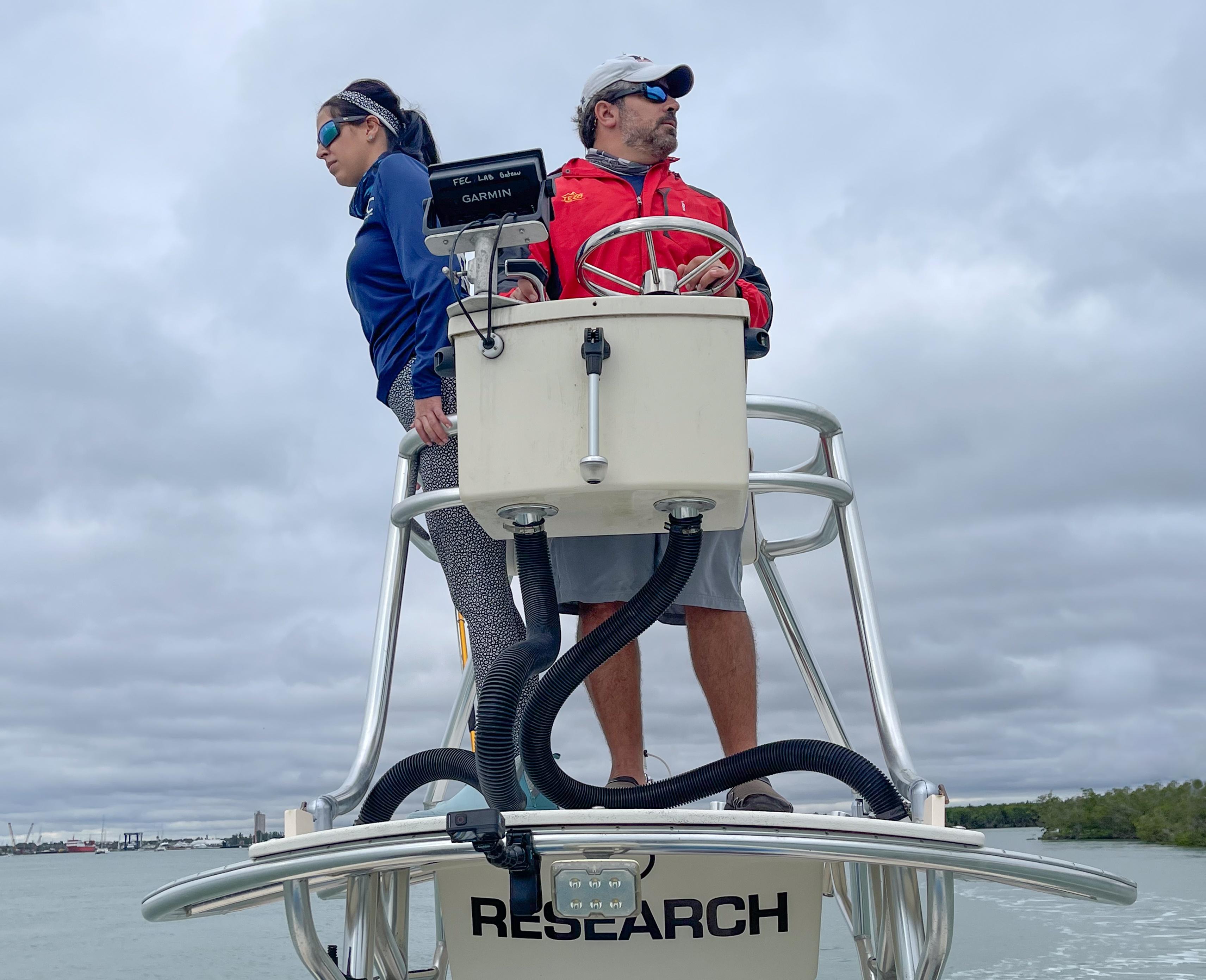
FAU Harbor Branch researchers looking for whitespotted eagle rays in Florida’s Indian River Lagoon.
19 / 28
Share This Gallery
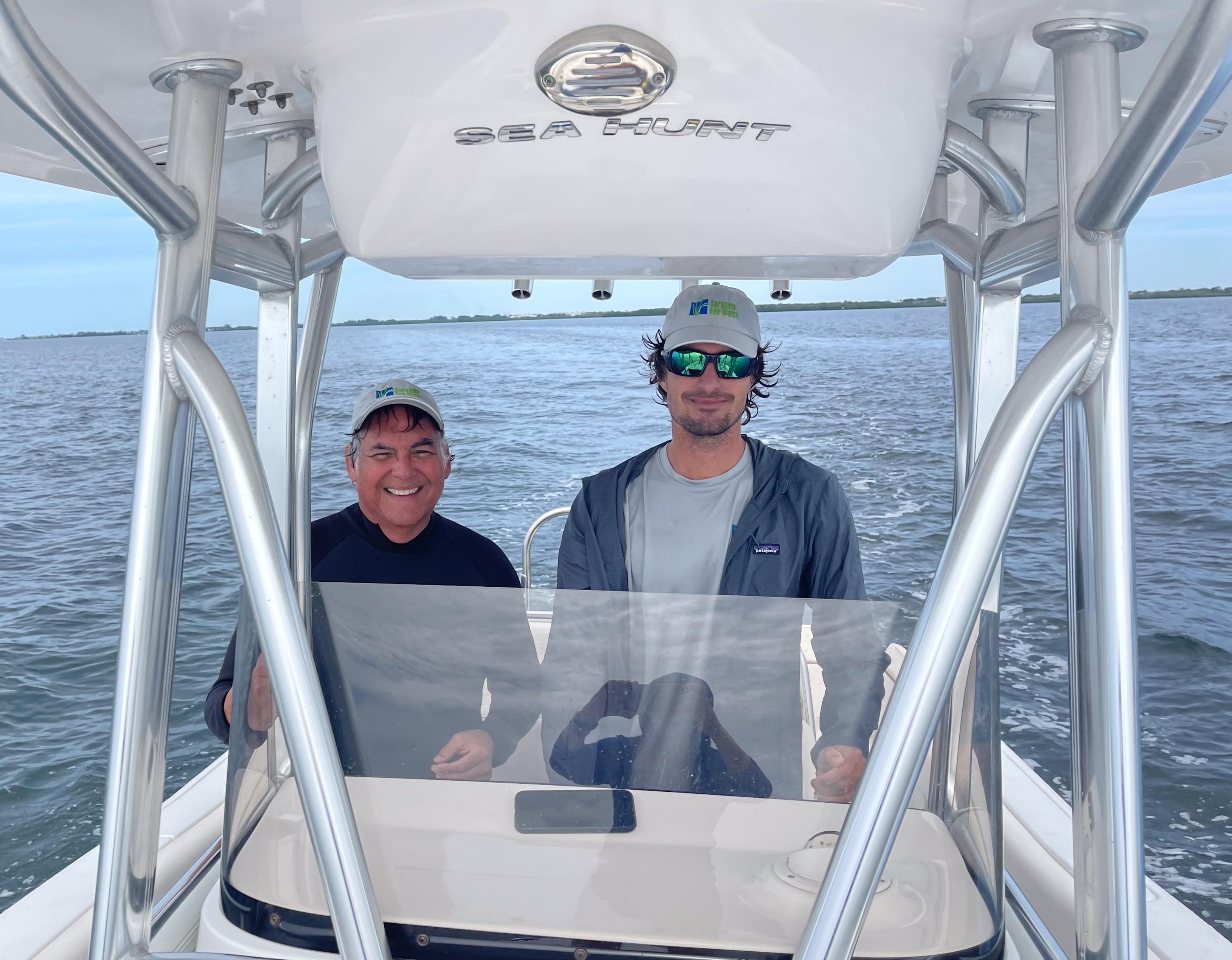
FAU Harbor Branch Associate Research Professor Matt Ajemian, Ph.D. and Ph.D. Candidate Ariadna Rojas Corzo keep an eye out for whitespotted eagle rays in Florida’s Indian River Lagoon.
20 / 28
Share This Gallery
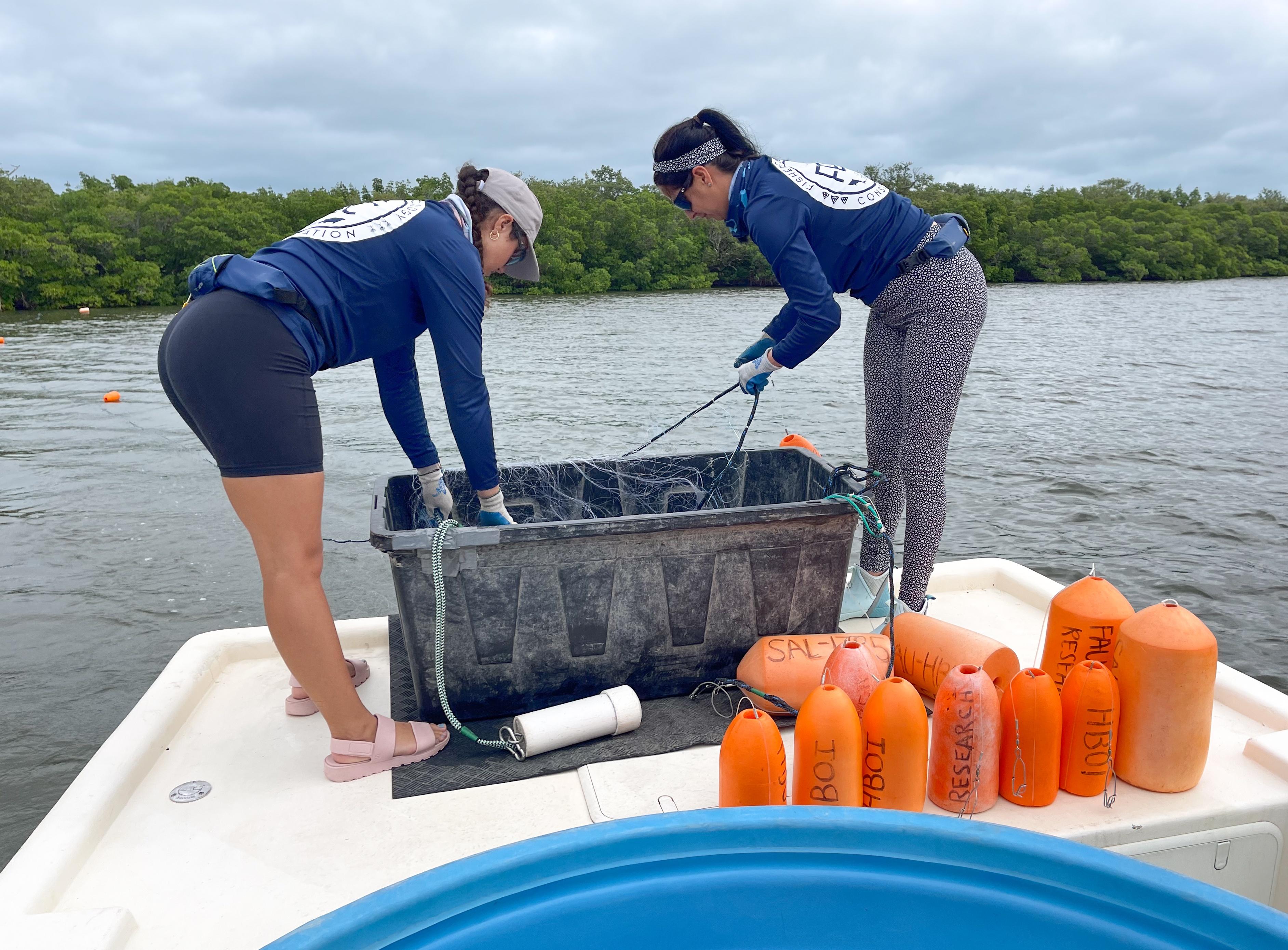
FAU Harbor Branch Ph.D. Student Cecilia Hampton (left) and Ph.D. Candidate Ariadna Rojas Corzo (right) set a scientific gill net in Florida’s Indian River Lagoon. They hope to catch eagle ray pups.
21 / 28
Share This Gallery
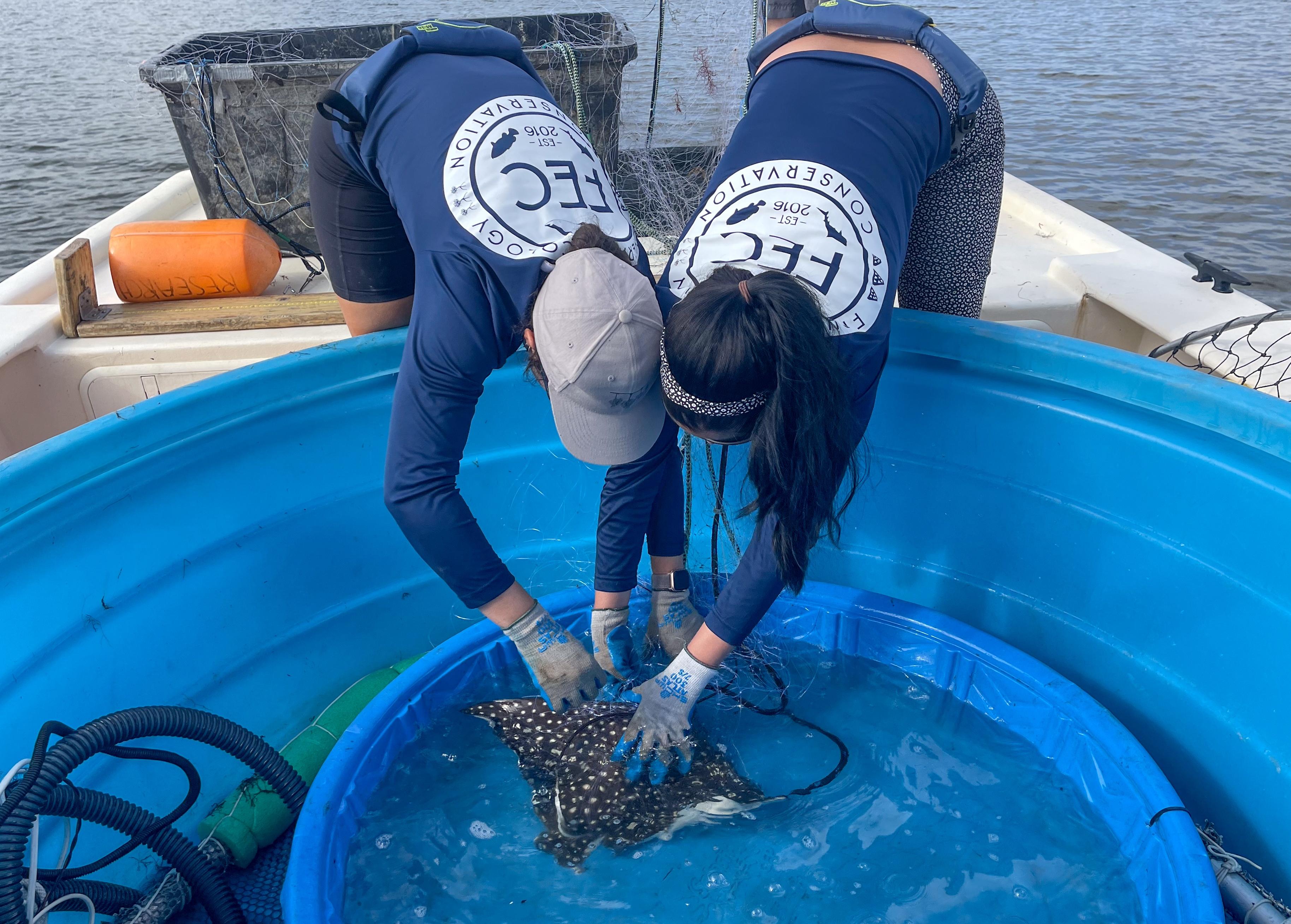
FAU Harbor Branch Ph.D. Student Cecilia Hampton (left) and Ph.D. Candidate Ariadna Rojas Corzo (right) untangle an eagle ray pup from the net before working it up.
22 / 28
Share This Gallery
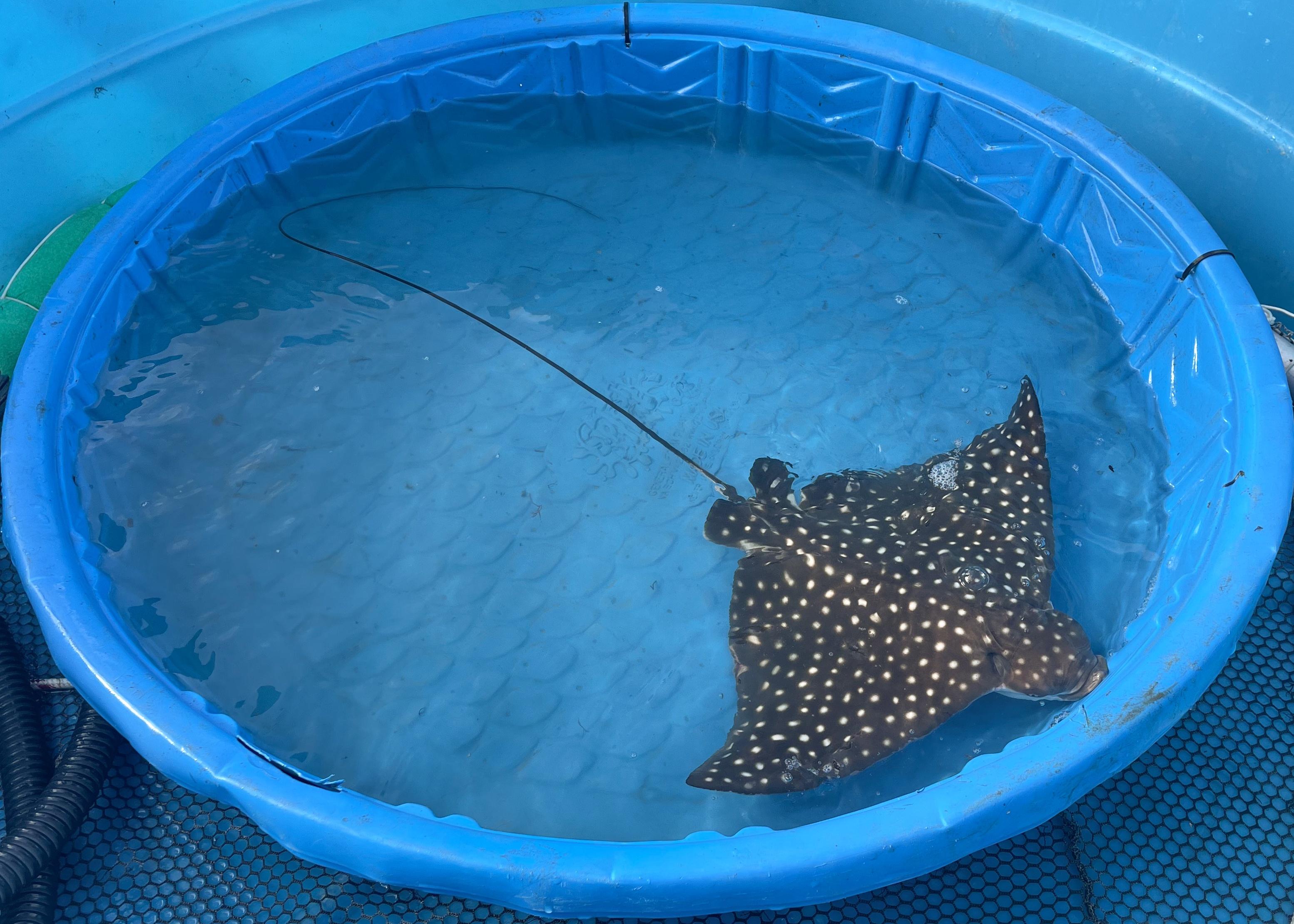
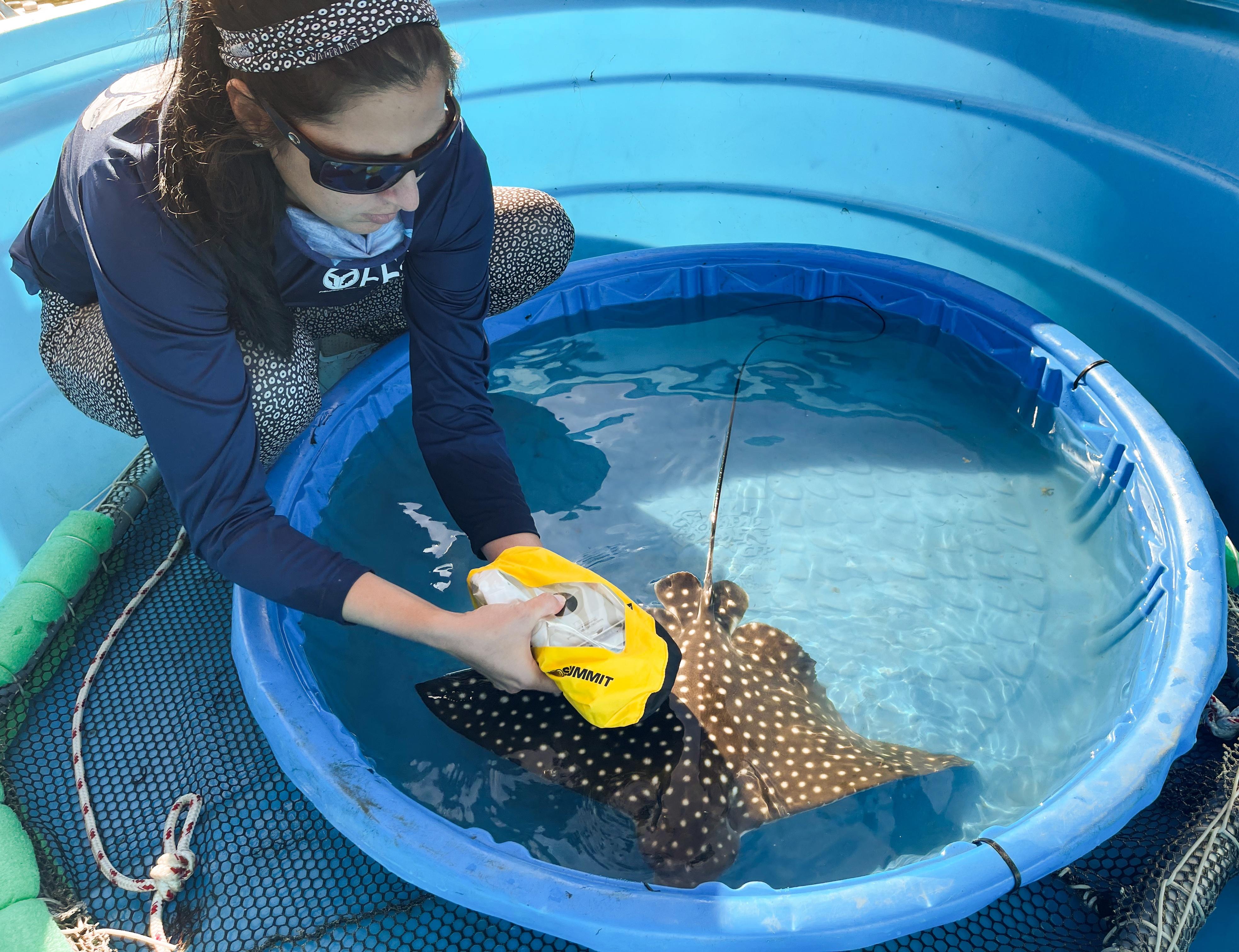
An adorable whitespotted eagle ray pup in its research pool on the boat.
23 / 28
Share This Gallery
FAU Harbor Branch Ph.D. Candidate Ariadna Rojas Corzo checks the pup for a pit tag, which is similar to microchips used in pets. It tells scientists if an animal has been captured before.
24 / 28
Share This Gallery
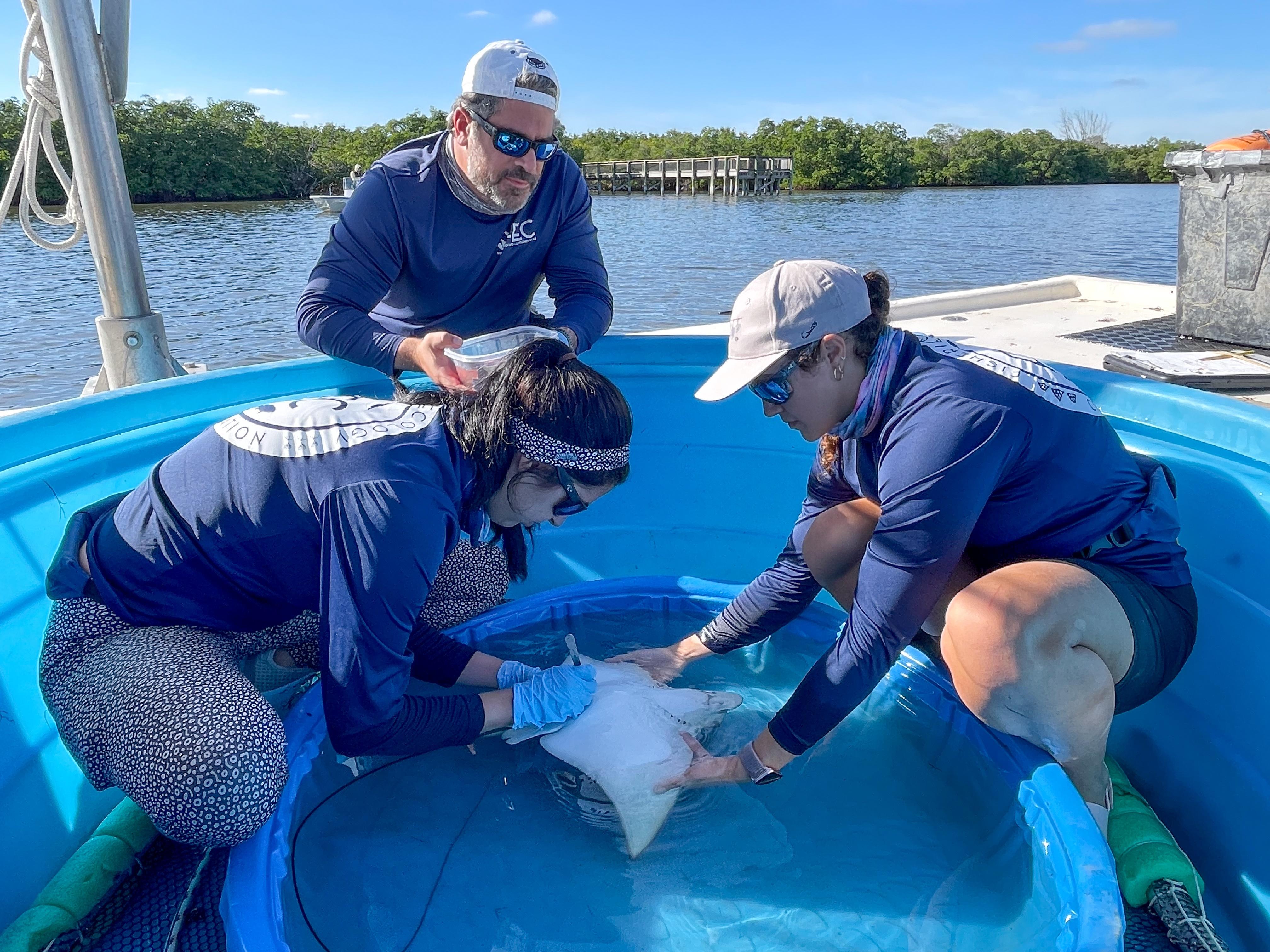
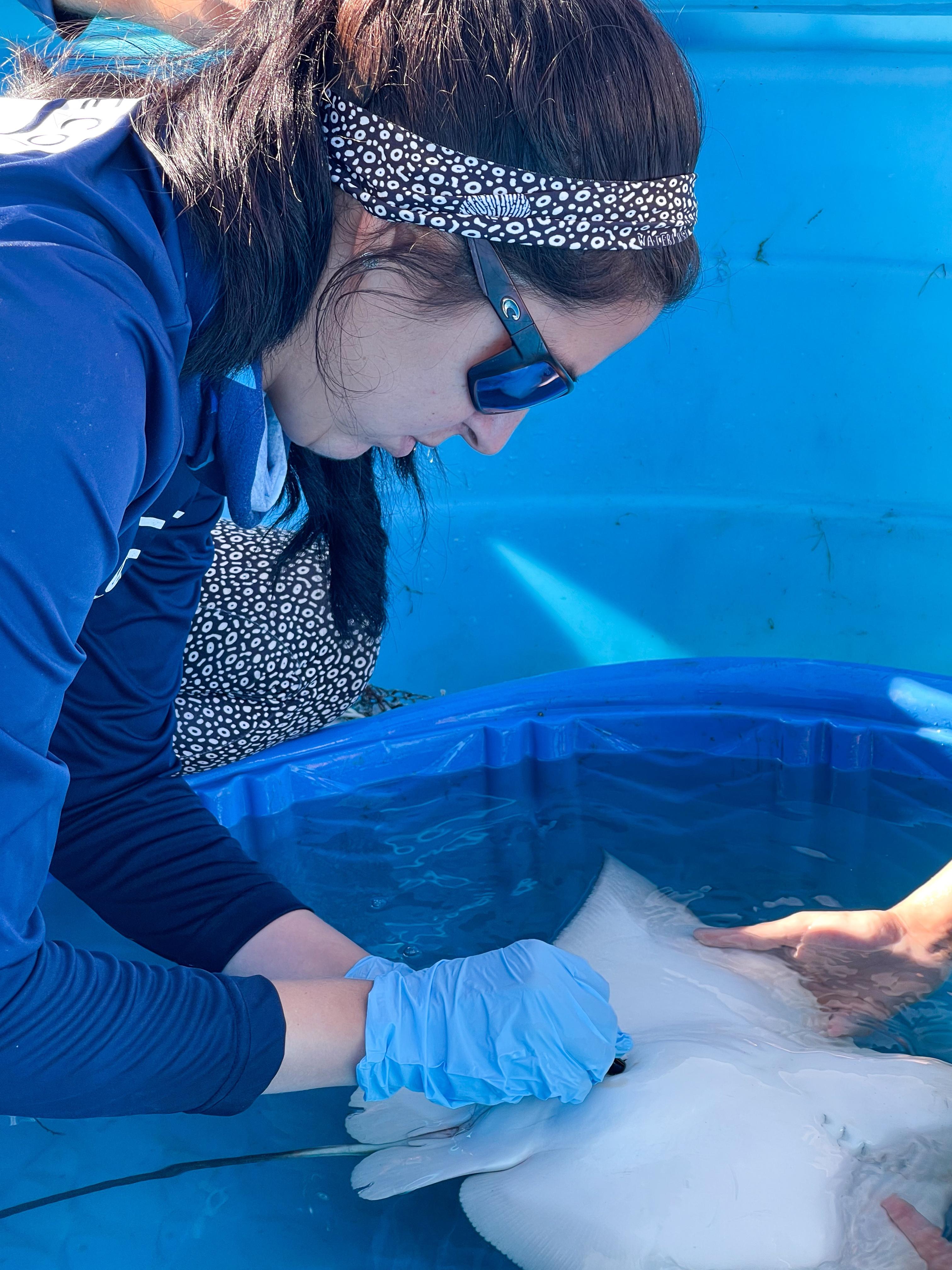
FAU Harbor Branch Ph.D. Candidate Ariadna Rojas Corzo makes a small incision to insert two acoustic transmitters.
25 / 28
Share This Gallery
FAU Harbor Branch Ph.D. Candidate Ariadna Rojas Corzo inserts one of two acoustic transmitters into the animal's stomach cavity. One tag communicates with stationary receivers set up throughout the lagoon that record the time and date each time a pup swims by over the course of two years. The second tag allows Ariadna to actively track a pup from a boat.
26 / 28
Share This Gallery
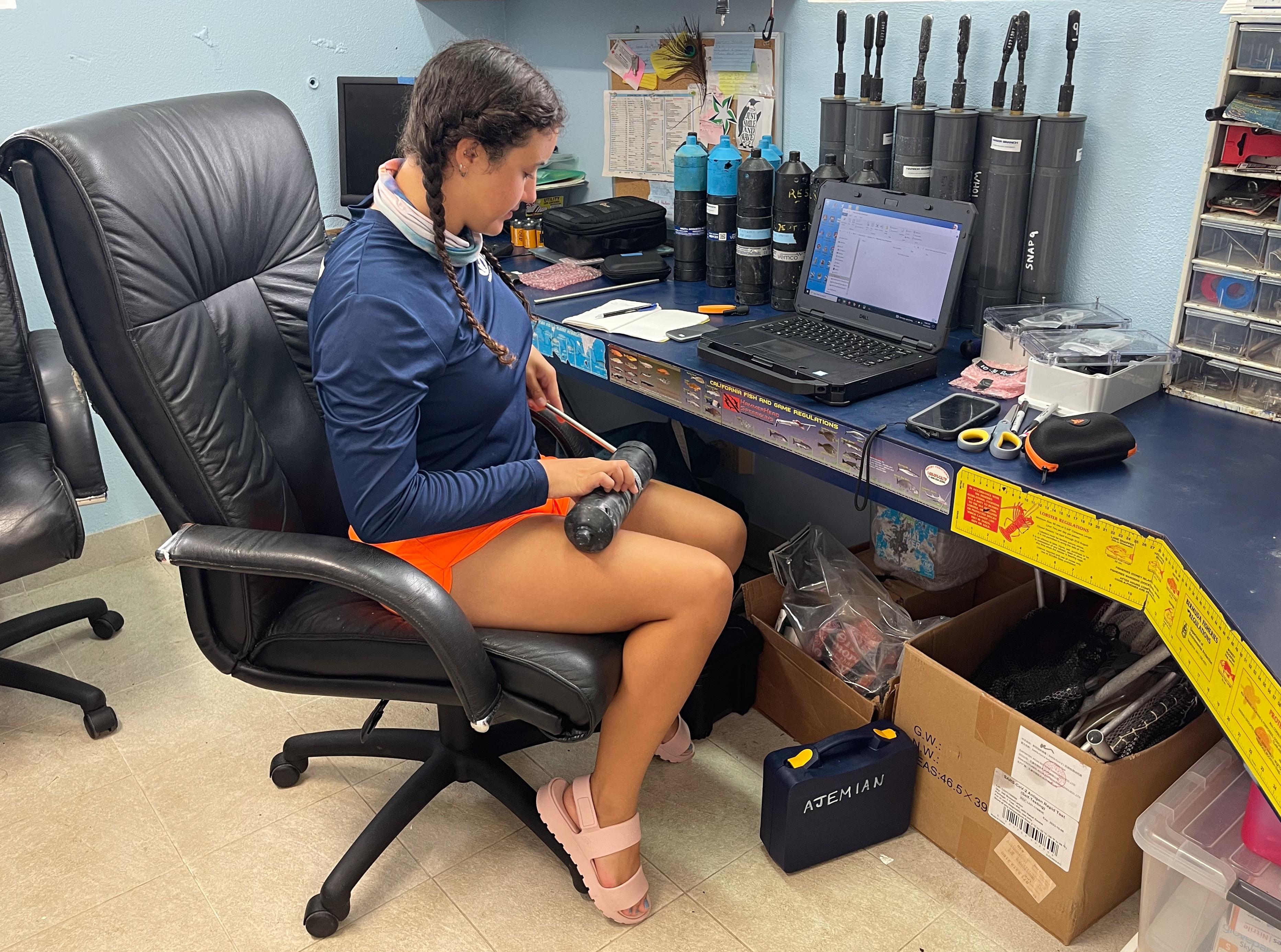
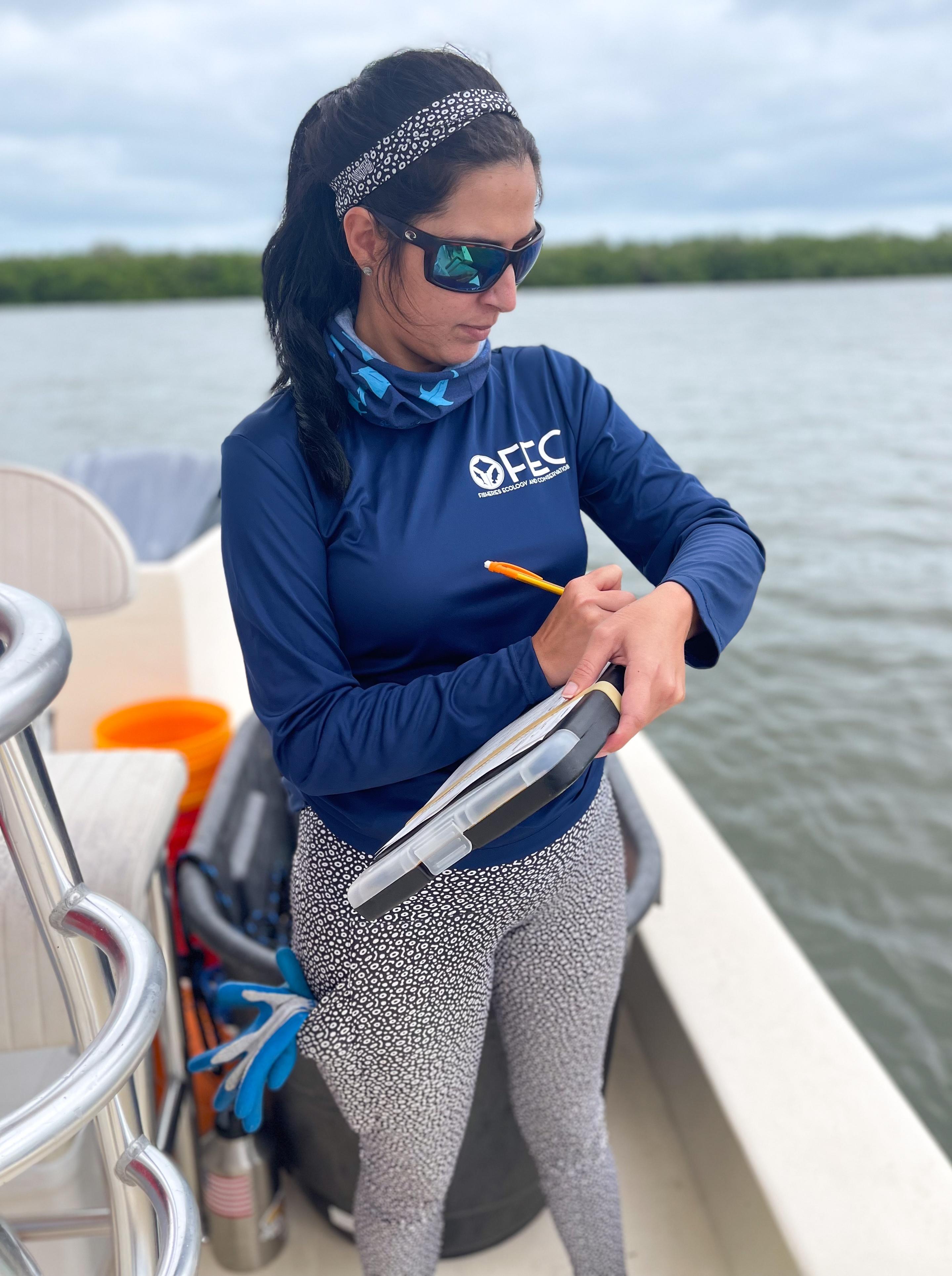
FAU Harbor Branch Ph.D. Candidate Ariadna Rojas Corzo takes notes while conducting eagle ray research in Florida’s Indian River Lagoon.
27 / 28
Share This Gallery
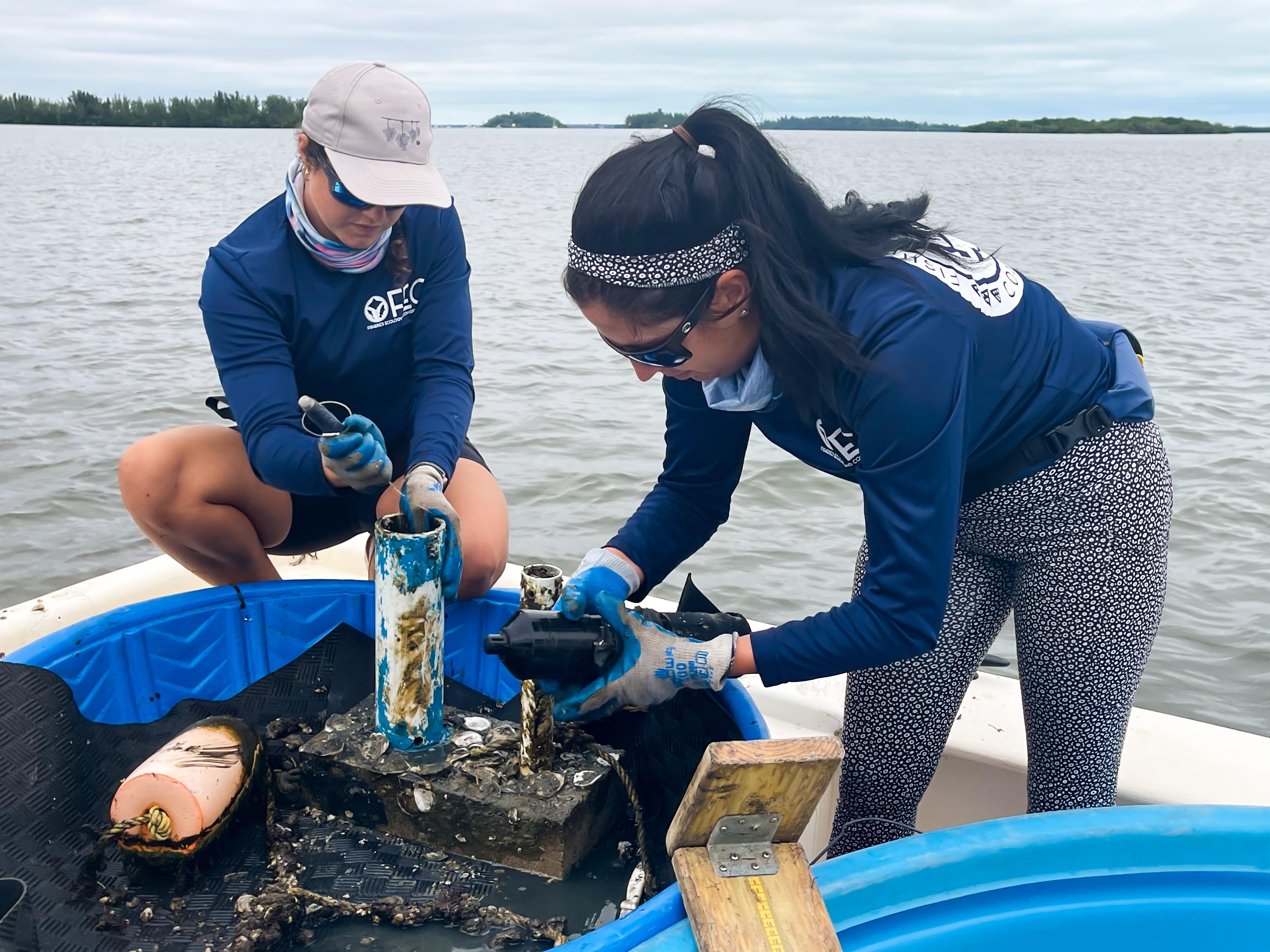
FAU Harbor Branch Ph.D. Student Cecilia Hampton (left) and Ph.D. Candidate Ariadna Rojas Corzo (right) retrieve stationary receivers set up throughout the lagoon that record the time and date when a tagged animal swims by.
28 / 28
Share This Gallery
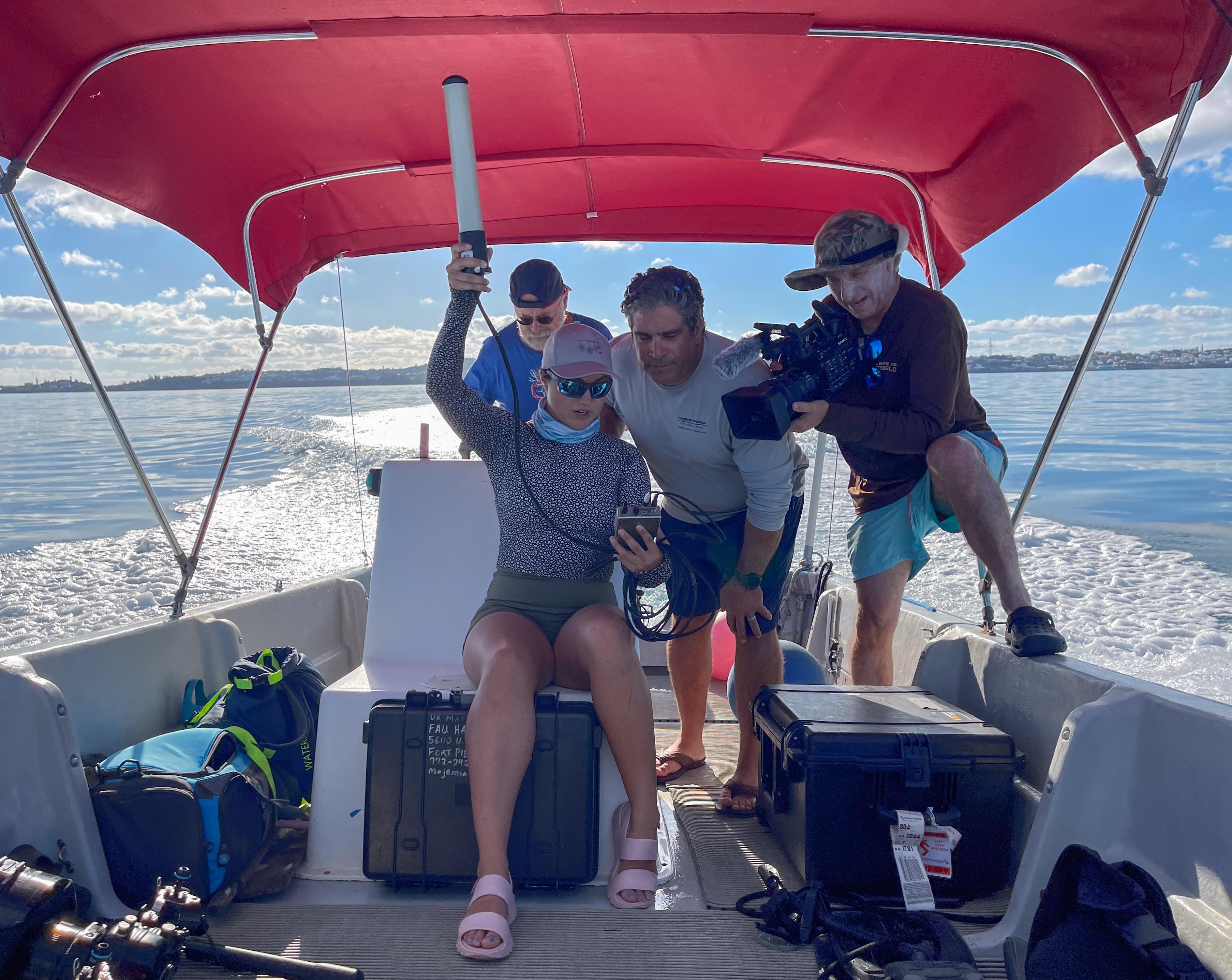
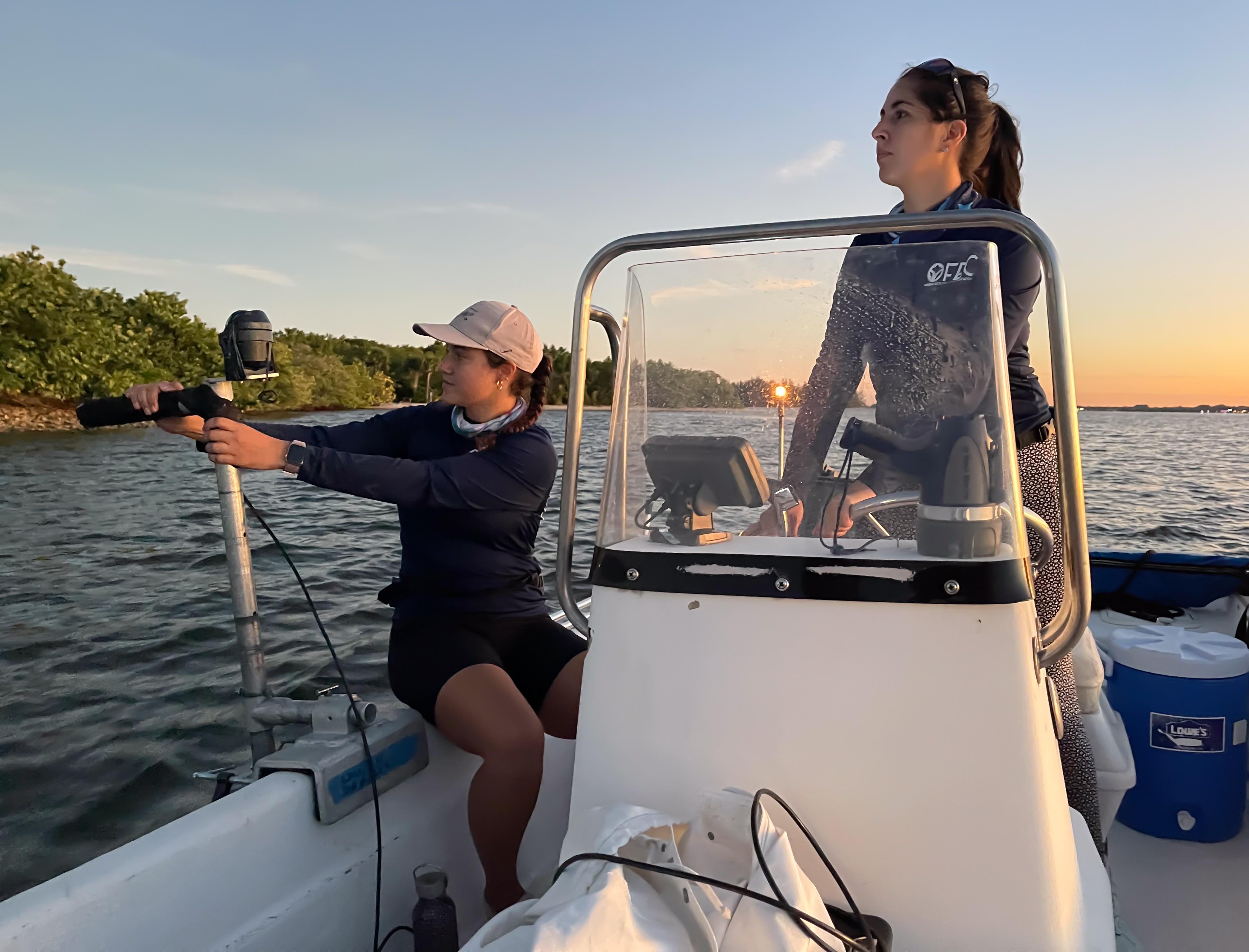
FAU Harbor Branch Ph.D. Student Cecilia Hampton (left) and Ph.D. Candidate Ariadna Rojas Corzo (standing) actively track an eagle ray pup from the boat using a hydrophone system that can listen for an implanted tag. This allows experts to better understand where the animals spend their time over a 24-hour period.
Changing Seas would like to thank the following individuals and institutions who kindly allowed their footage, images and other media to be used in this production: