Episode 1804: Getting Sharked: Search for Solutions
After a period of serious decline, shark populations are slowly recovering along the southeastern U.S. thanks to strong management measures that were put in place in the 1990s. Sharks reproduce slowly and it takes decades for populations to recover.
With some shark species finally rebounding, recreational fishers are reporting more depredation – instances of sharks eating their catch before they can reel it in. With frustrations mounting in the fishing community, researchers are seeking solutions that will keep anglers happy and sharks thriving. This includes the testing of magnetic and electric pulse “repellent” devices to see if they can deter sharks away from the line long enough for anglers to land their fish.
Florida’s nearly 1400 miles of coastline support a diverse variety of fish, making the sunshine state a saltwater angler’s dream.
Mississippi State University, Marine Fisheries Ecology Program
2 / 28
Share This Gallery
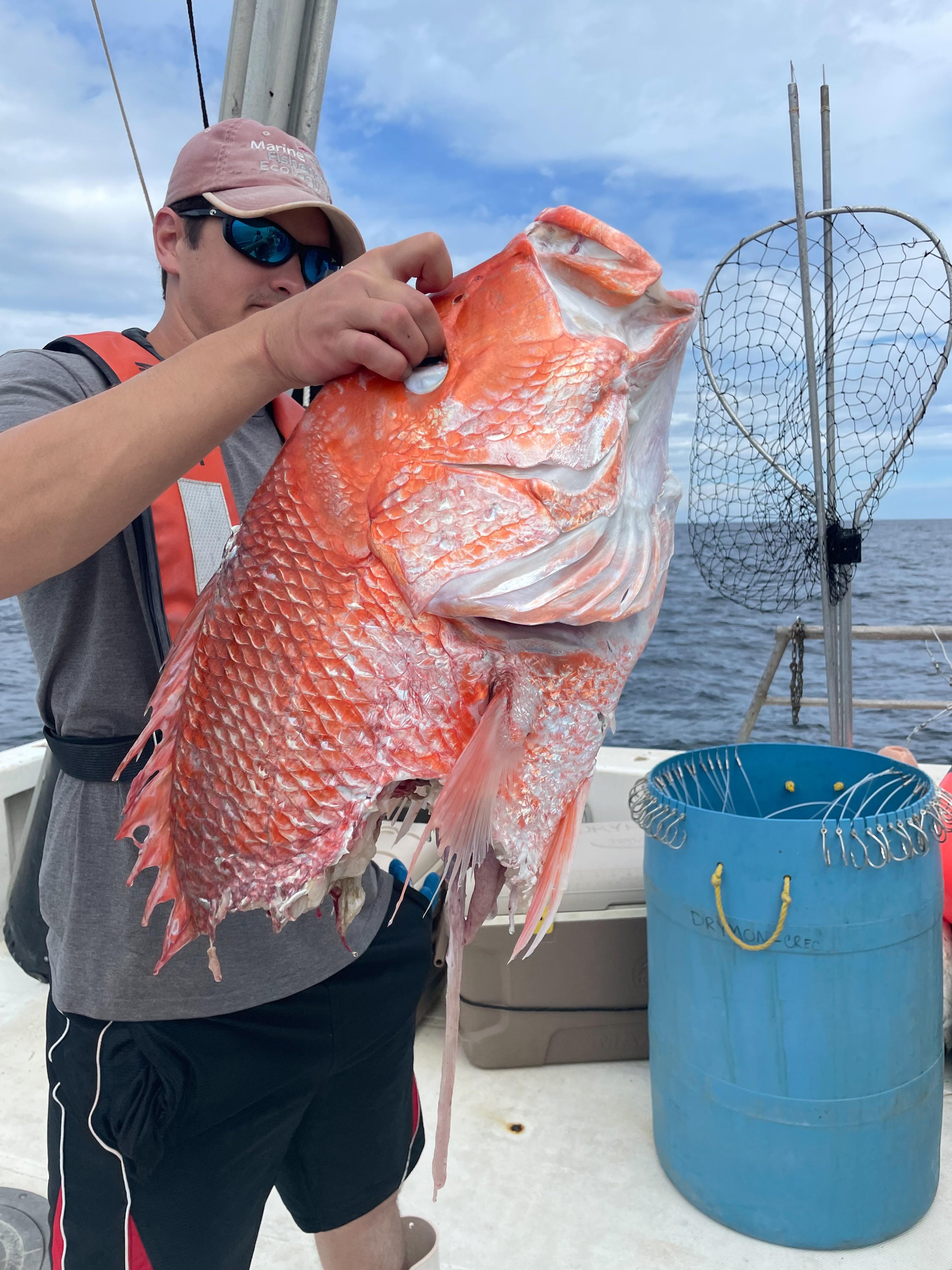
As shark populations are slowly recovering along the southeastern U.S., recreational fishers are reporting more depredation – instances of sharks eating their catch before they can reel it in.
Mississippi State University, Marine Fisheries Ecology Program
3 / 28
Share This Gallery
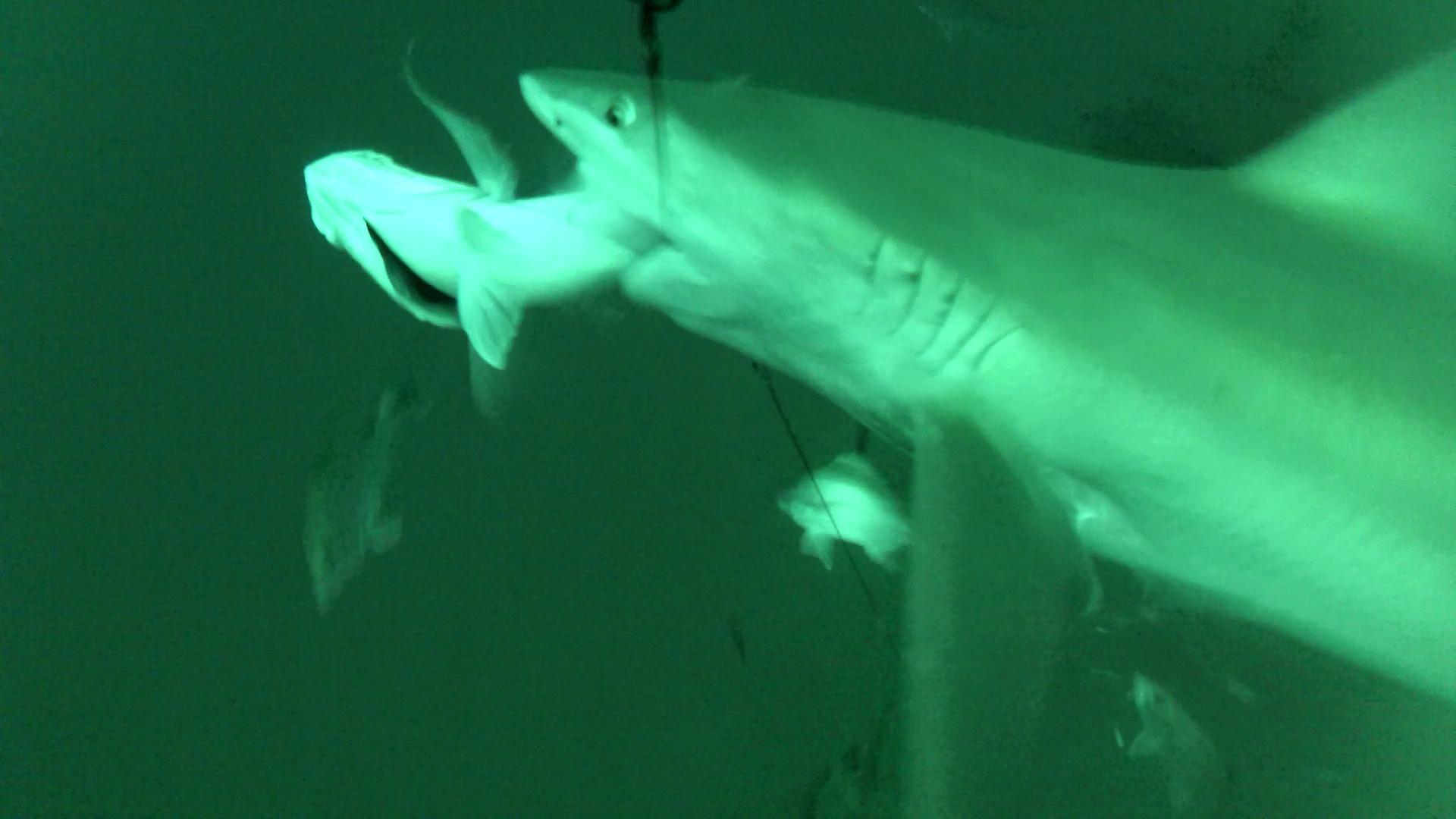
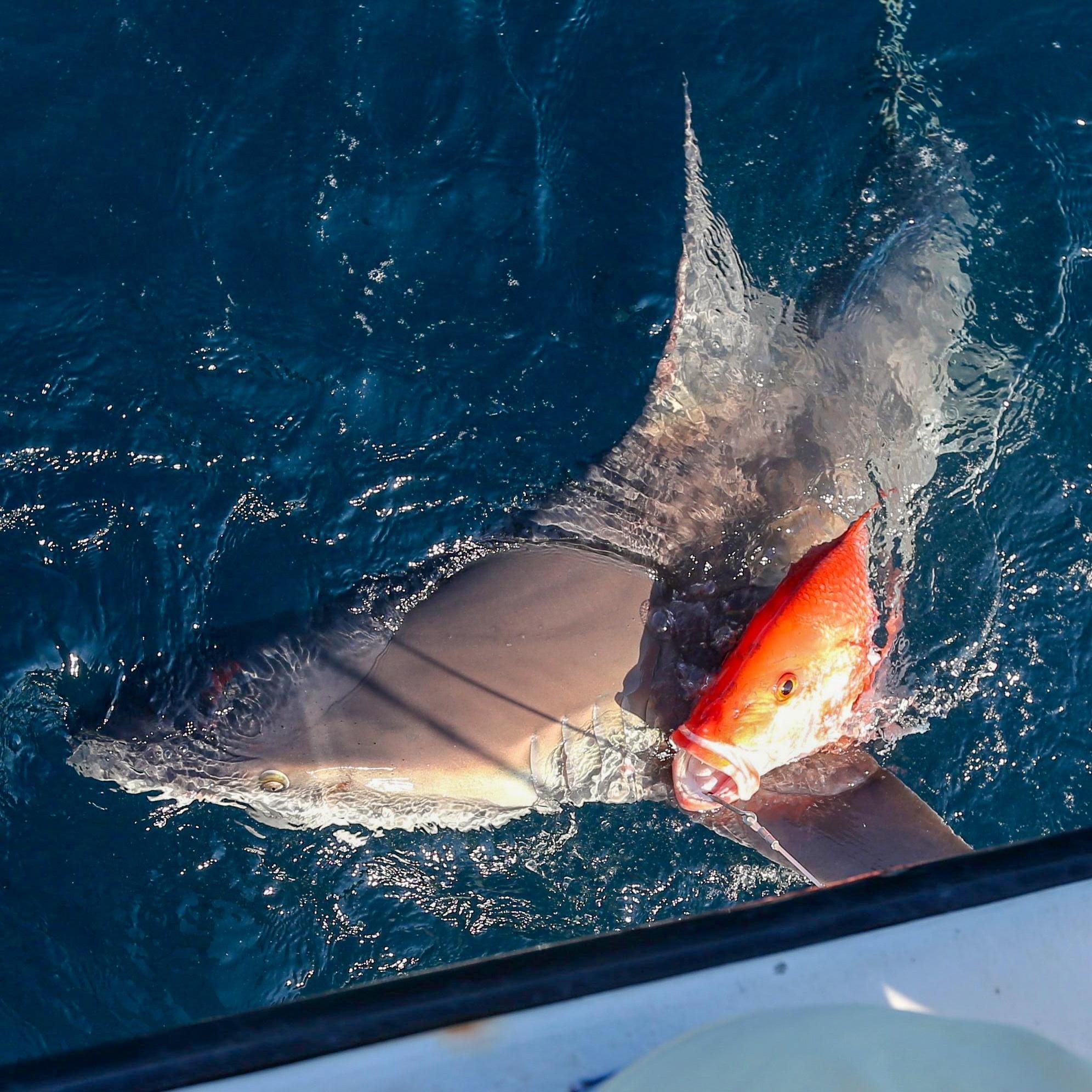
A shark taking an angler's catch.
Changing Seas
4 / 28
Share This Gallery
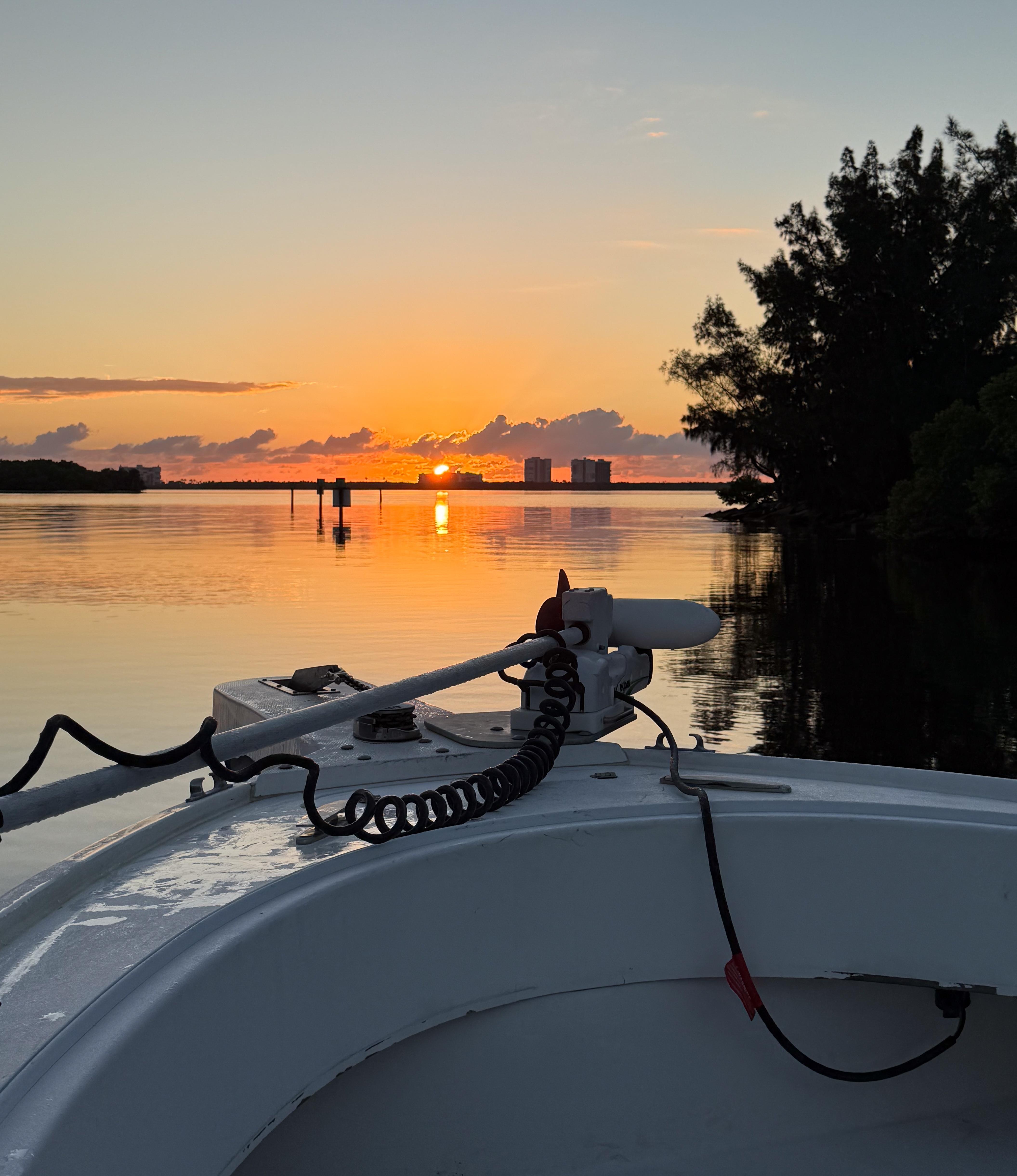
Sunrise on Florida's Indian River Lagoon. Researchers with FAU Harbor Branch are testing shark repellents to determine if they might help anglers keep their catch.
Changing Seas
5 / 28
Share This Gallery
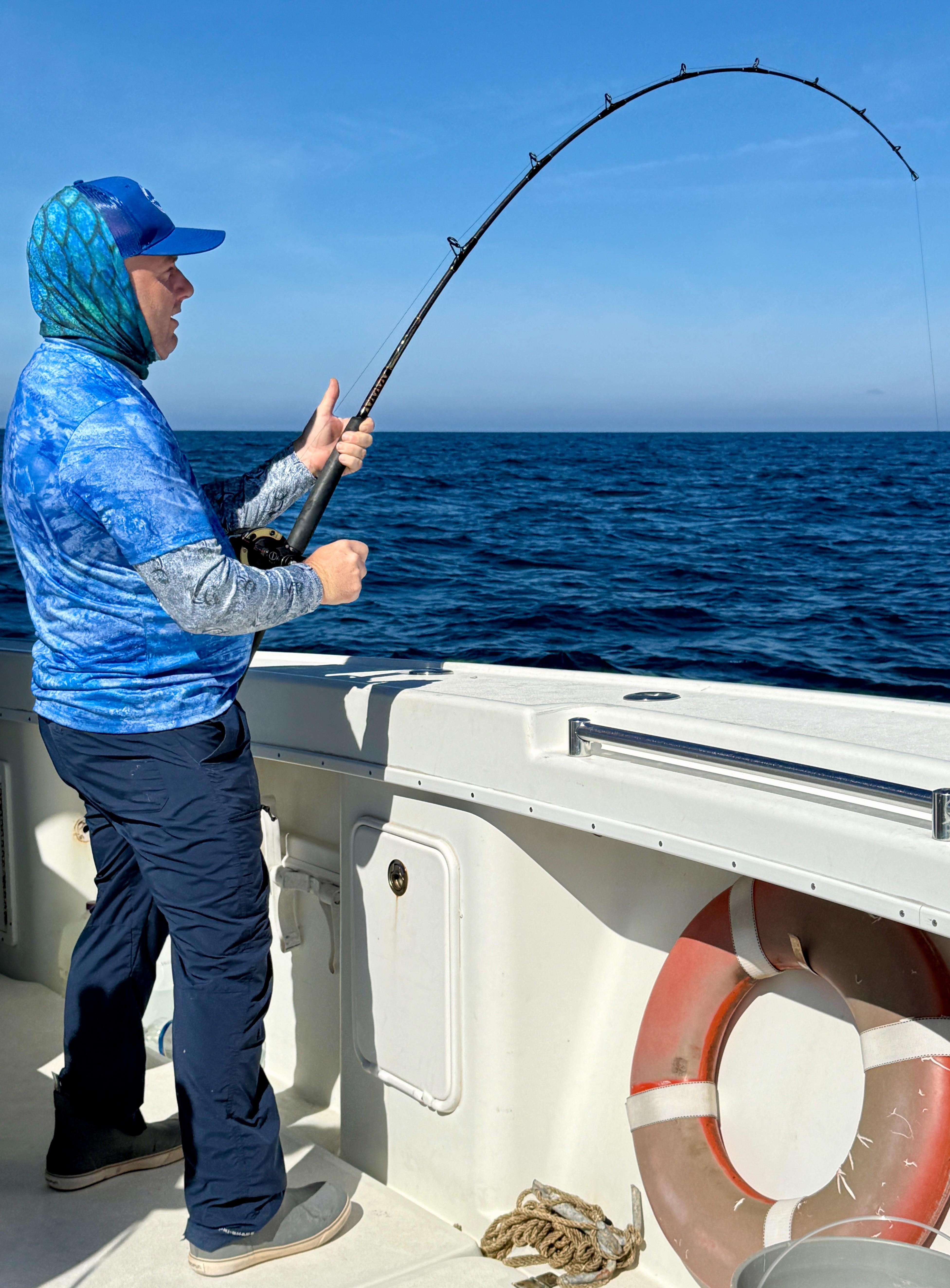
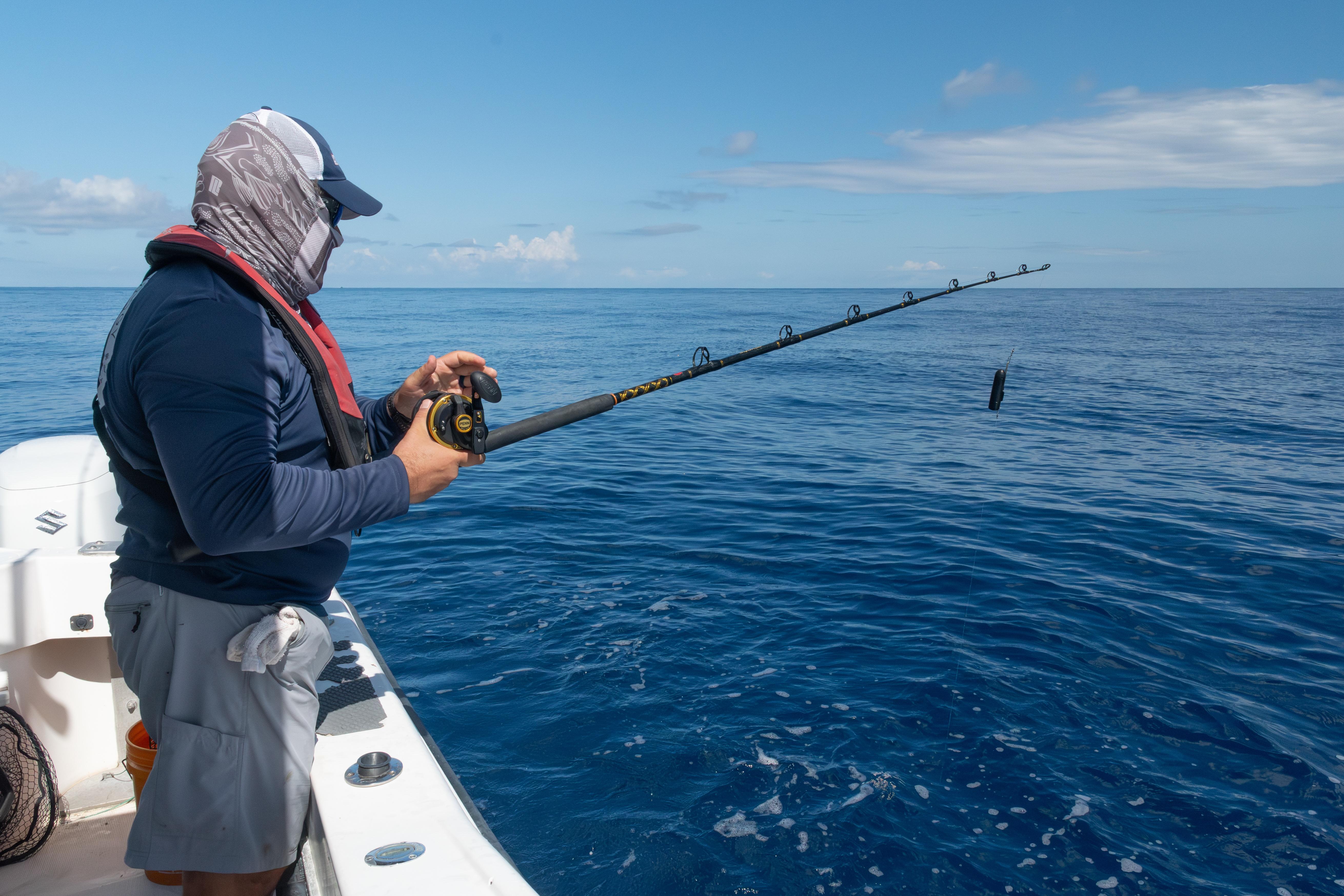
Matt Ajemian, Ph.D. fishes with a shark repellent attached to his rod and reel. A camera on the line will record what happens beneath the surface.
Changing Seas
6 / 28
Share This Gallery
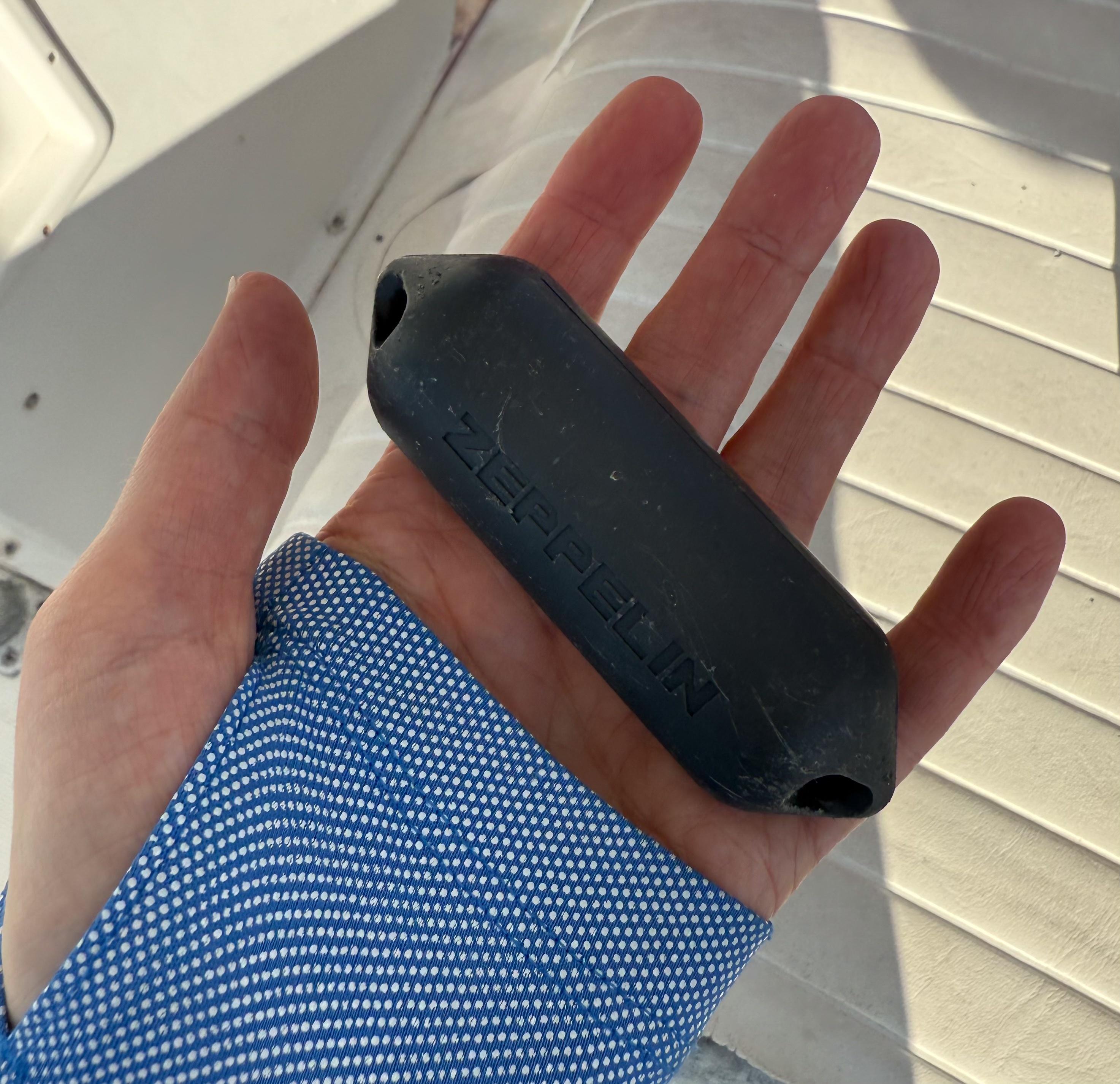
The Zeppelin shark depredation deterrent is a magnet that’s meant to irritate a shark's unique ability to sense electrical fields. It takes the place of a sinker on the line.
Changing Seas
7 / 28
Share This Gallery
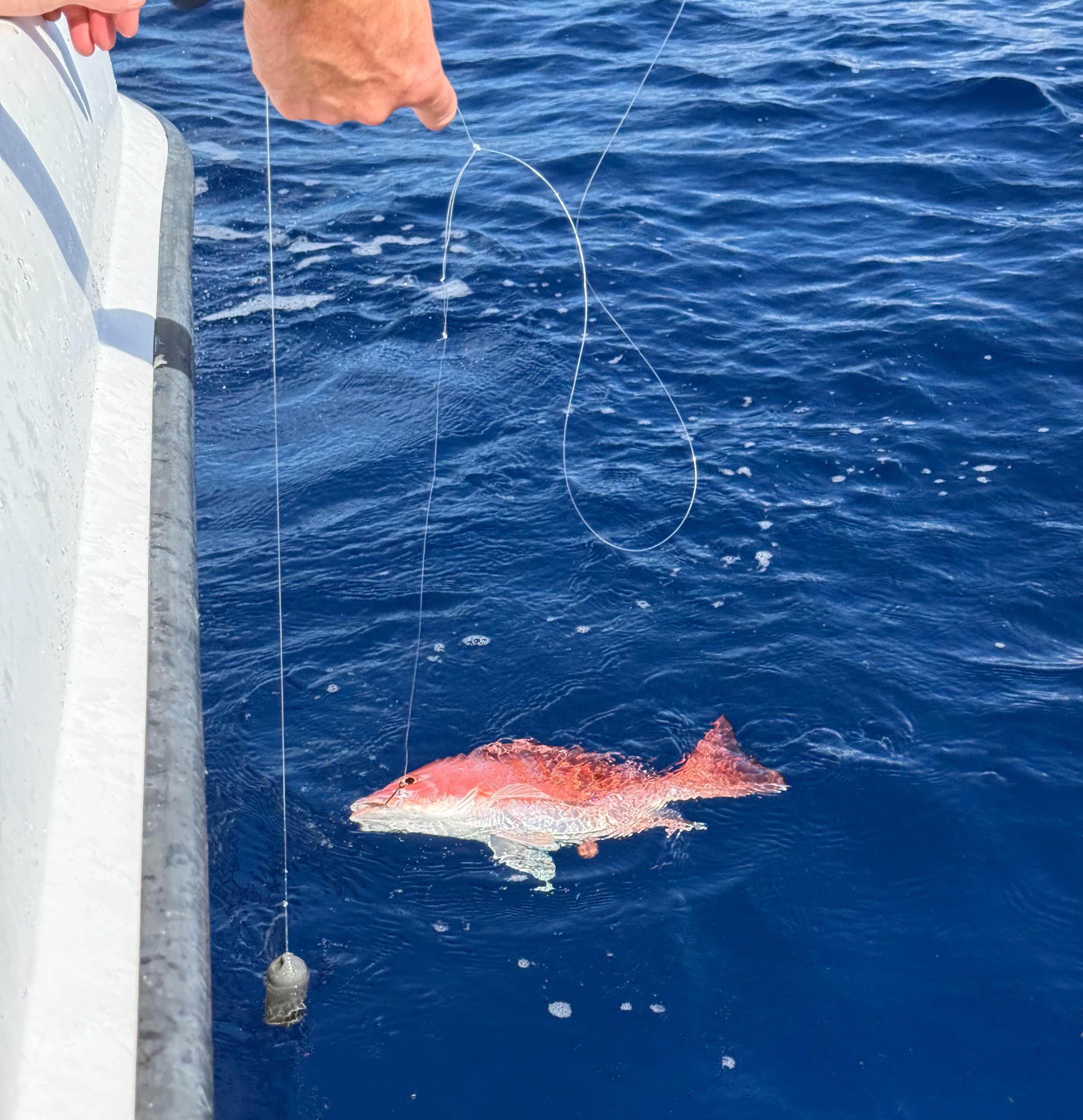
A Zeppelin shark deterrent on a fishing line with an intact fish. Researchers at FAU Harbor Branch are testing both active and dummy Zeppelins to test the magnet's effectiveness.
Trey Spearman, courtesy of Marcus Drymon
8 / 28
Share This Gallery
Scientists at FAU Harbor Branch sent a quarterly survey to all saltwater fishing license holders in Florida to better understand when and where they were experiencing depredation.
David Hay Jones, courtesy of Marcus Drymon
9 / 28
Share This Gallery
The survey revealed regional and seasonal depredation hotspots in Florida.
Changing Seas
10 / 28
Share This Gallery
While still a master’s student at Florida Atlantic University, Laura Jones filmed how sharks reacted to the magnet in the presence of bait.
Changing Seas
11 / 28
Share This Gallery
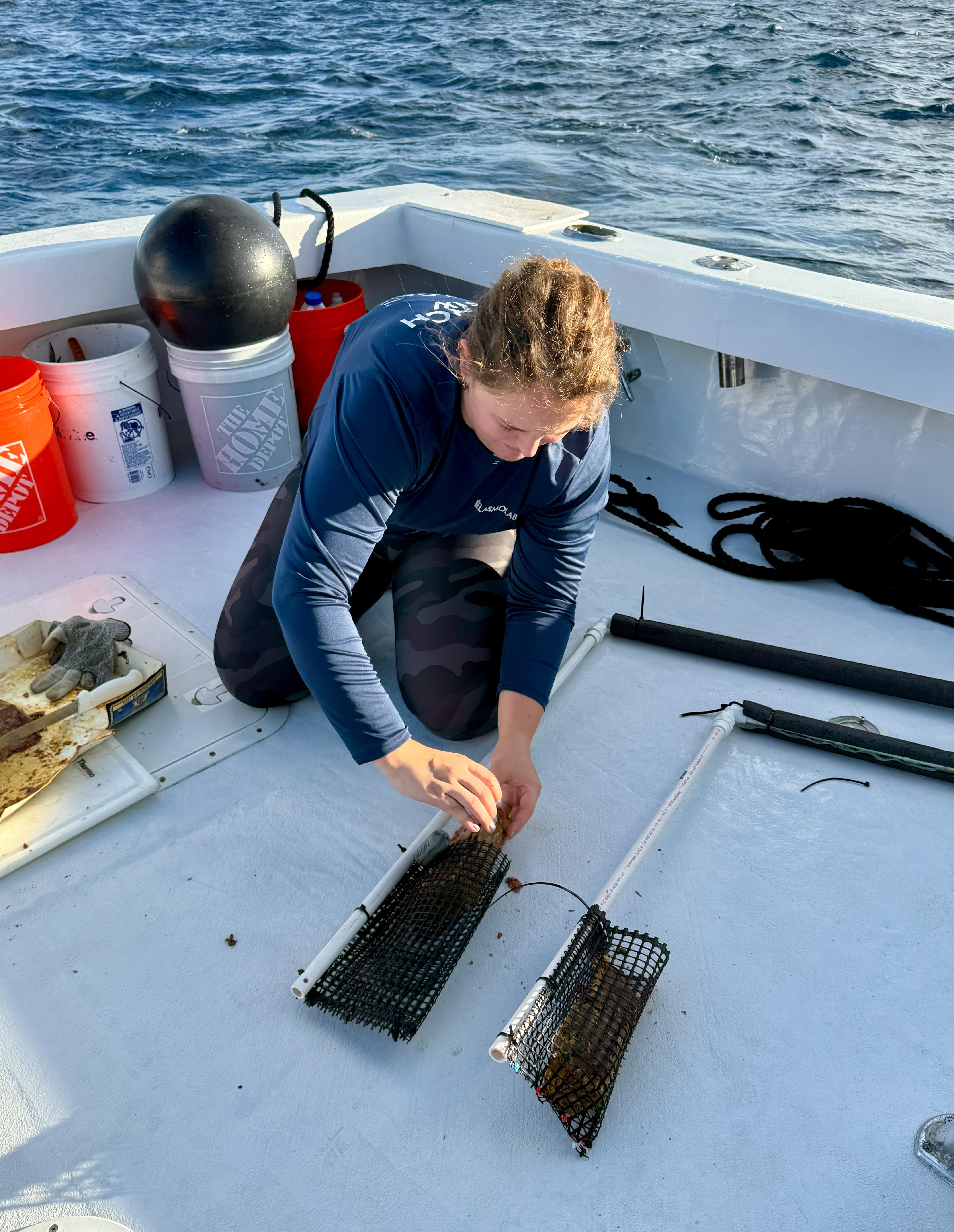
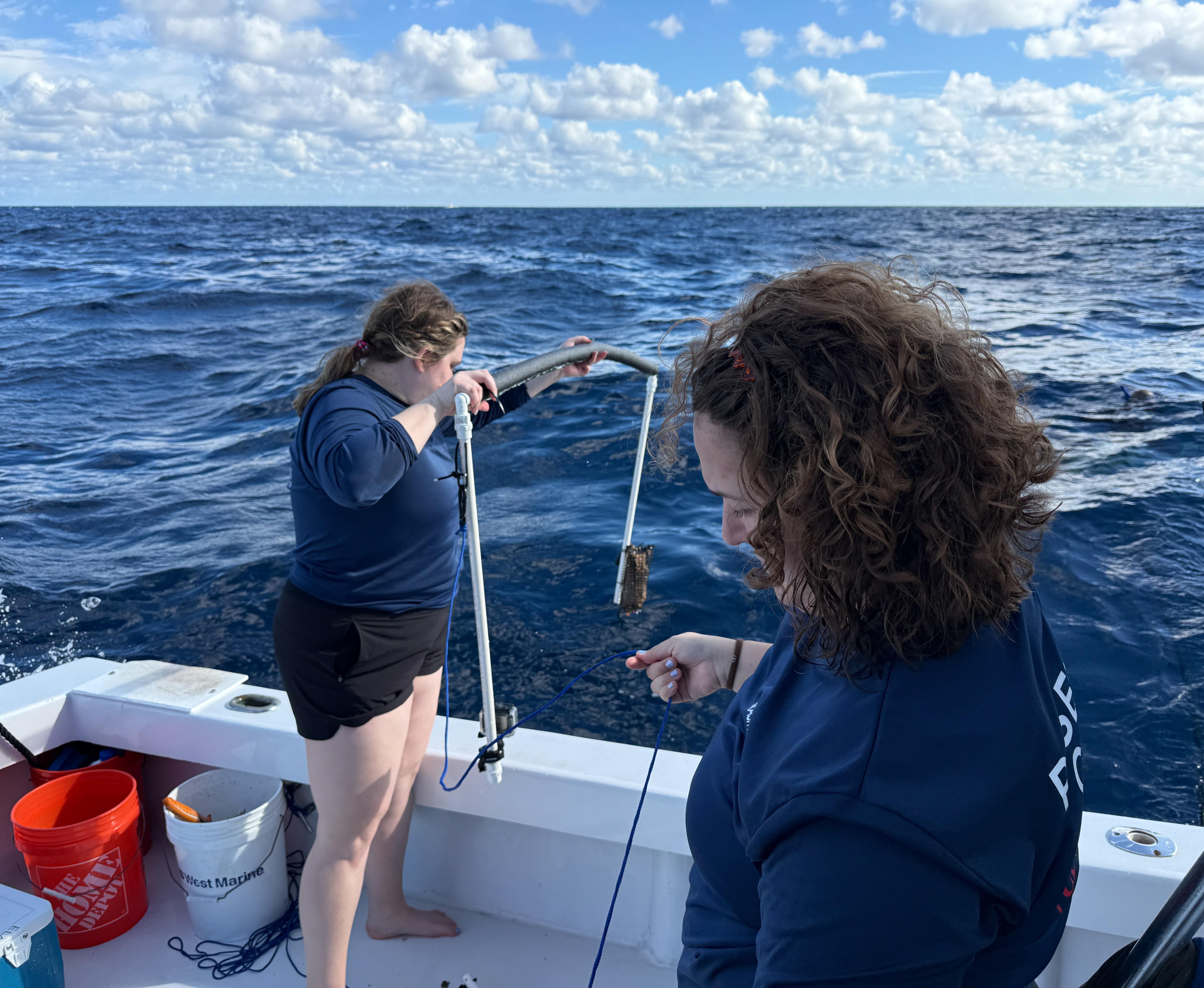
Laura's colleague adds bait to what is known as a BRUV, which is short for “baited remote underwater video.” The Zeppelin will be attached near the bait bag.
Changing Seas
12 / 28
Share This Gallery
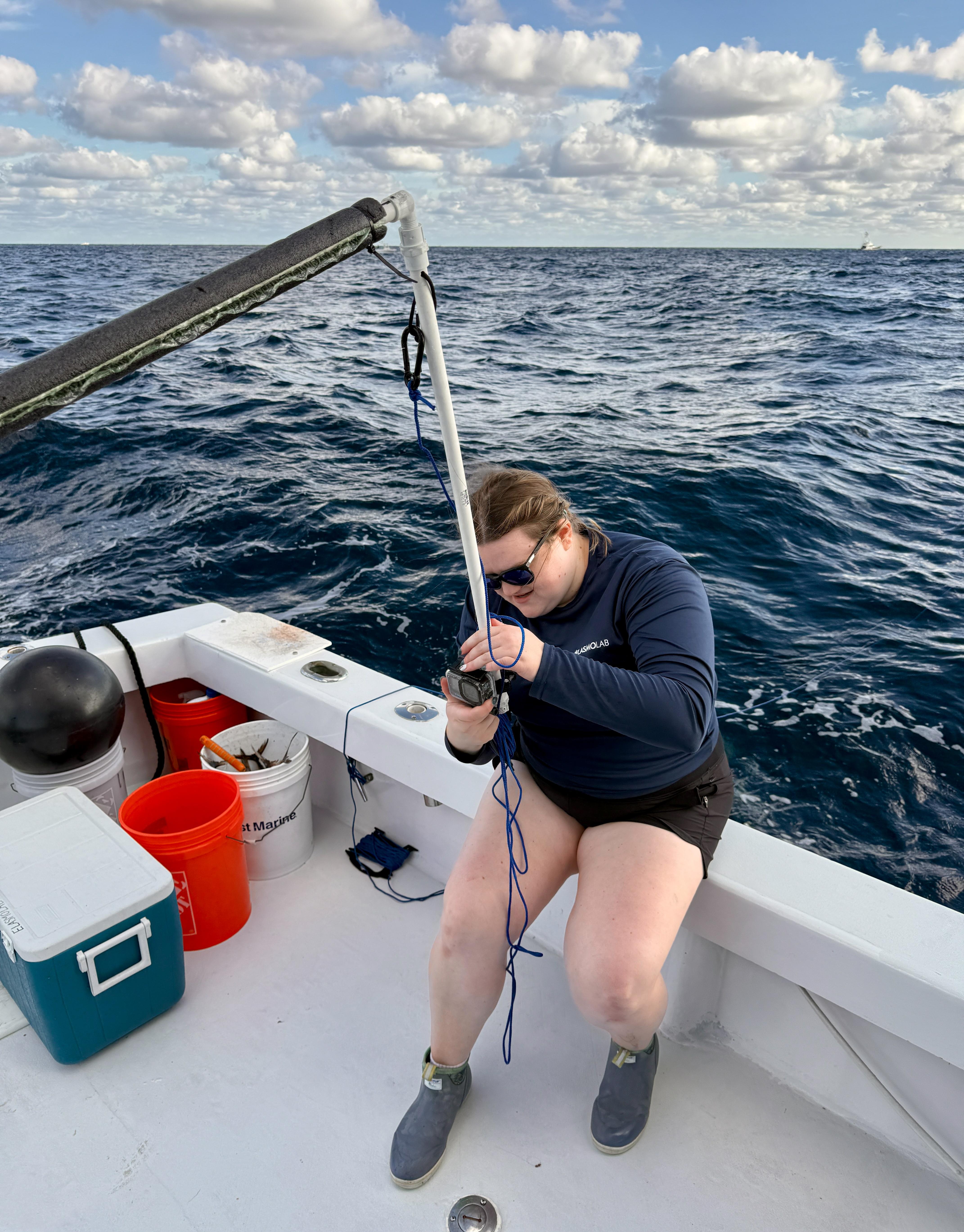
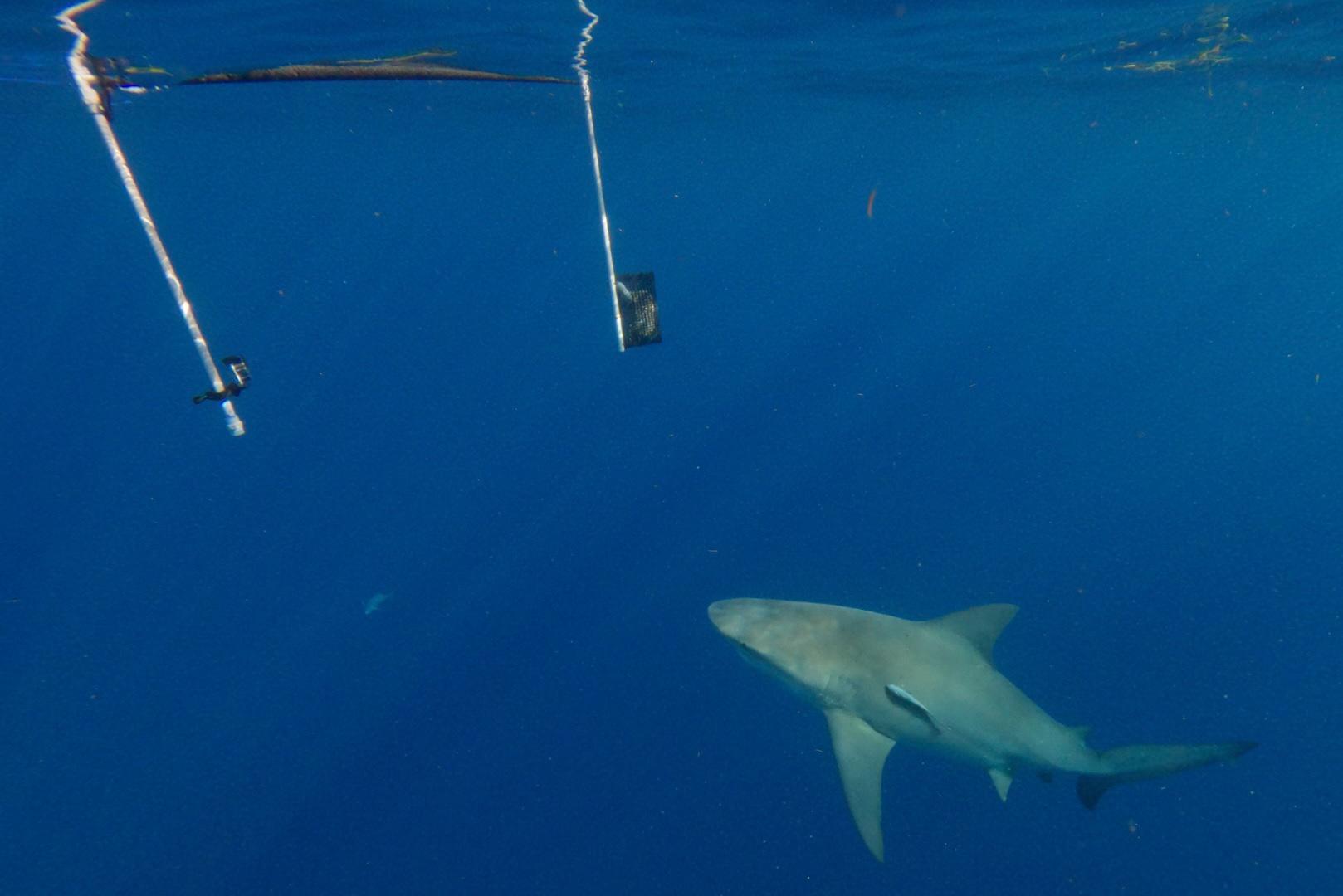
Laura deploying the BRUV. She also tested the same setup with an identical, non-magnetic control device to see if the sharks reacted differently.
Changing Seas
13 / 28
Share This Gallery
A shark approaching a BRUV with a Zeppelin near the bait bag. A camera films the animal's interaction from the opposite arm of the BRUV.
David Hay Jones, courtesy of Marcus Drymon
14 / 28
Share This Gallery
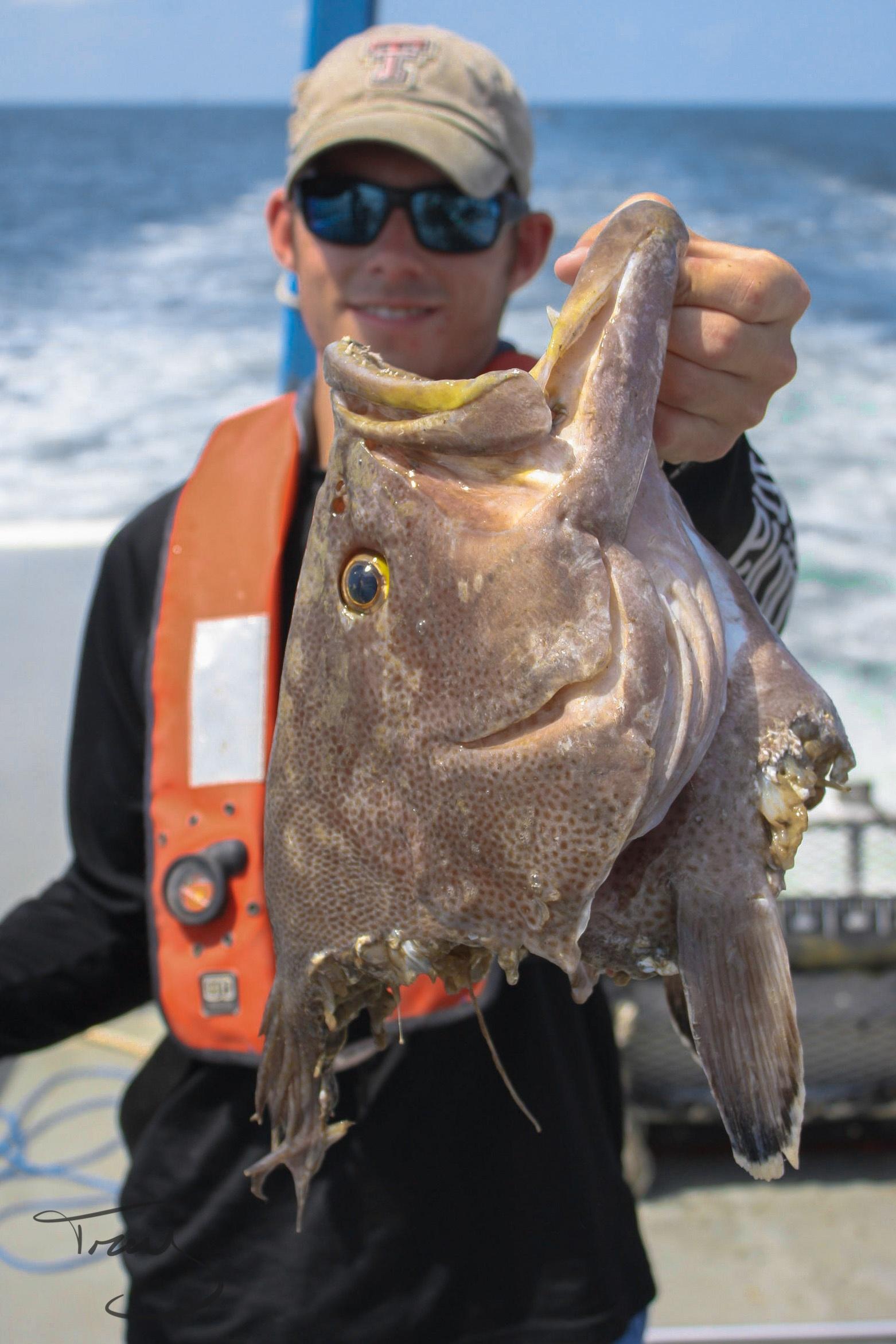
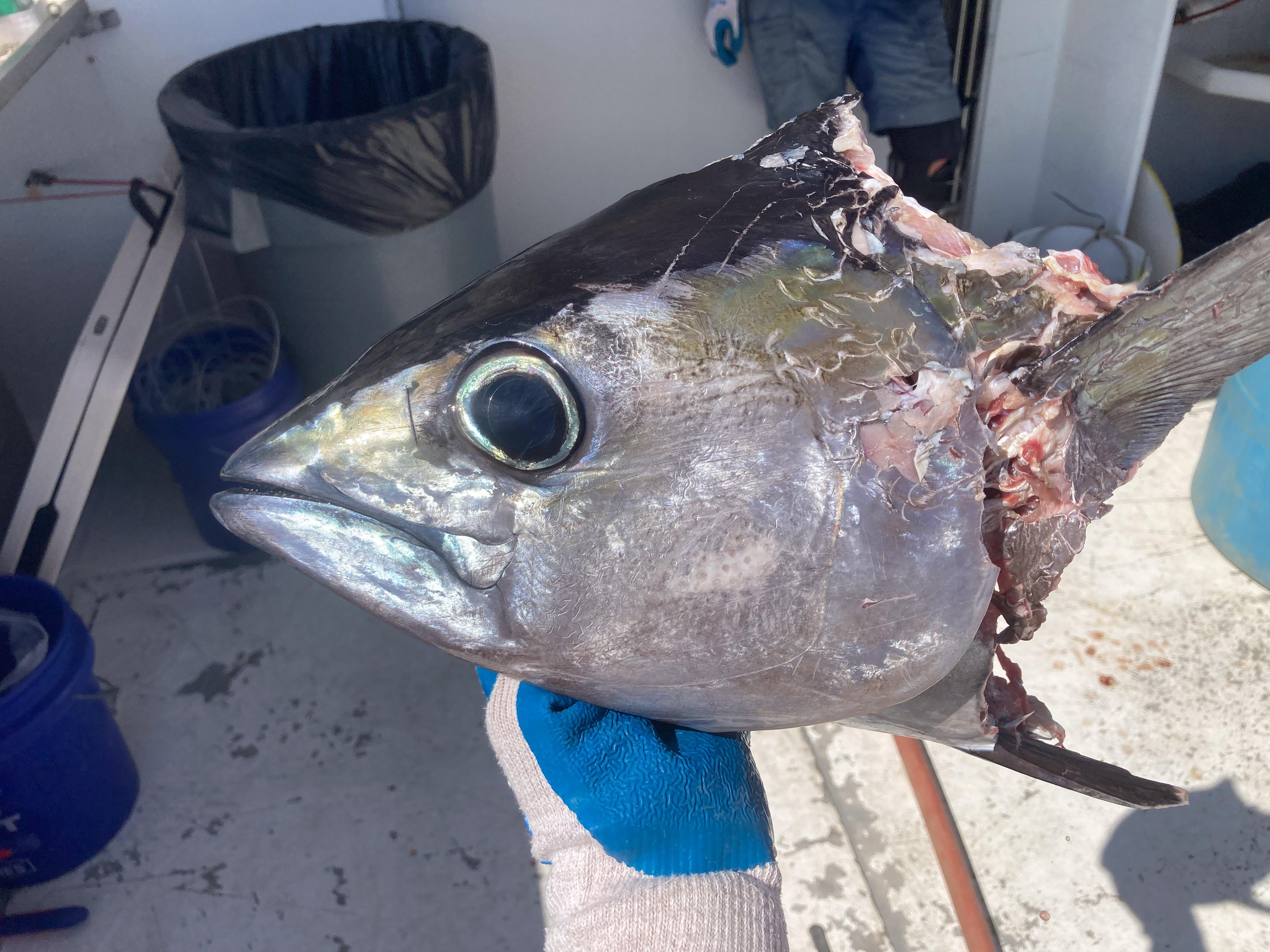
A shark with a depredated fish.
Changing Seas
15 / 28
Share This Gallery
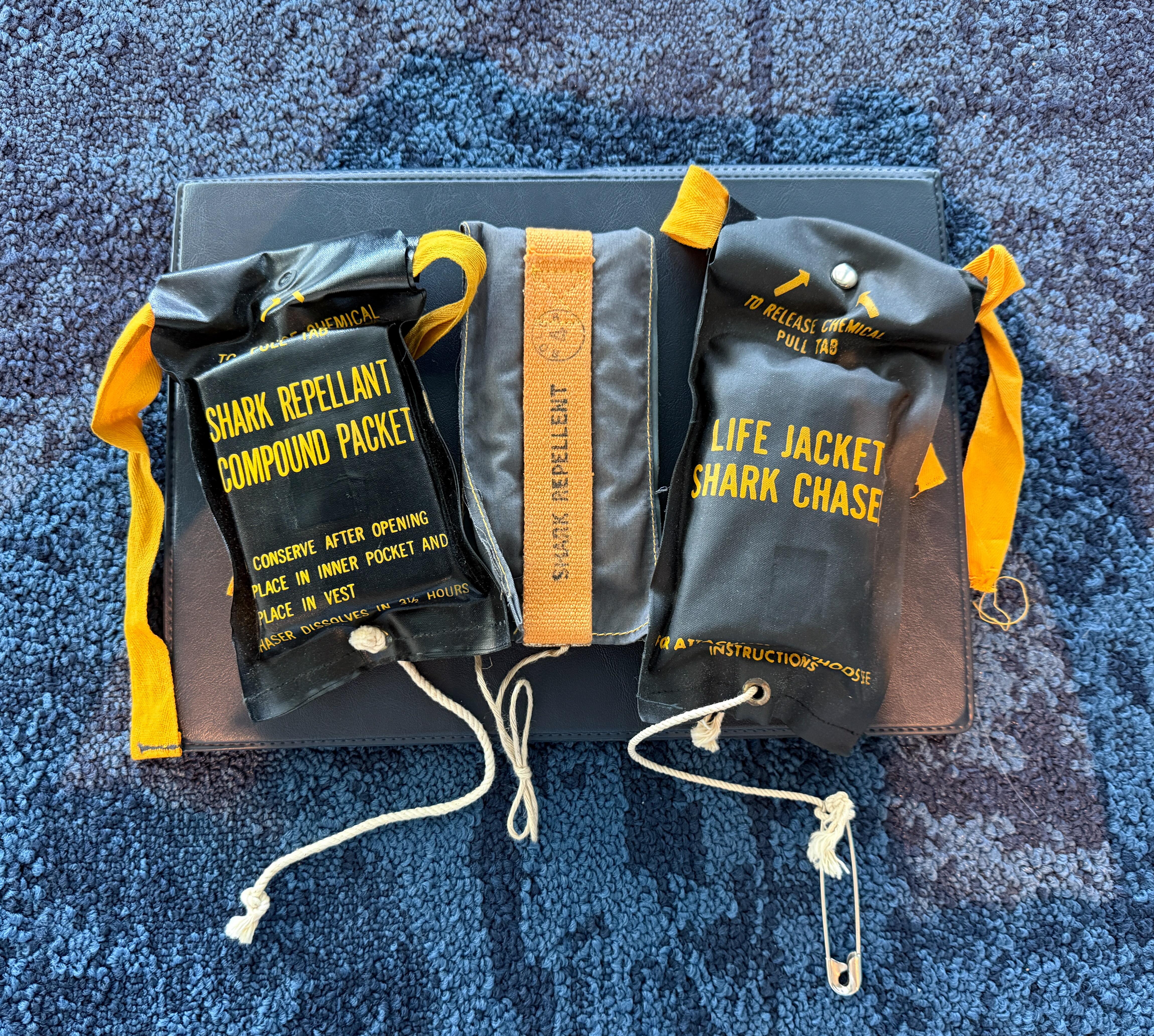
Shark repellents were first developed in the U.S. during World War II to protect sailors and pilots from shark attacks.
Mississippi State University, Marine Fisheries Ecology Program
16 / 28
Share This Gallery
Depredation isn’t a new problem. Ernest Hemingway wrote about it nearly a hundred years ago, before shark populations decreased from overfishing.
Changing Seas
17 / 28
Share This Gallery
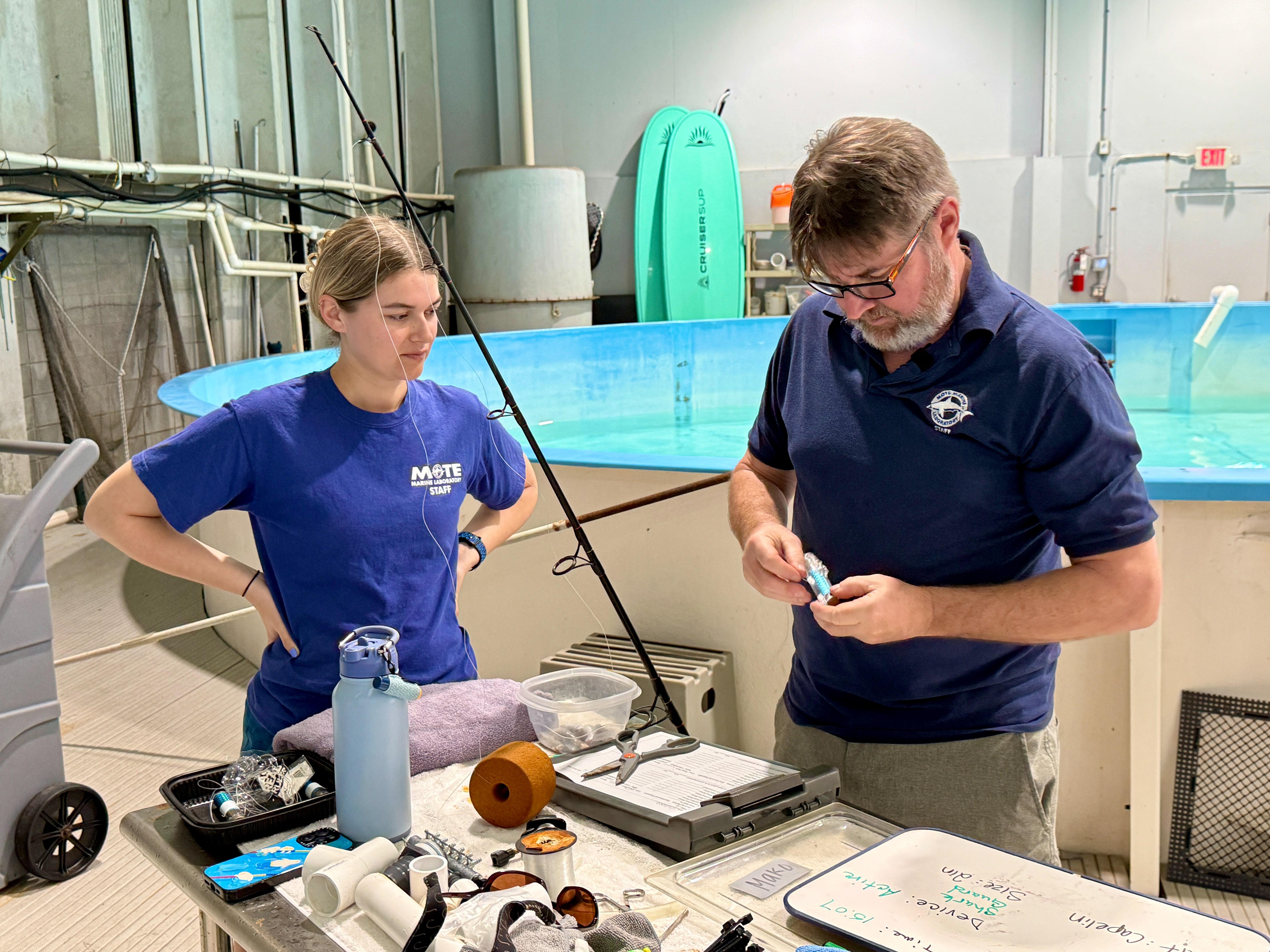
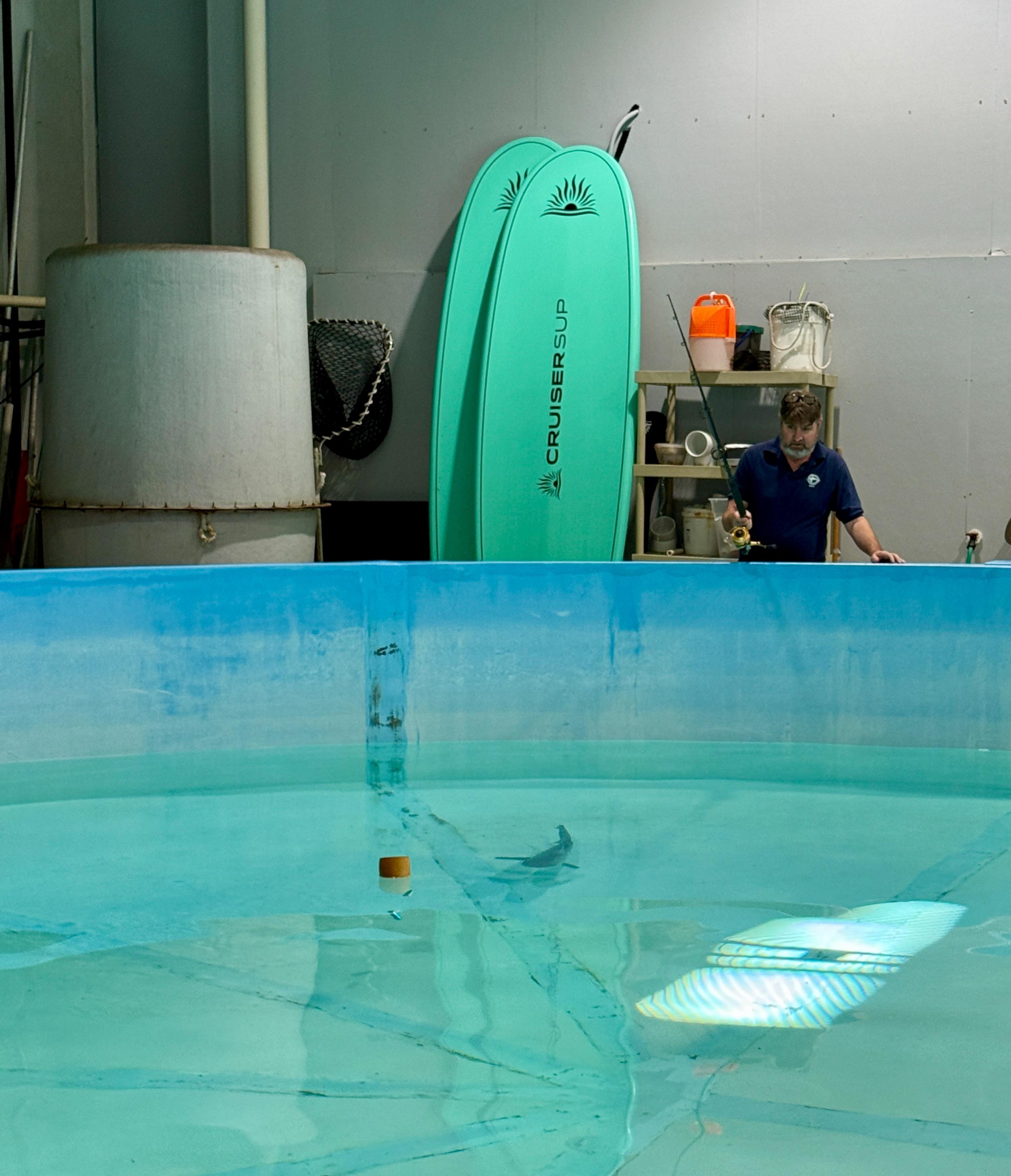
Shark researchers at Mote Marine Laboratory are testing an electrical pulse device called SharkGuard in their Marine Experimental Research Facility. Anglers can attach this deterrent to their rod and reel.
Changing Seas
18 / 28
Share This Gallery
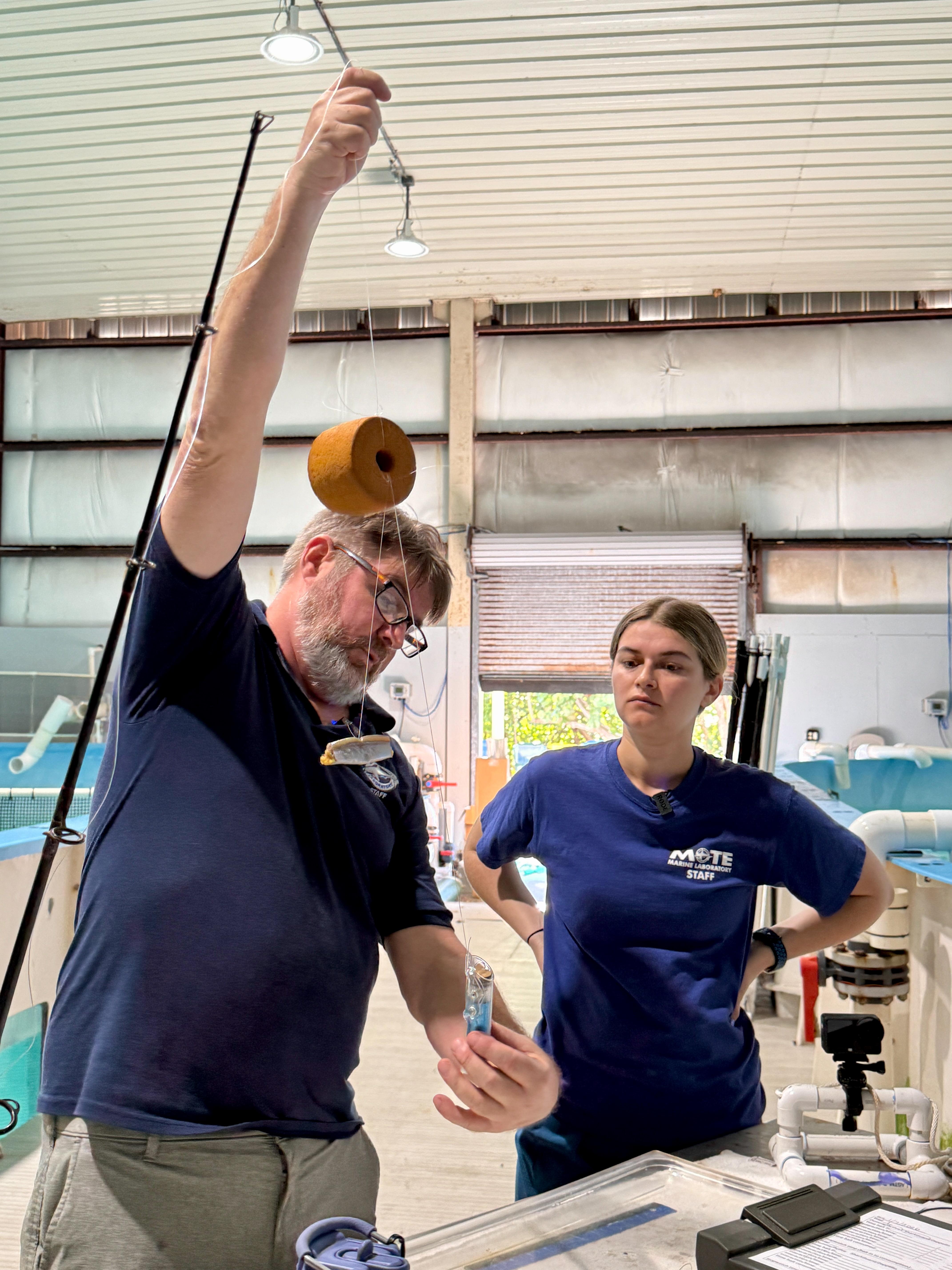
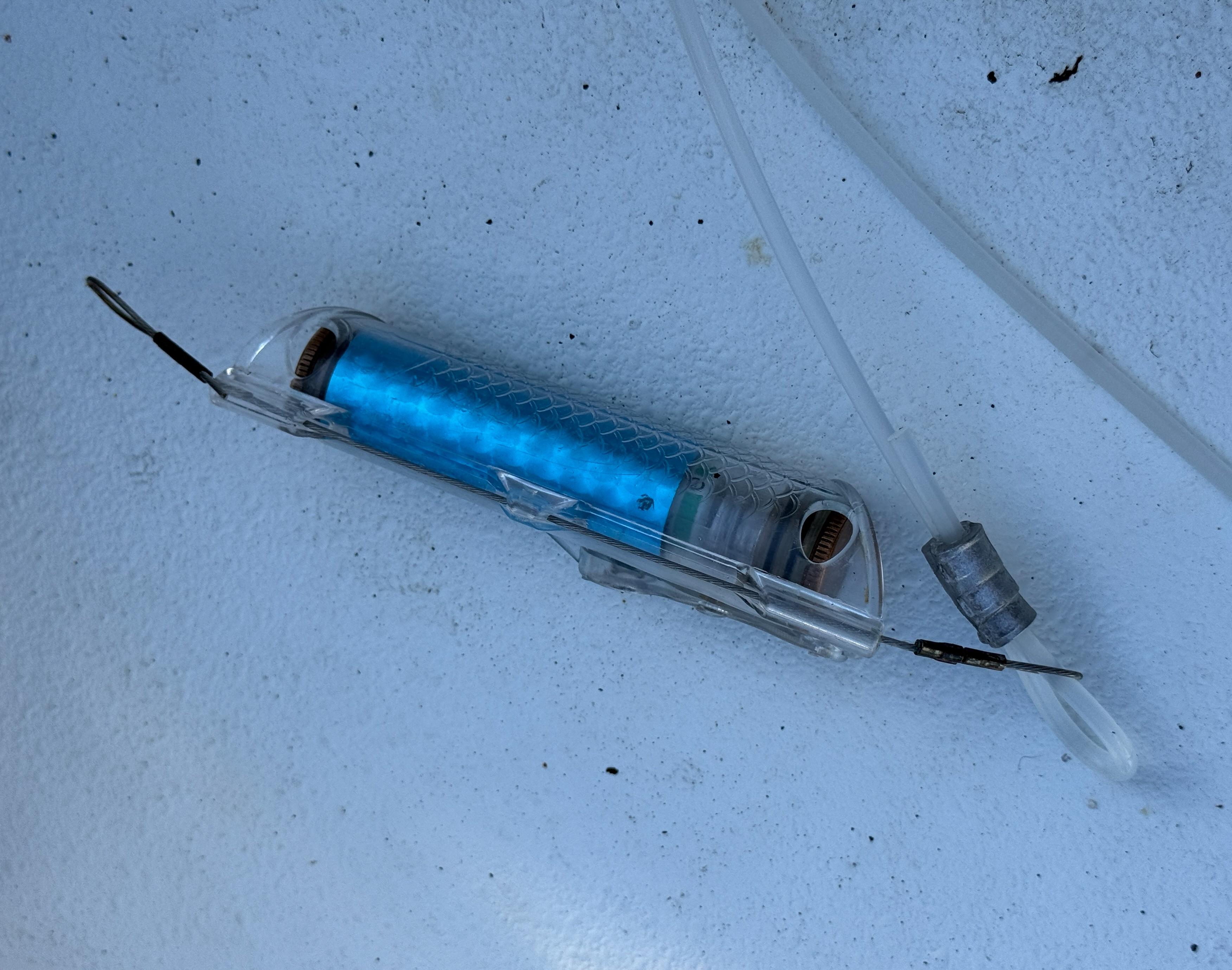
The SharkGuard sits approximately 25 centimeters away from the bait and will fire every second.
Changing Seas
19 / 28
Share This Gallery
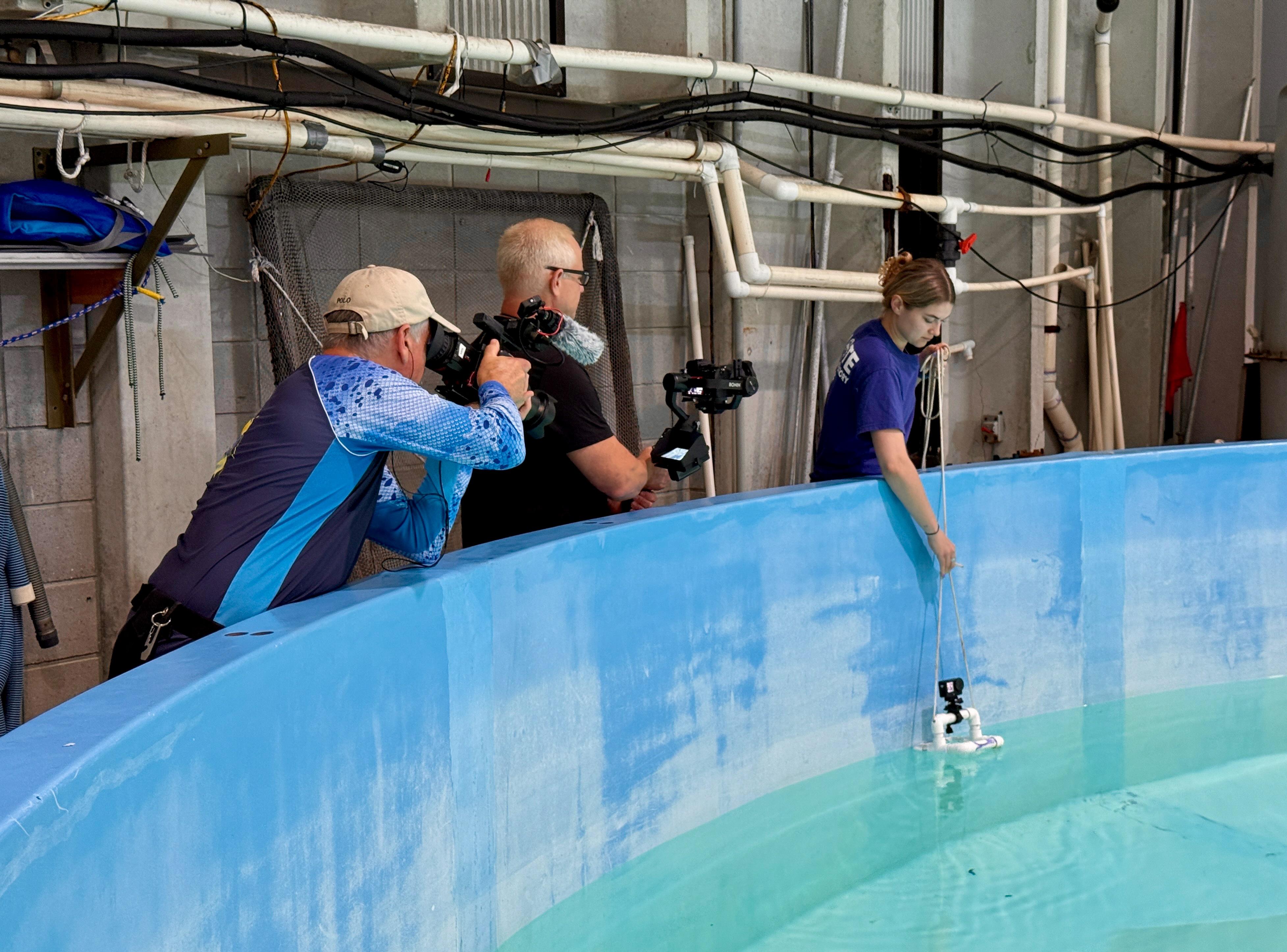
Researchers lower a camera in the water before testing the SharkGuard at Mote's Marine Experimental Research Facility. Videographer Felipe Marrou and Director of Photography Sean Hickey (middle) capture the action.
Changing Seas
20 / 28
Share This Gallery
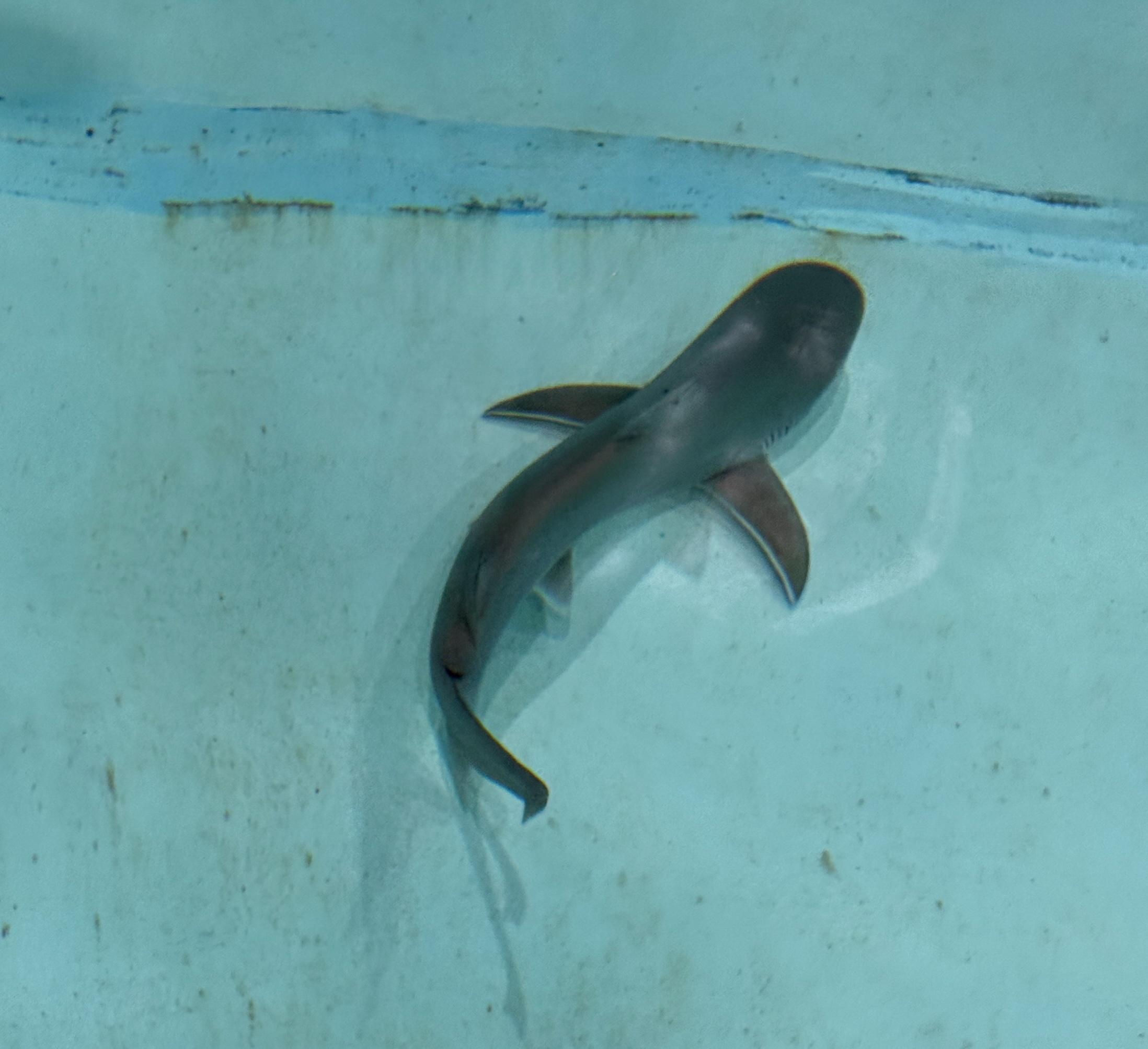
A curious sandbar shark approaches as Senior Biologist Jack Morris lowers the bait and SharkGuard into the research tank at Mote Marine Laboratory.
Changing Seas
21 / 28
Share This Gallery
A sandbar shark in the research tank at Mote Marine Laboratory's Marine Experimental Research Facility.
David Hay Jones, courtesy of Marcus Drymon
22 / 28
Share This Gallery
Researchers say there are several factors that exacerbate the perception that certain shark species are out of control. There are more anglers on the water than ever, going after declining target species. The state of Florida issued more than two-and-a-half million saltwater fishing licenses in fiscal year 2025 - an increase of more than 231-thousand licenses over a ten-year period.
David Hay Jones, courtesy of Marcus Drymon
23 / 28
Share This Gallery
Social media further amplifies the depredation challenge.
Changing Seas
24 / 28
Share This Gallery
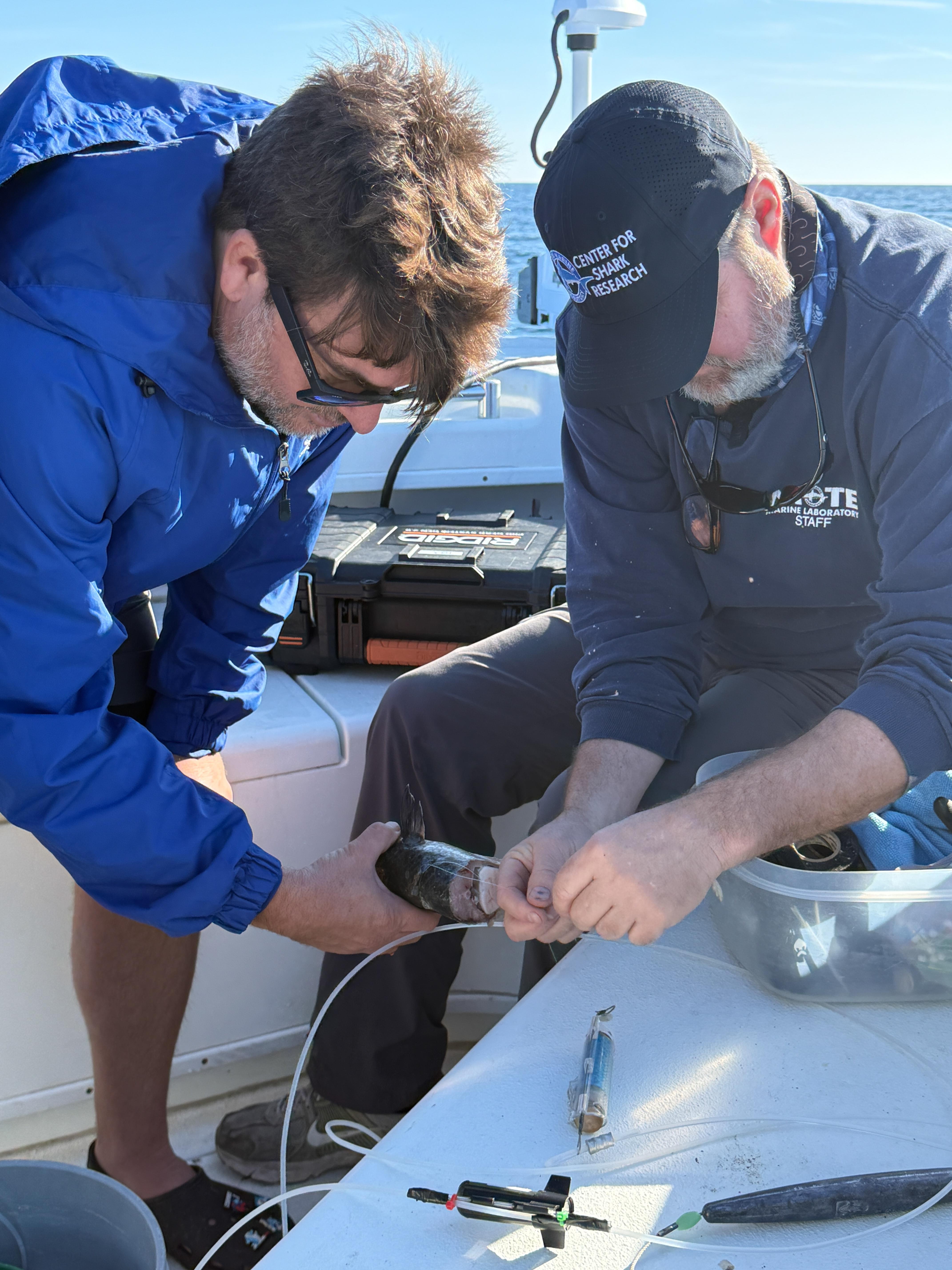
Demian Chapman, Ph.D. and Jack Morris prepare to test the SharkGuard while fishing offshore.
Changing Seas
25 / 28
Share This Gallery
The SharkGuard is battery operated and emits short-range electric pulses that overstimulate a shark's sensitive electroreceptors.
Changing Seas
26 / 28
Share This Gallery
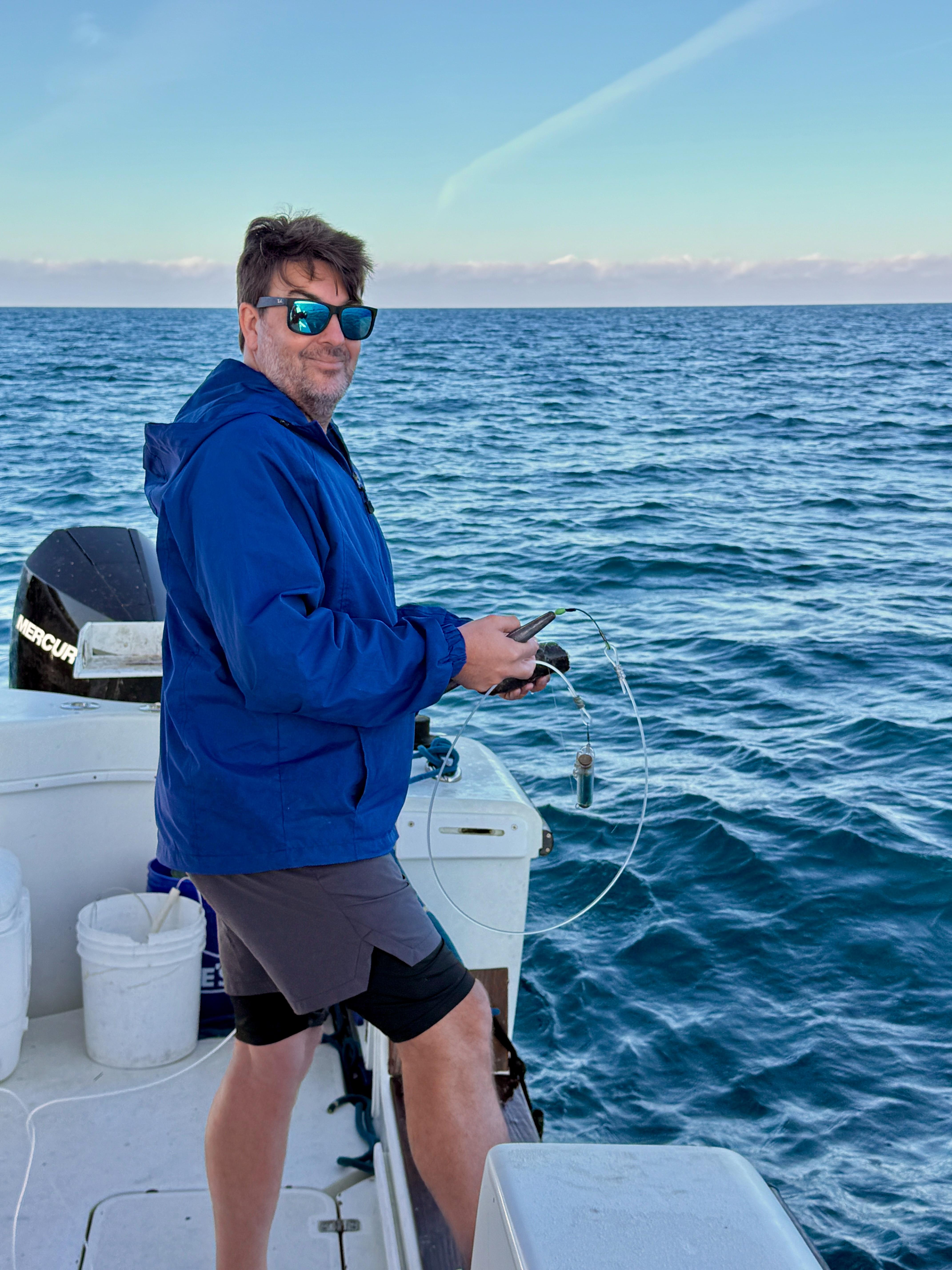
Demian Chapman, Ph.D. prepares to lower a hand line with SharkGuard attached.
Changing Seas
27 / 28
Share This Gallery
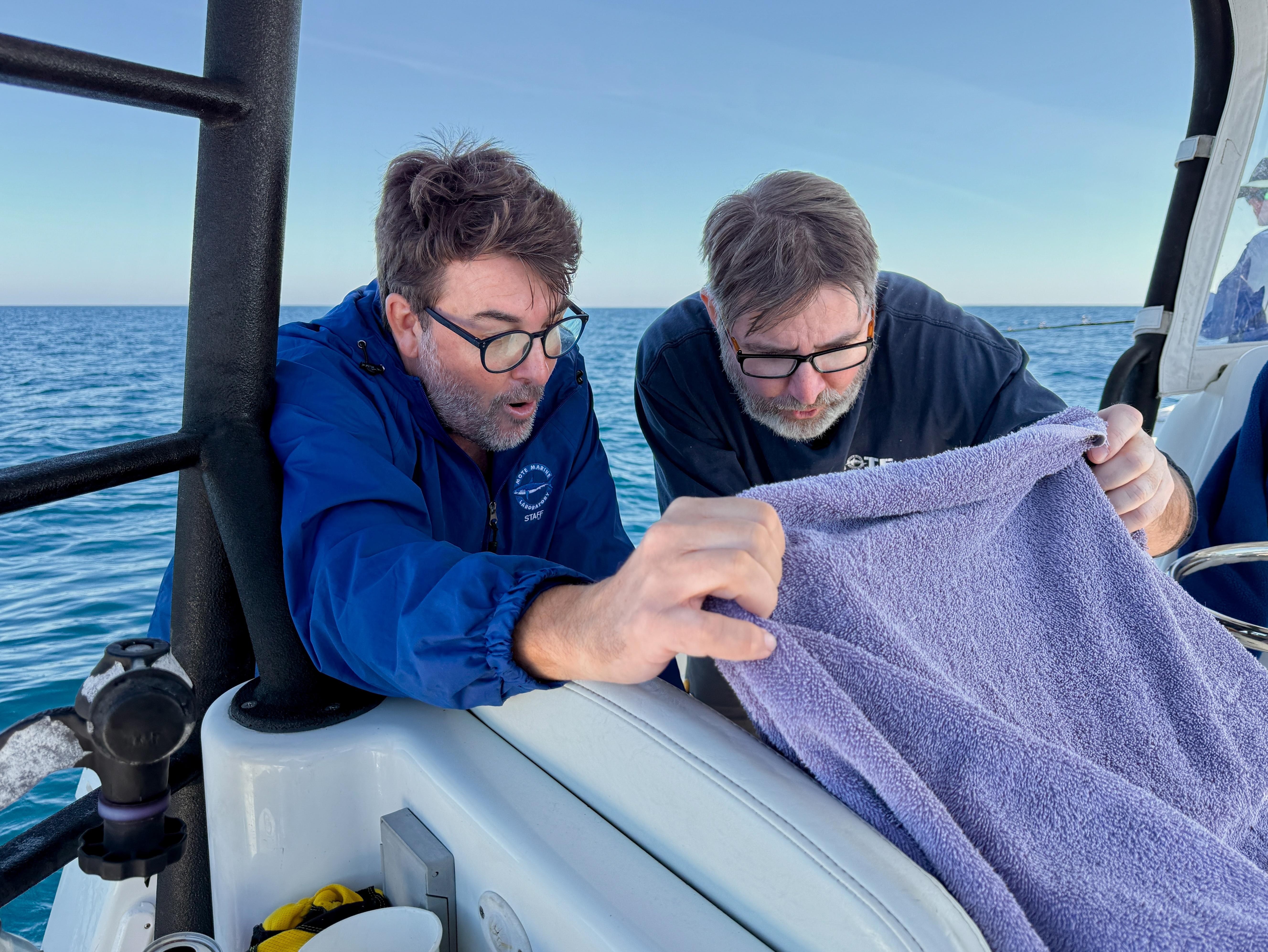
Demian Chapman, Ph.D. and Jack Morris review camera footage from the line. They are excited to see a sandbar shark repelled by the SharkGuard.
Mississippi State University, Marine Fisheries Ecology Program
28 / 28
Share This Gallery
Researchers say they are encouraged to see shark repellents showing promise at addressing depredation. But they also acknowledge that this complex issue will likely take multiple approaches to keep anglers happy and sharks thriving.
Image Credits
Changing Seas would like to thank the following individuals and institutions who kindly allowed their footage, images and other media to be used in this production:



.jpg)
.jpg)
.jpg)
.jpg)