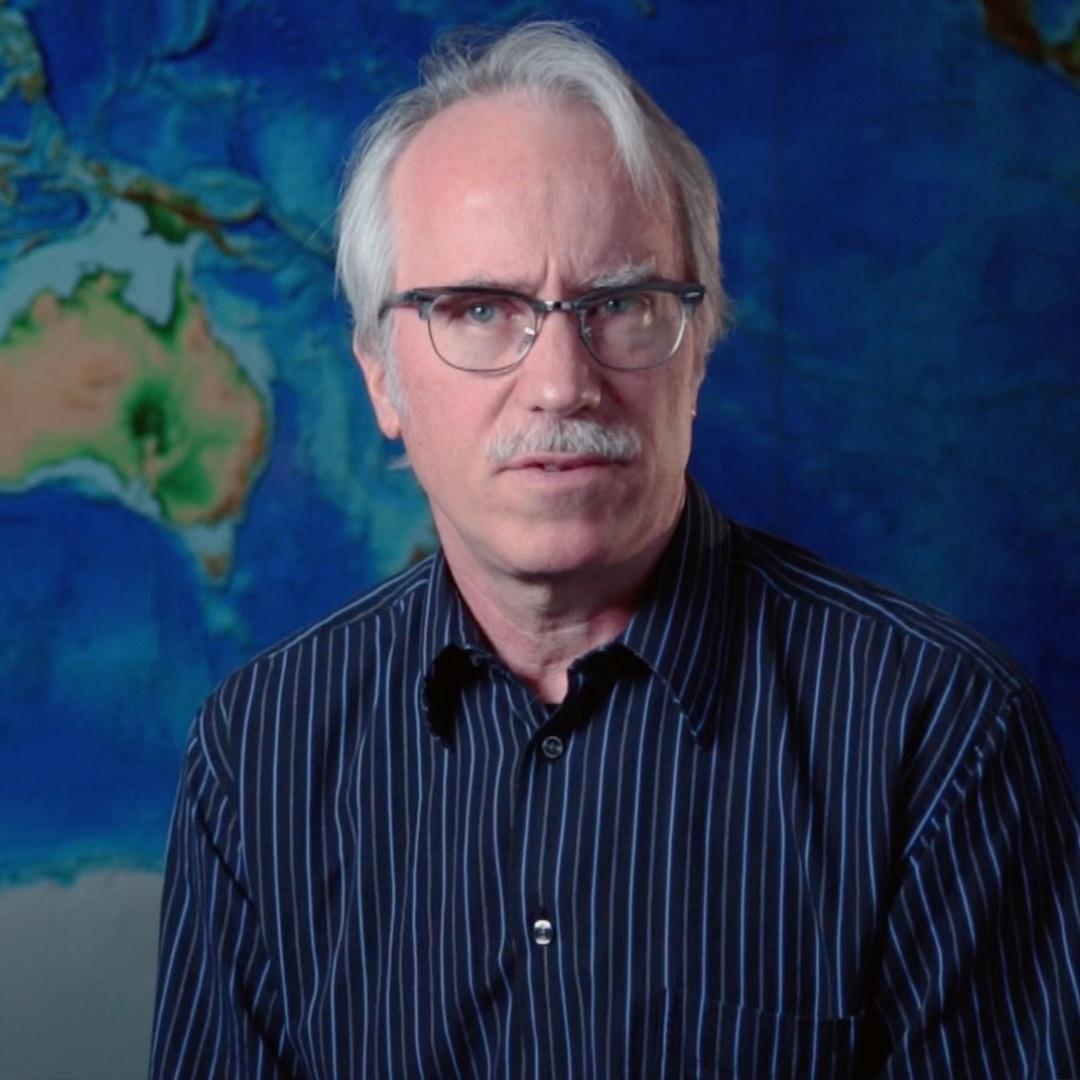
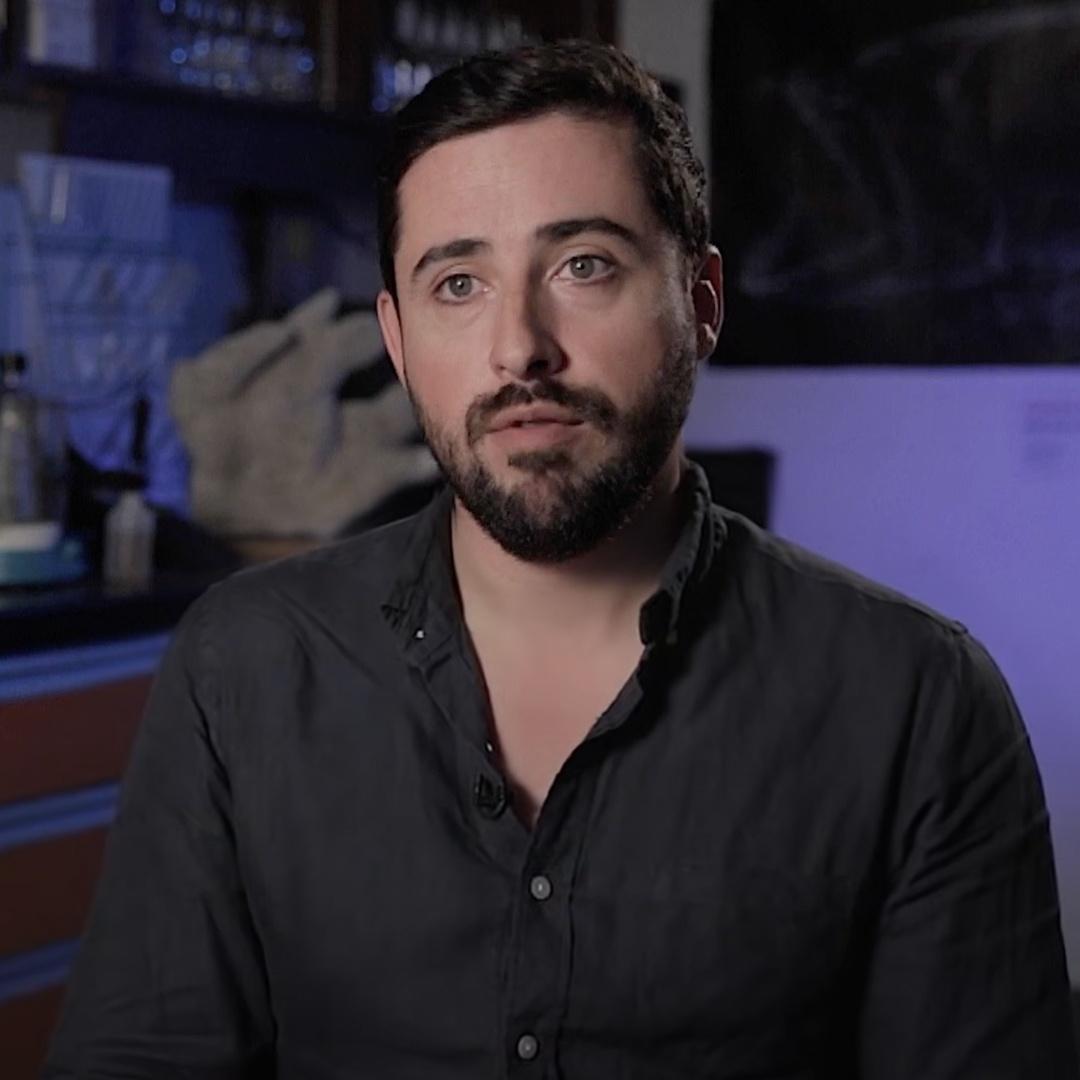
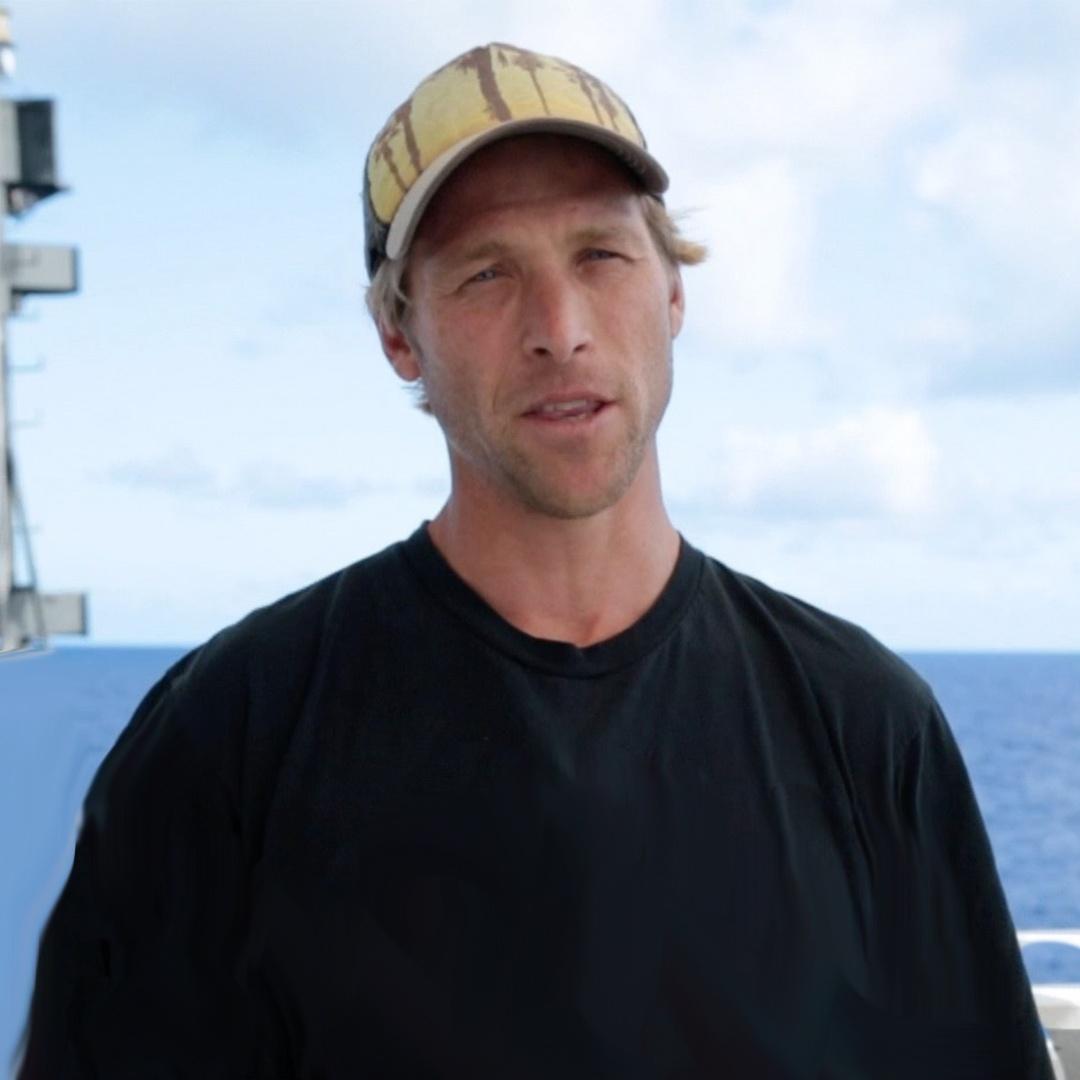
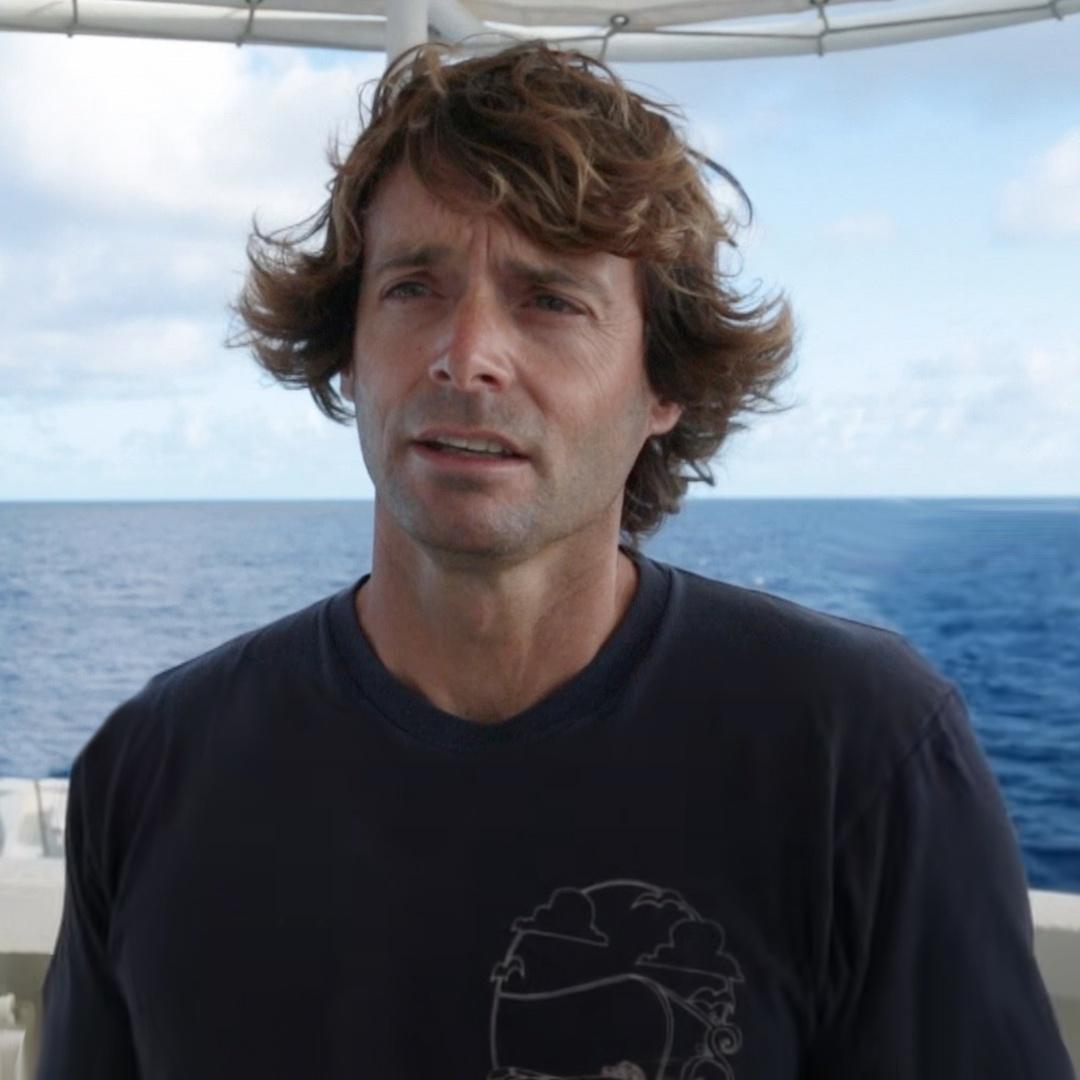
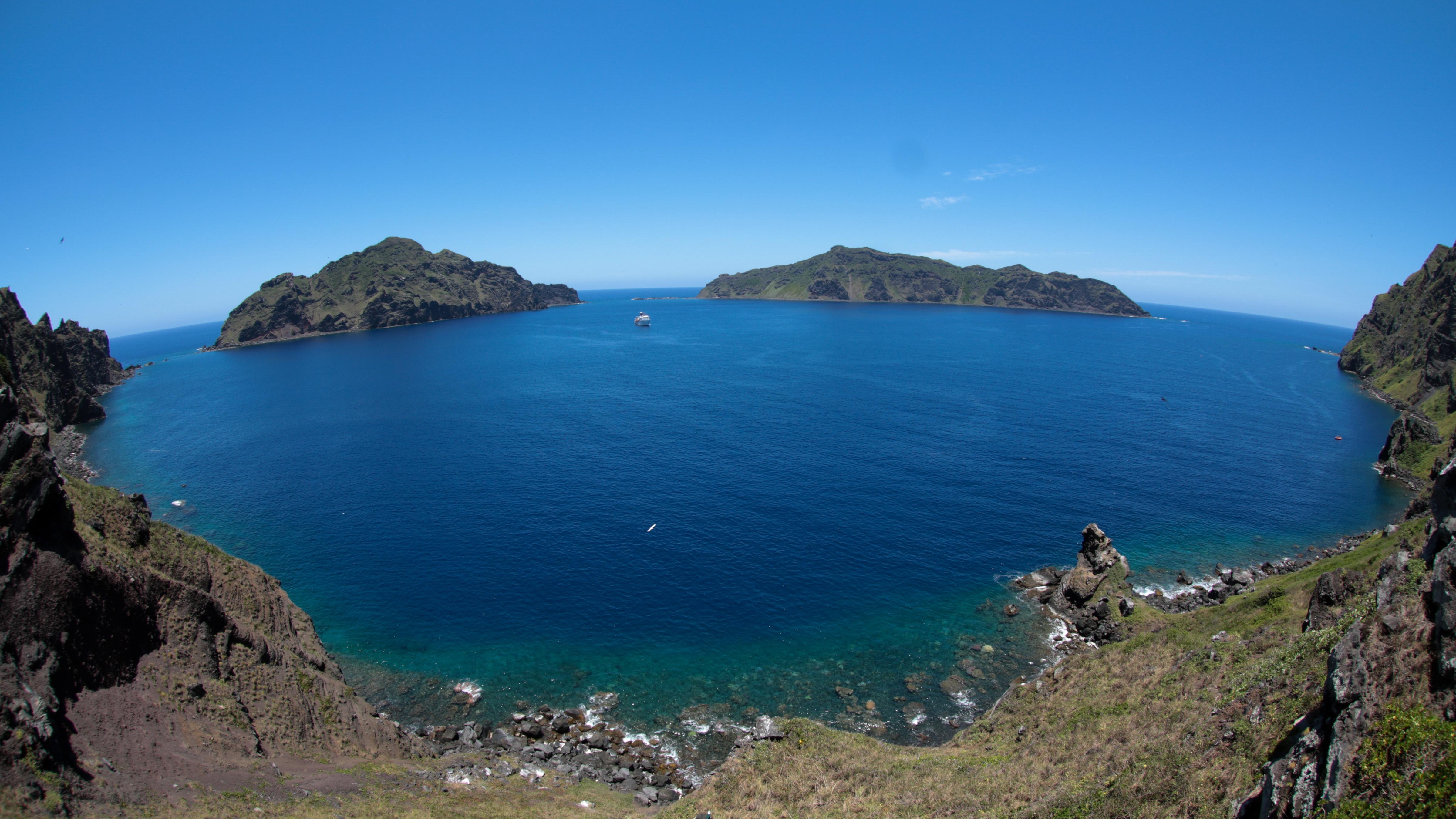
In the remote Pacific, the islands of Maug rise out of the sea. Formed by an ancient volcano, shallow hydrothermal vents are found close to coral reefs inside the submerged caldera. These vents emit levels of CO2 that can be expected in the world’s oceans by the end of the century, making these waters a natural laboratory for scientists studying the impacts of ocean acidification on coral reefs.
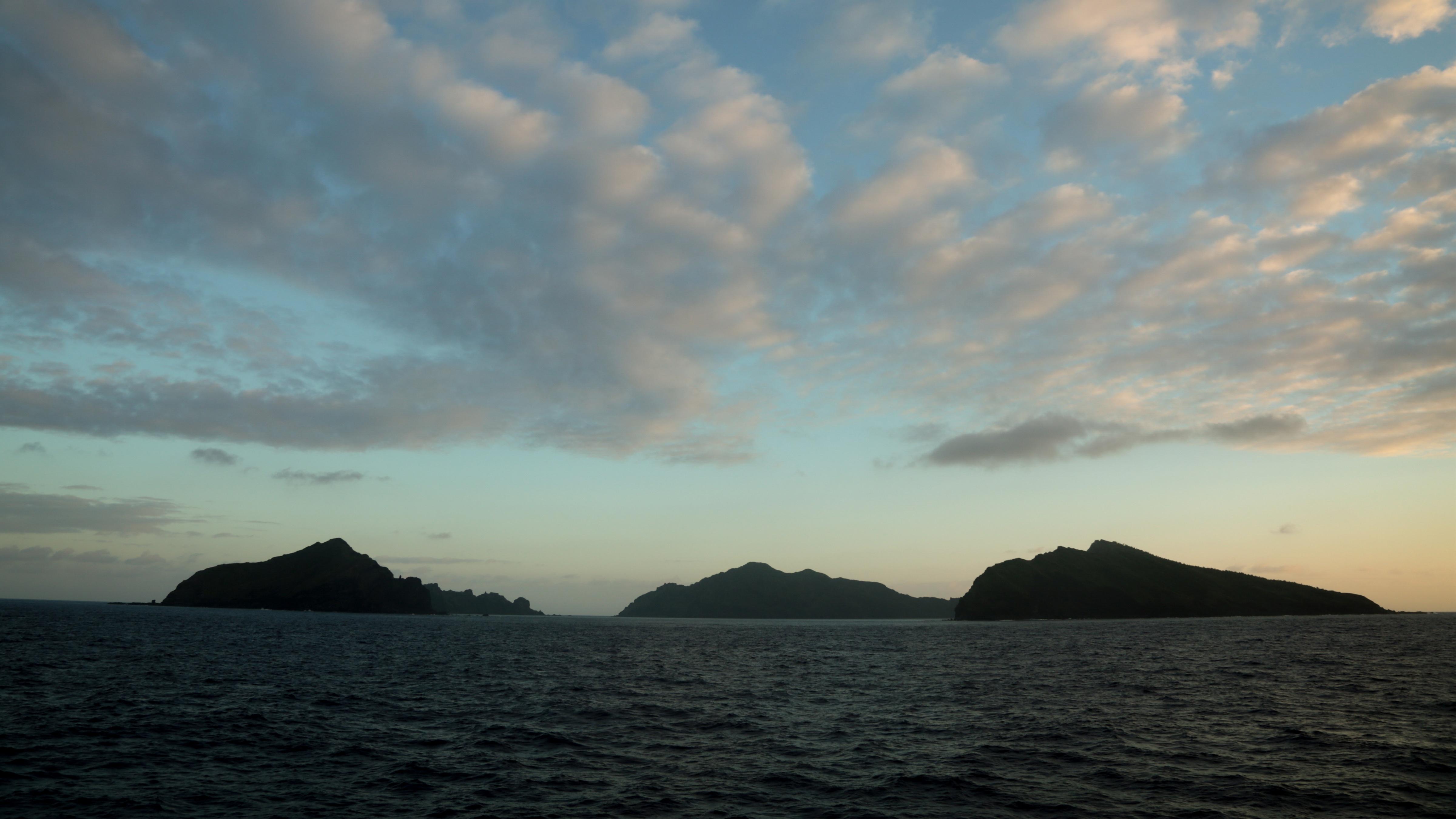
The three islands of Maug, a remote caldera at the northern end of the Northern Marianas archipelago in the Pacific.
Stephani Gordon/Open Boat Films
2 / 28
Share This Gallery
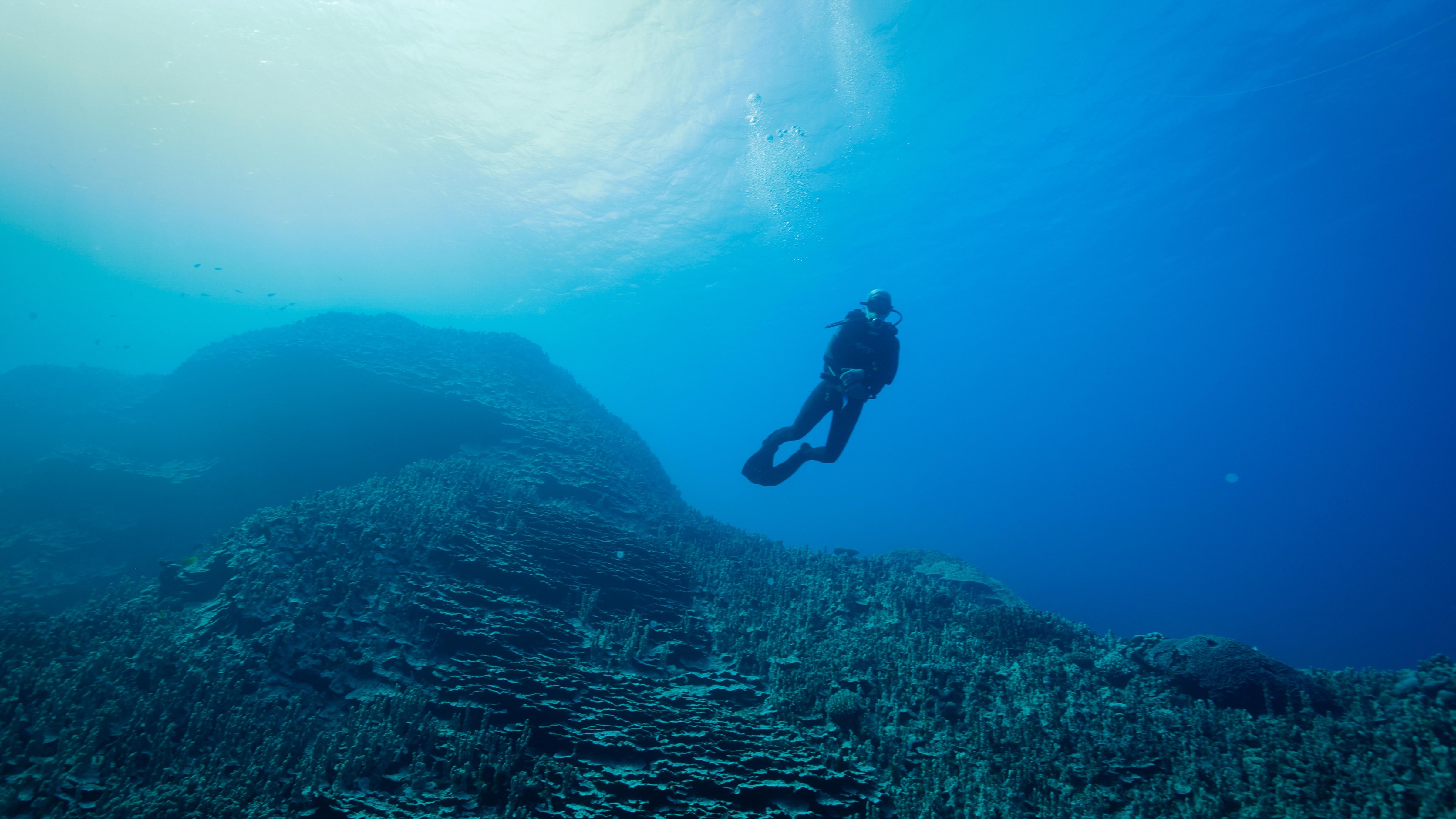
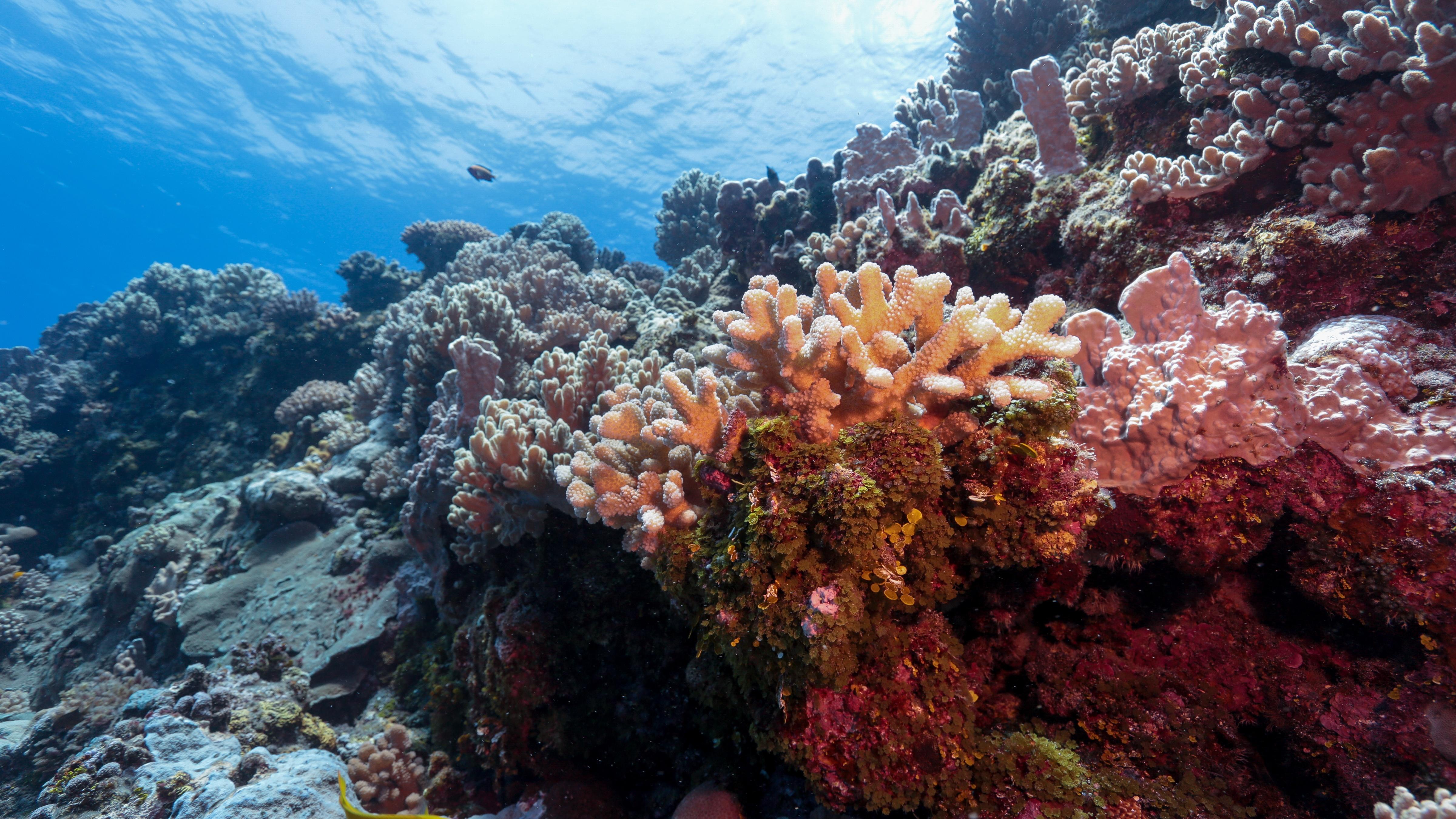
Extensive coral colonies carpet the sea floor on much of Maug’s diverse habitats (NOAA diver Jeanette Clark.)
Stephani Gordon/Open Boat Films
3 / 28
Share This Gallery
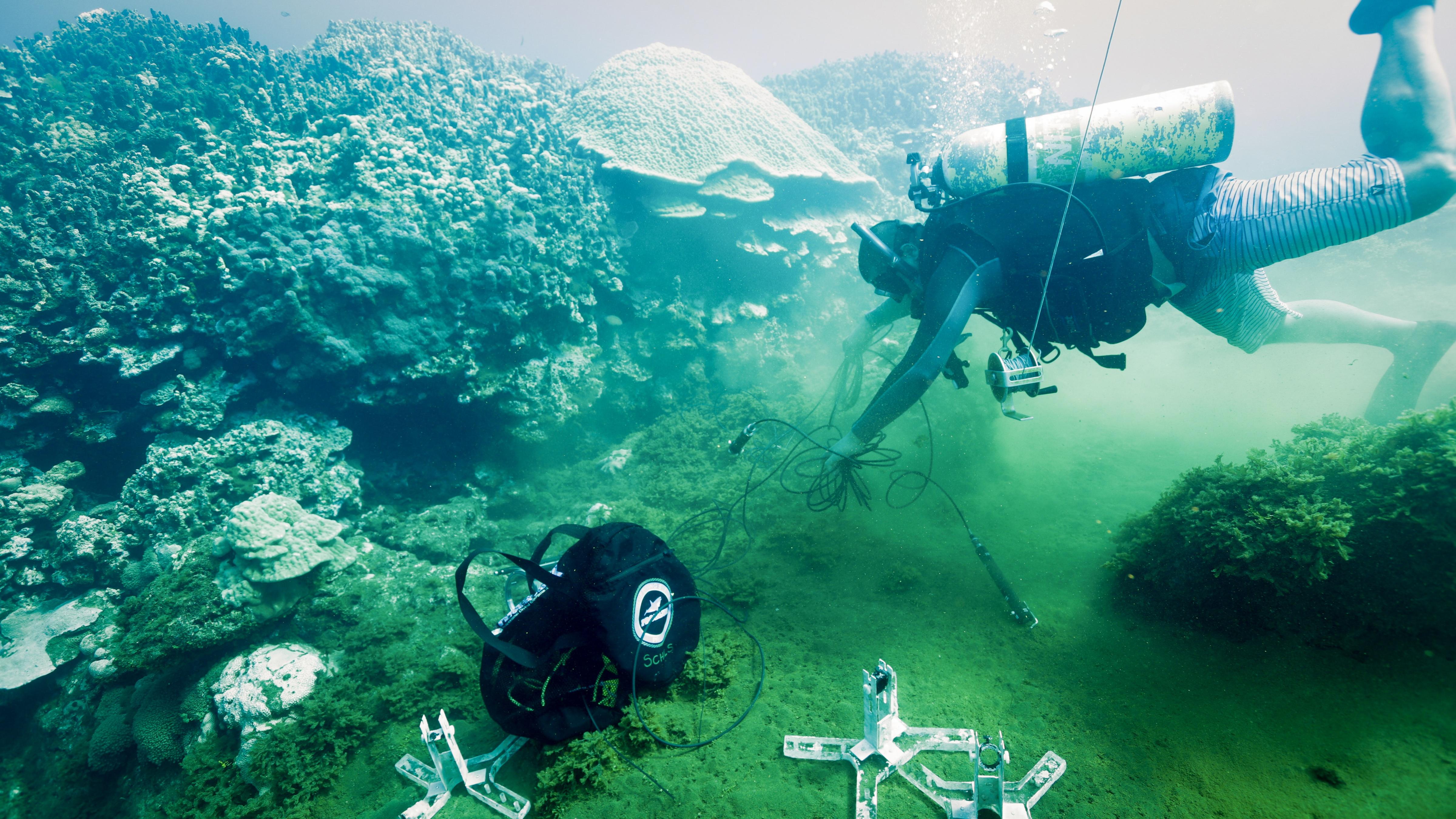
Diver John Iguel from local research partner CNMI Bureau of Environmental & Coastal Quality sets up a device to measure coral fluorometry activity near a hydrothermal vent.
Stephani Gordon/Open Boat Films
4 / 28
Share This Gallery
One of the most exciting and unusual things about Maug is its hydrothermal vent system in very shallow water next to healthy coral reefs.
Stephani Gordon/Open Boat Films
5 / 28
Share This Gallery
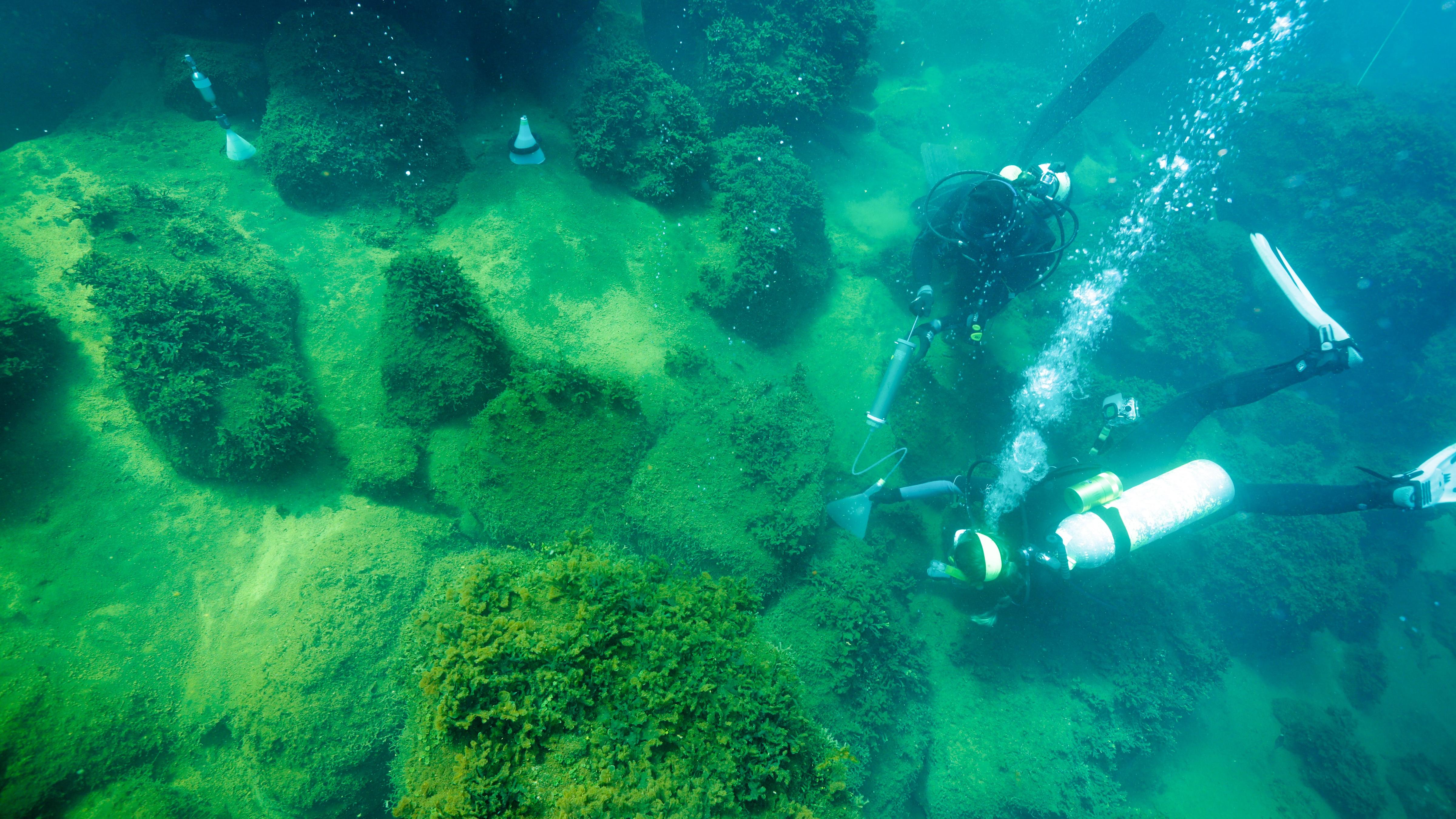
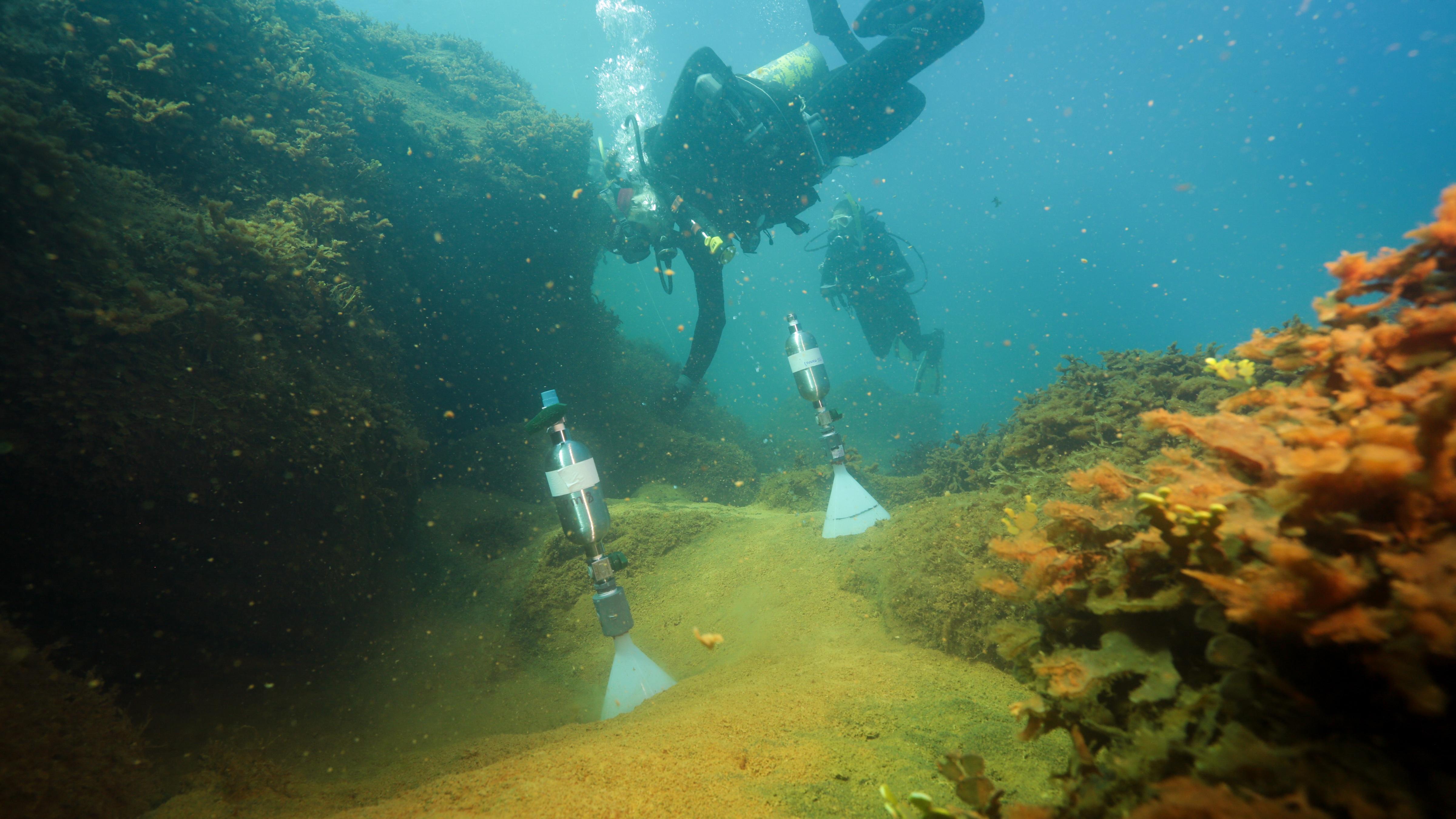
Research divers collect vent bubbles for gas analysis (NOAA divers: Noah Pomeroy and Kerry Reardon.)
Stephani Gordon/Open Boat Films
6 / 28
Share This Gallery
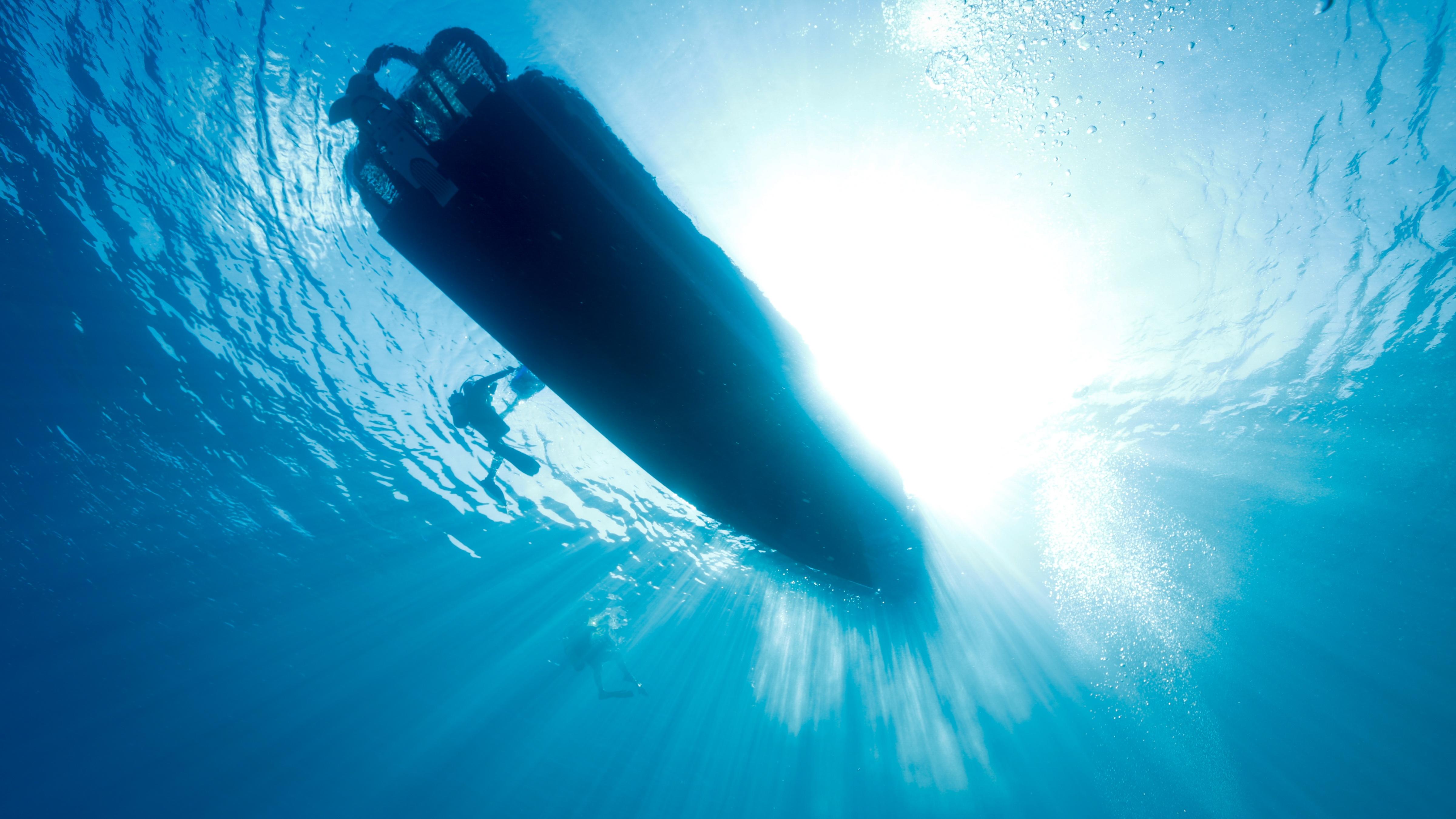
A research diver enters the clear waters of Maug from a RHIB (rigid hull inflatable boat) launched off the larger NOAA ship.
Stephani Gordon/Open Boat Films
7 / 28
Share This Gallery
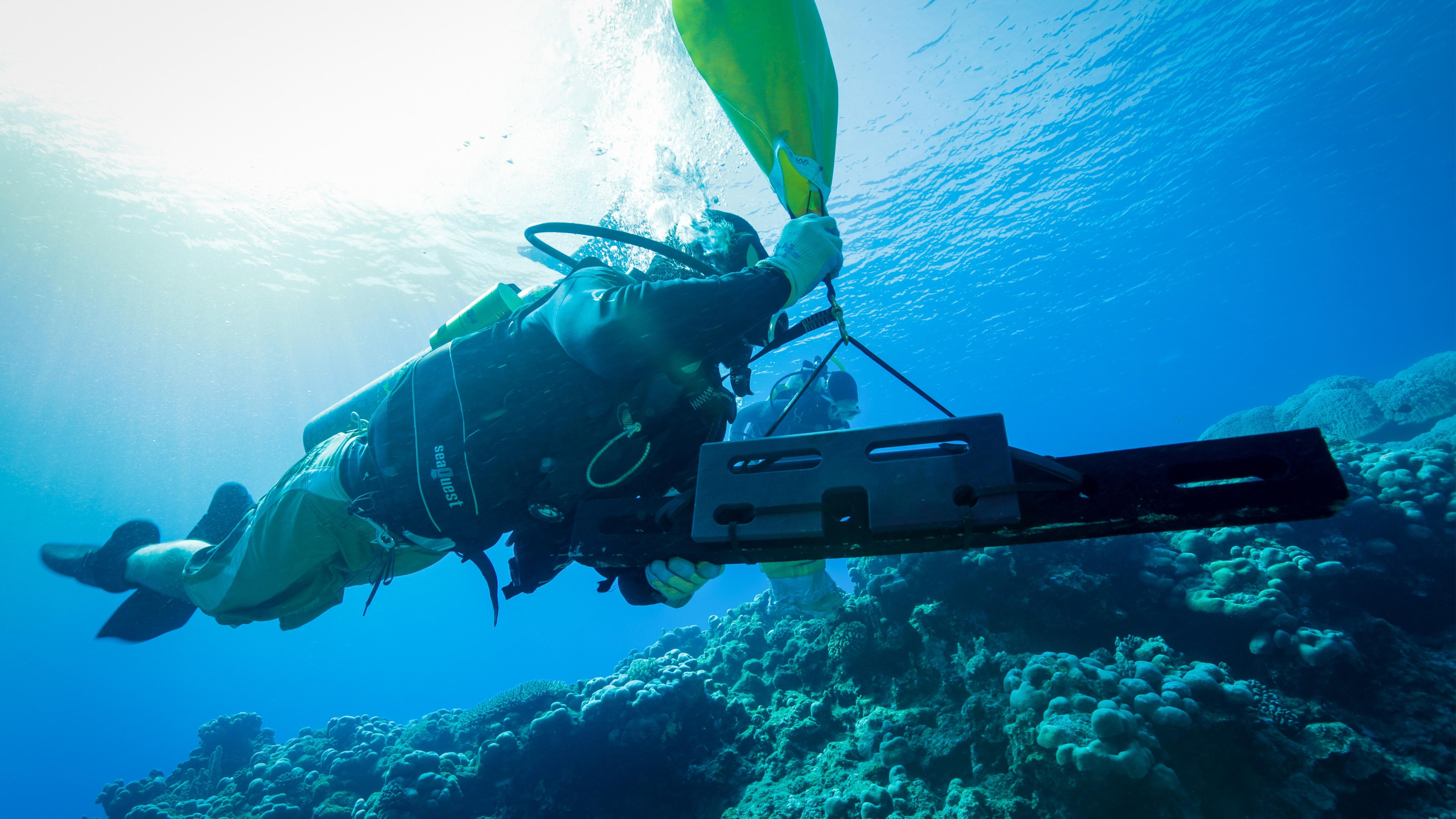
Expedition Chief Scientist and Research Diver Chip Young swims with an oceanographic instrument suspended by a lift bag.
Stephani Gordon/Open Boat Films
8 / 28
Share This Gallery
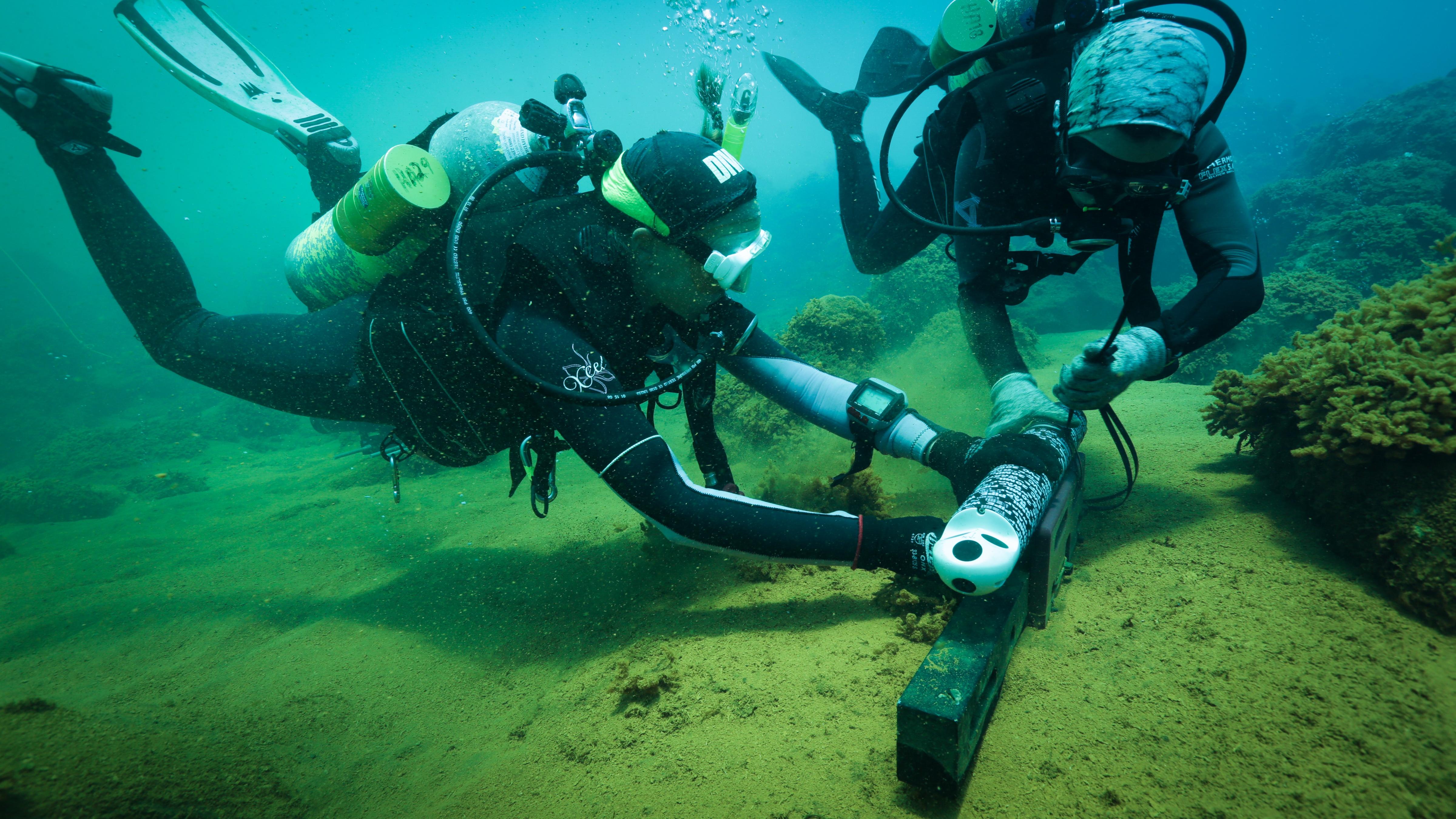
Two divers install an oceanographic instrument near the vent site to measure temperature, salinity, and other parameters (NOAA divers Kerry Reardon and Jeanette Clark.)
Stephani Gordon/Open Boat Films
9 / 28
Share This Gallery
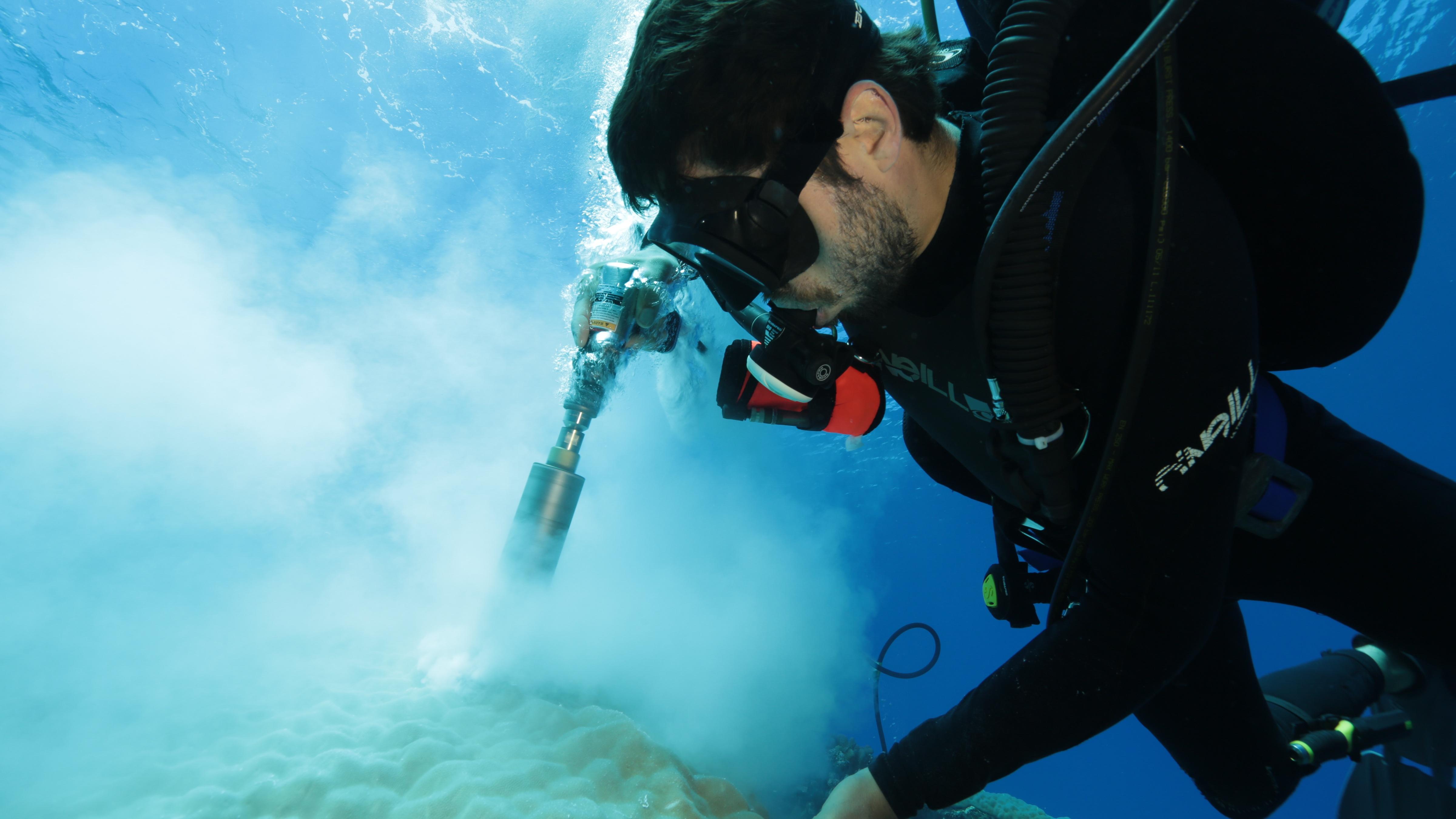
Researcher Ian Enochs operates a pneumatic (air-powered) underwater drill to extract a core from a large coral colony in the clearer waters of the area outside the vent site.
Stephani Gordon/Open Boat Films
10 / 28
Share This Gallery
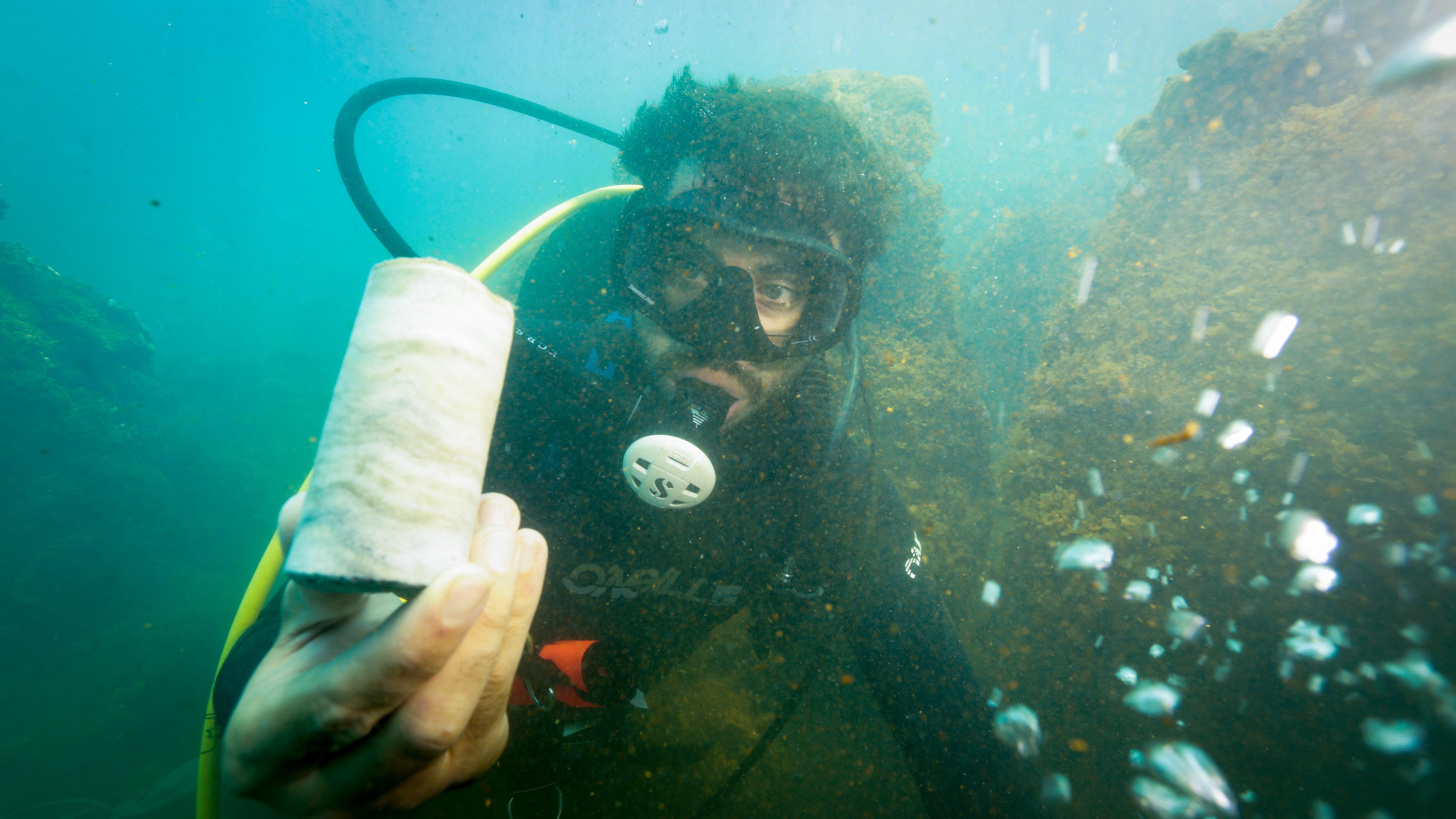
A coral core extracted from a large colony at the vent site at Maug, held by researcher Ian Enochs.
Stephani Gordon/Open Boat Films
11 / 28
Share This Gallery
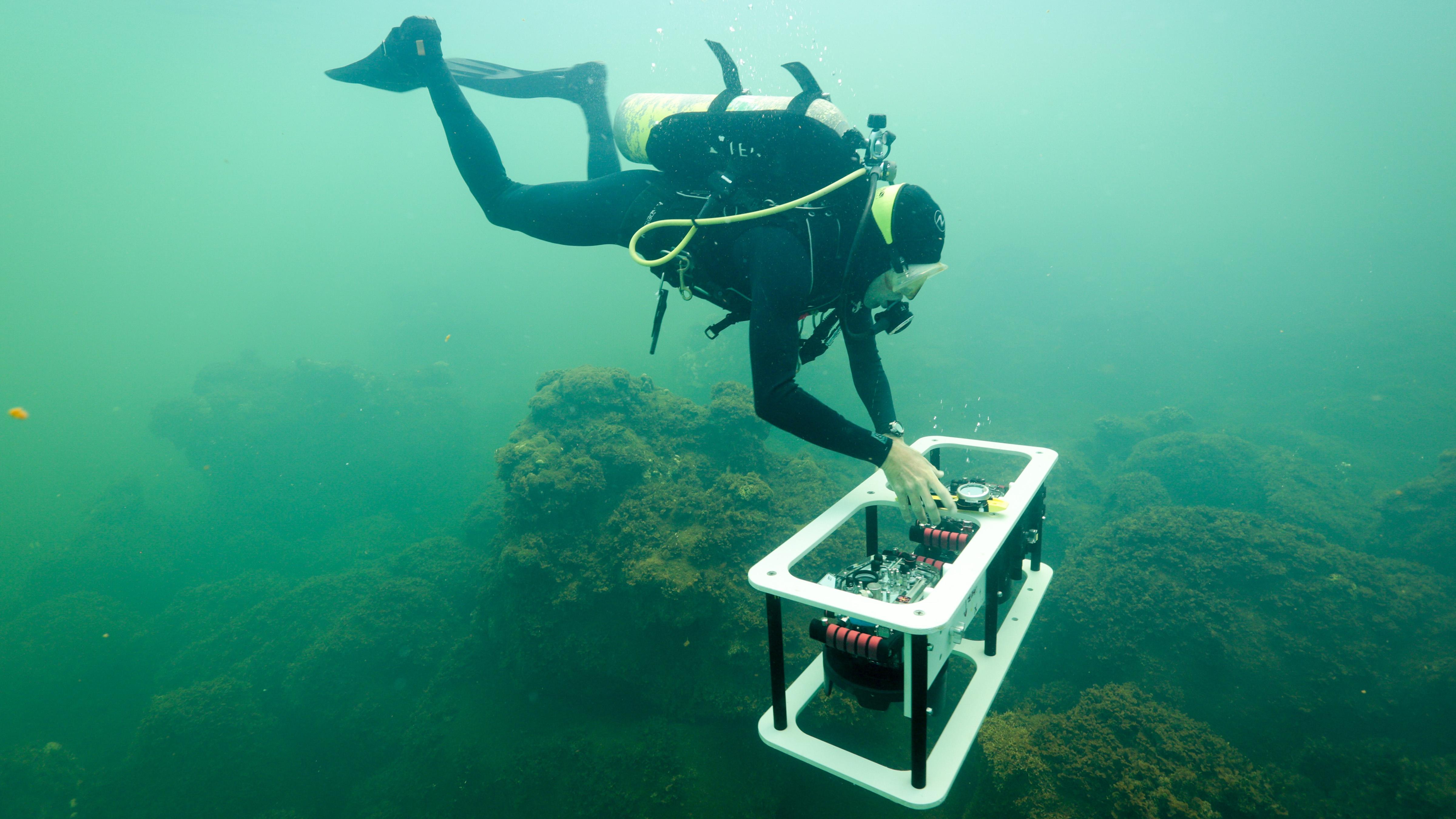
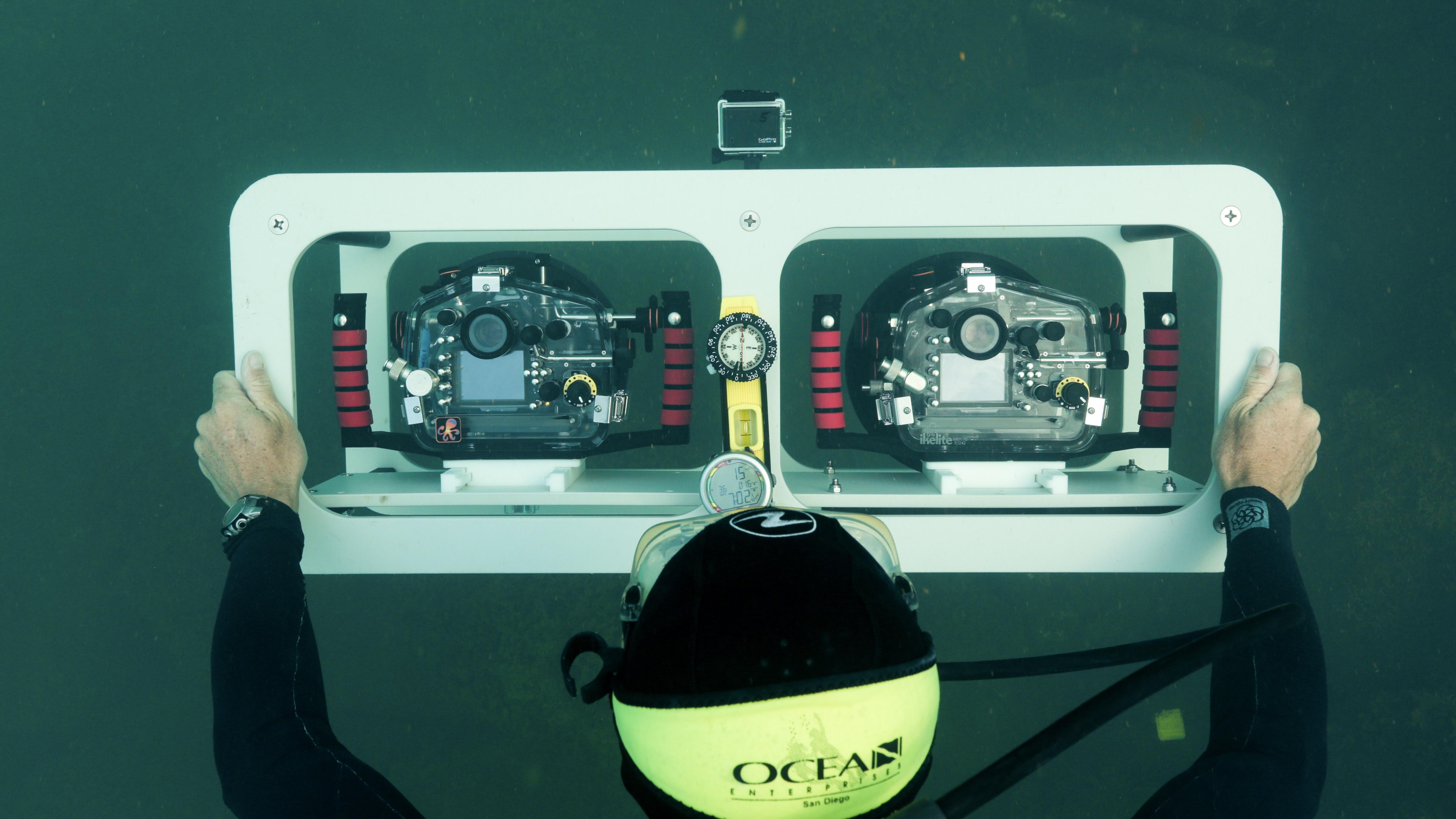
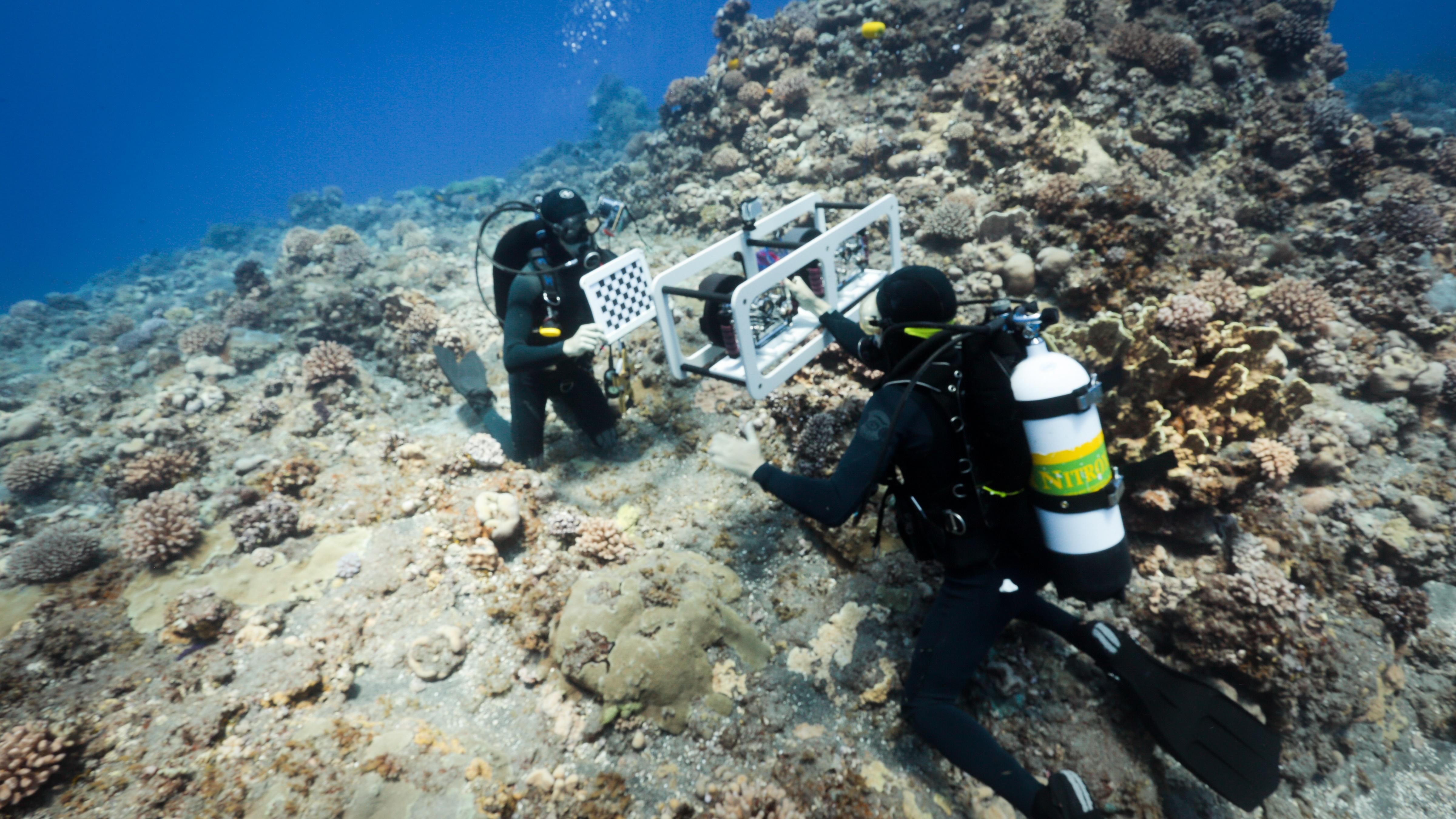
To accomplish the task of creating a high-resolution mosaic image map of the vent, a diver swims over the area with a dual-camera array (diver Clint Edwards.)
Stephani Gordon/Open Boat Films
12 / 28
Share This Gallery
Birdseye view of the dual-camera array used to make high-resolution, fine scale mosaics of the reef and vent habitats (diver Clint Edwards, Scripps Institution of Oceanography.)
Stephani Gordon/Open Boat Films
13 / 28
Share This Gallery
Research divers collect vent bubbles for gas analysis (NOAA divers: Noah Pomeroy and Kerry Reardon.)
Stephani Gordon/Open Boat Films
14 / 28
Share This Gallery
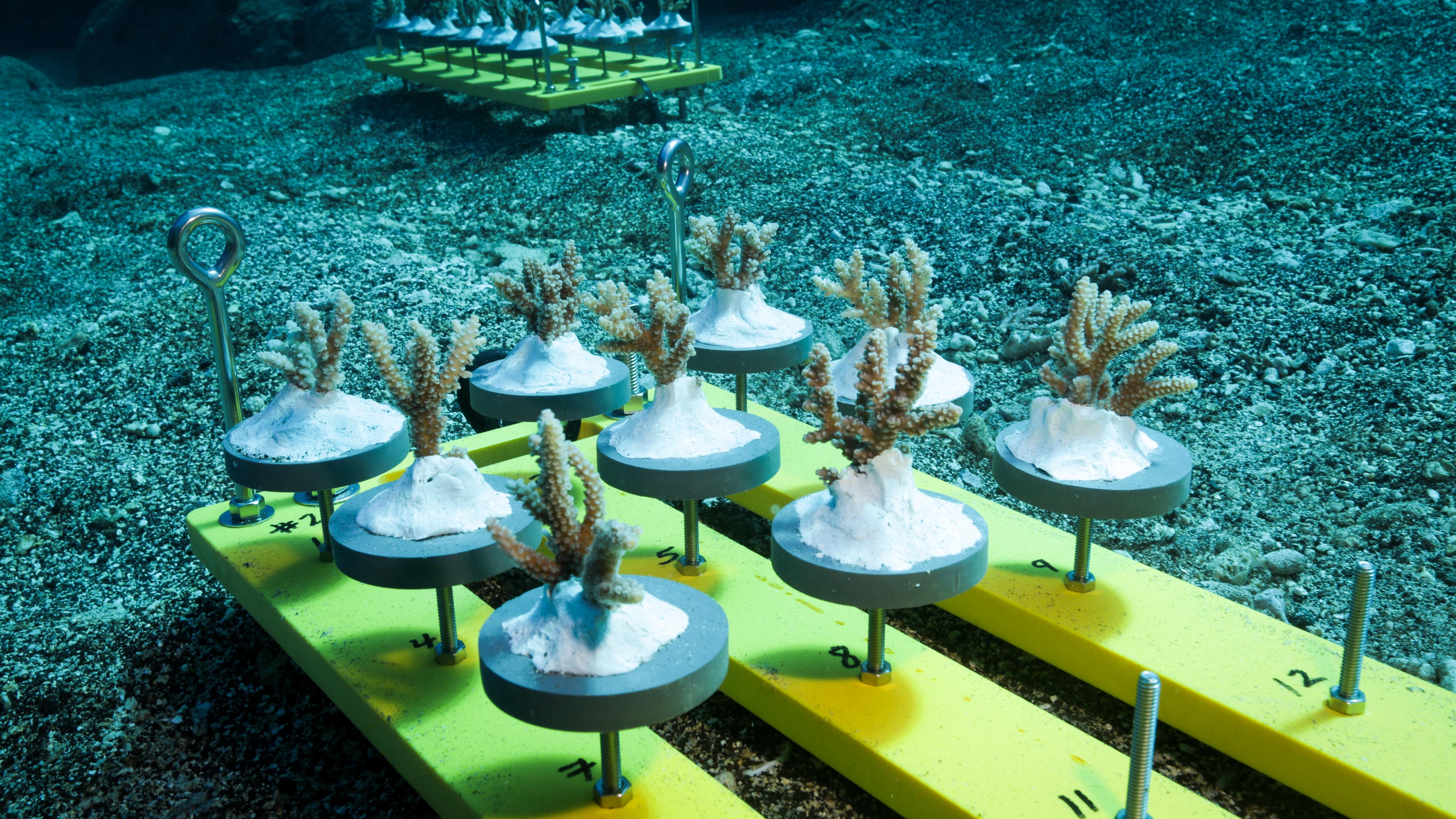
Trays of coral transplants were used in an experiment to compare coral health at sites along a gradient of increasing acidity.
Stephani Gordon/Open Boat Films
15 / 28
Share This Gallery
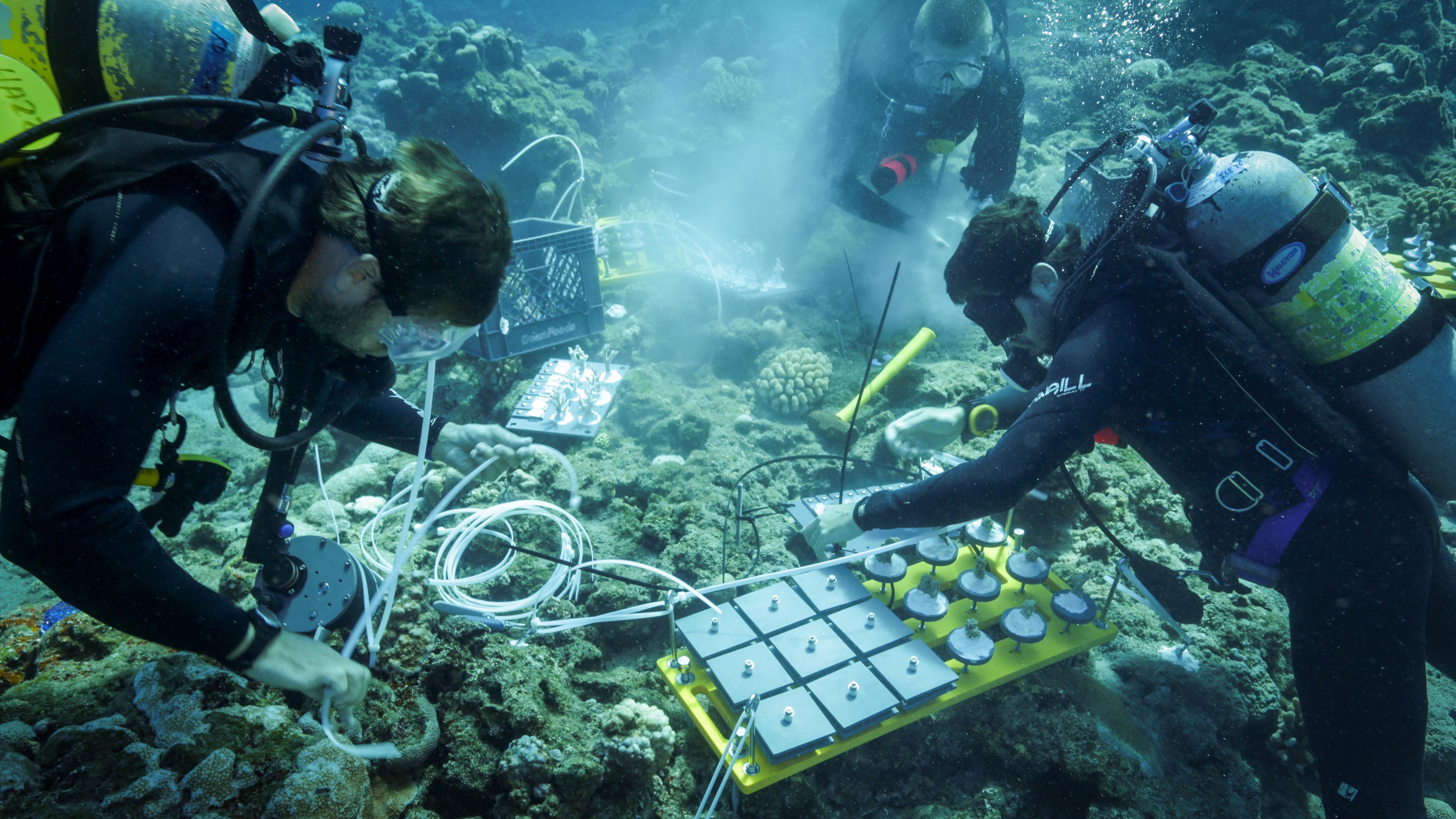
A team of research divers installs coral transplants at the control site where vent fluids and gases should be diluted enough to not have a noticeable impact.
Stephani Gordon/Open Boat Films
16 / 28
Share This Gallery
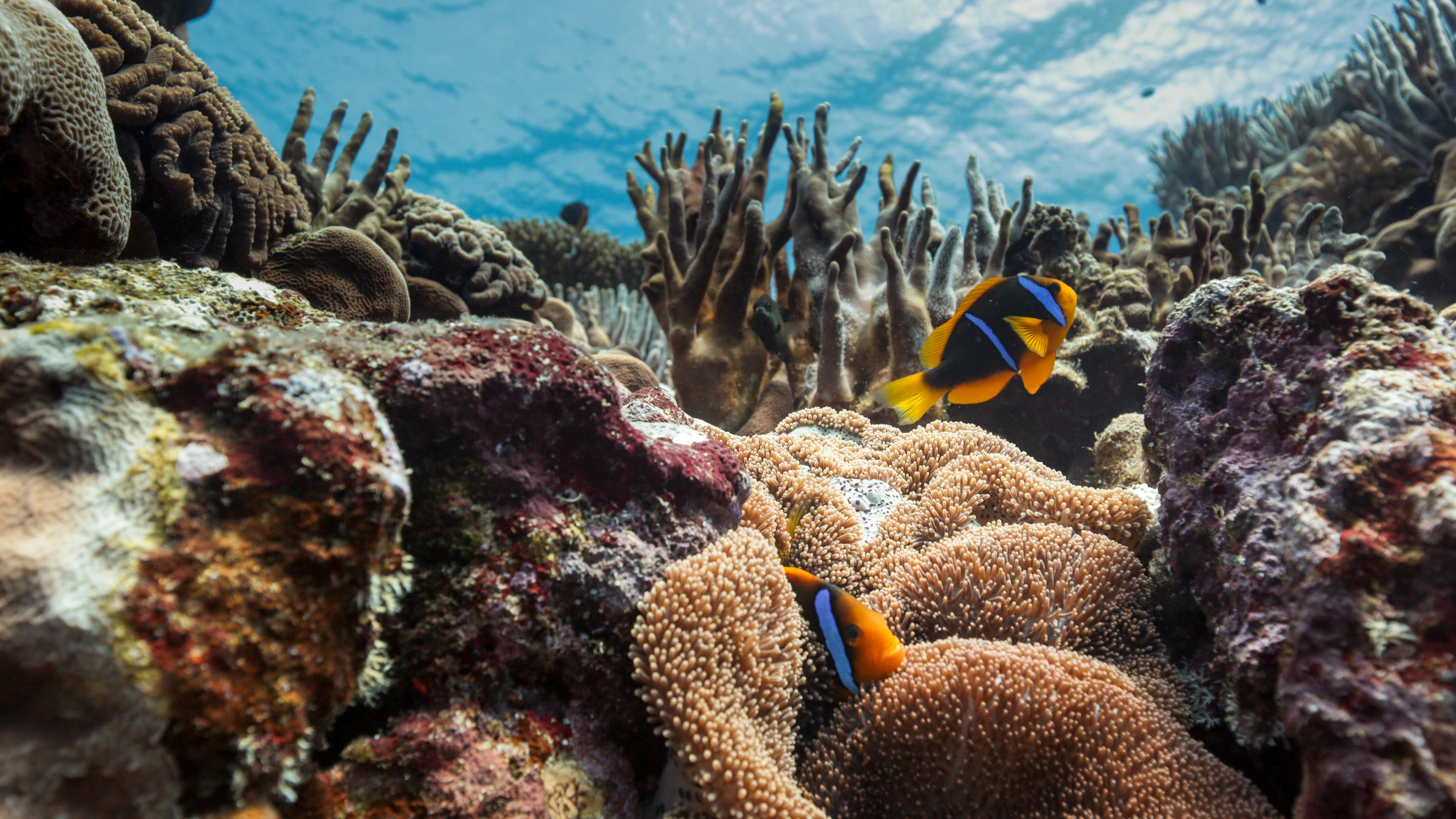
Clownfish in an anemone on the reef at Maug.
Stephani Gordon/Open Boat Films
17 / 28
Share This Gallery
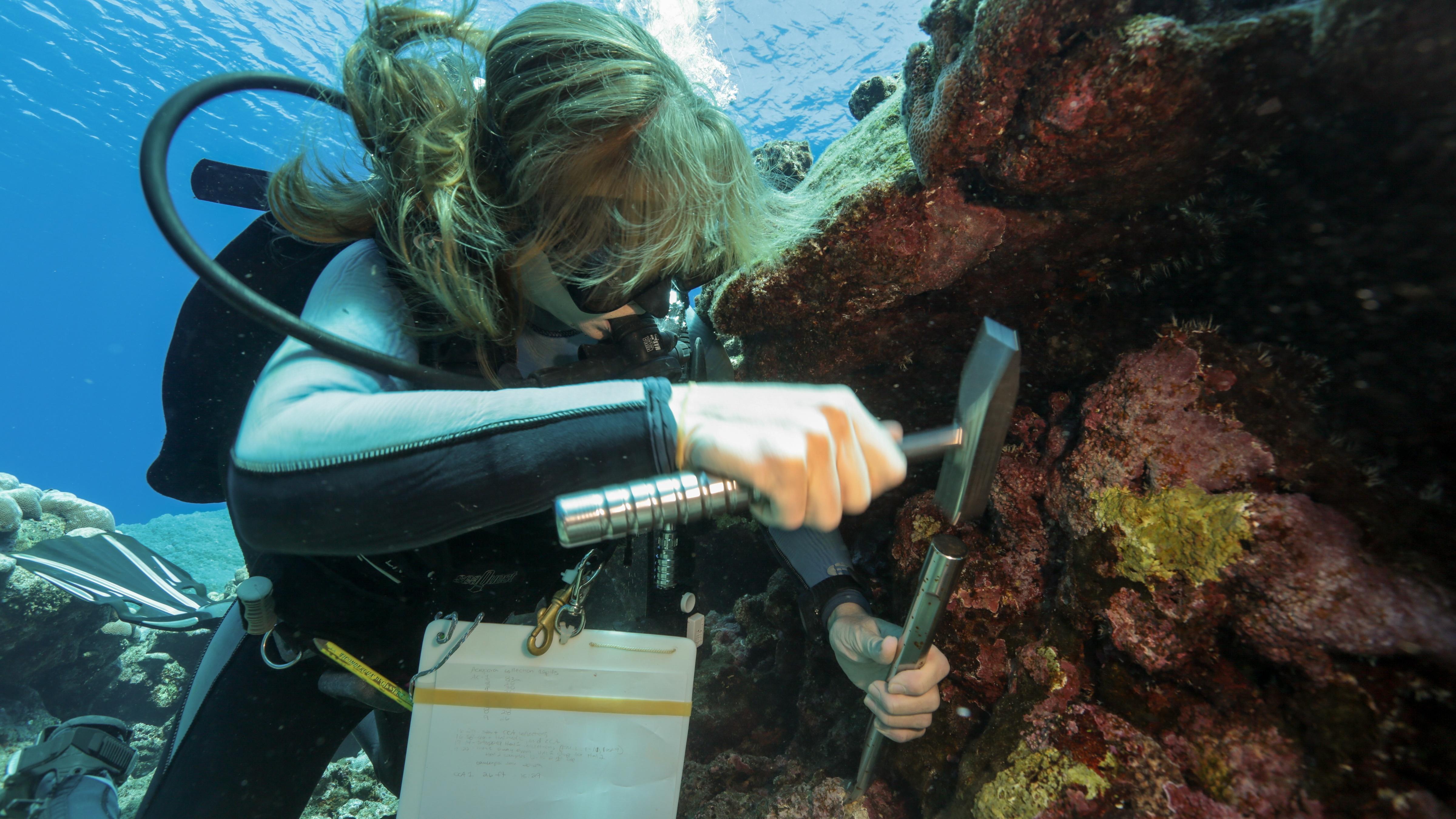
Scientist Emily Donham chisels off a small piece of coralline red algae, another key component (along with coral) for reef building.
Stephani Gordon/Open Boat Films
18 / 28
Share This Gallery
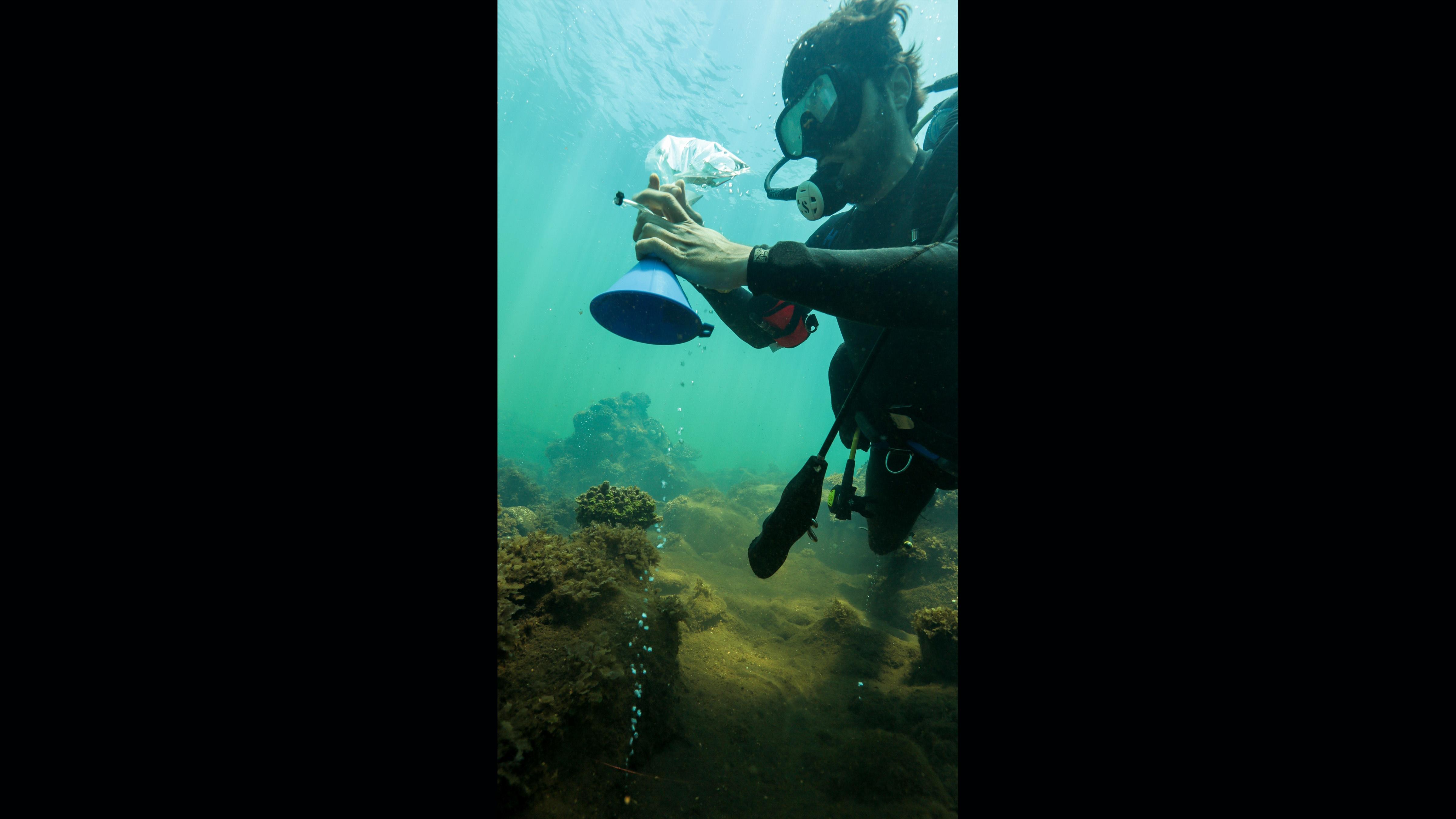
Another method of bubble collection for gas analysis involves capturing bubbles as they rise towards the surface (diver Ian Enochs.)
Stephani Gordon/Open Boat Films
19 / 28
Share This Gallery
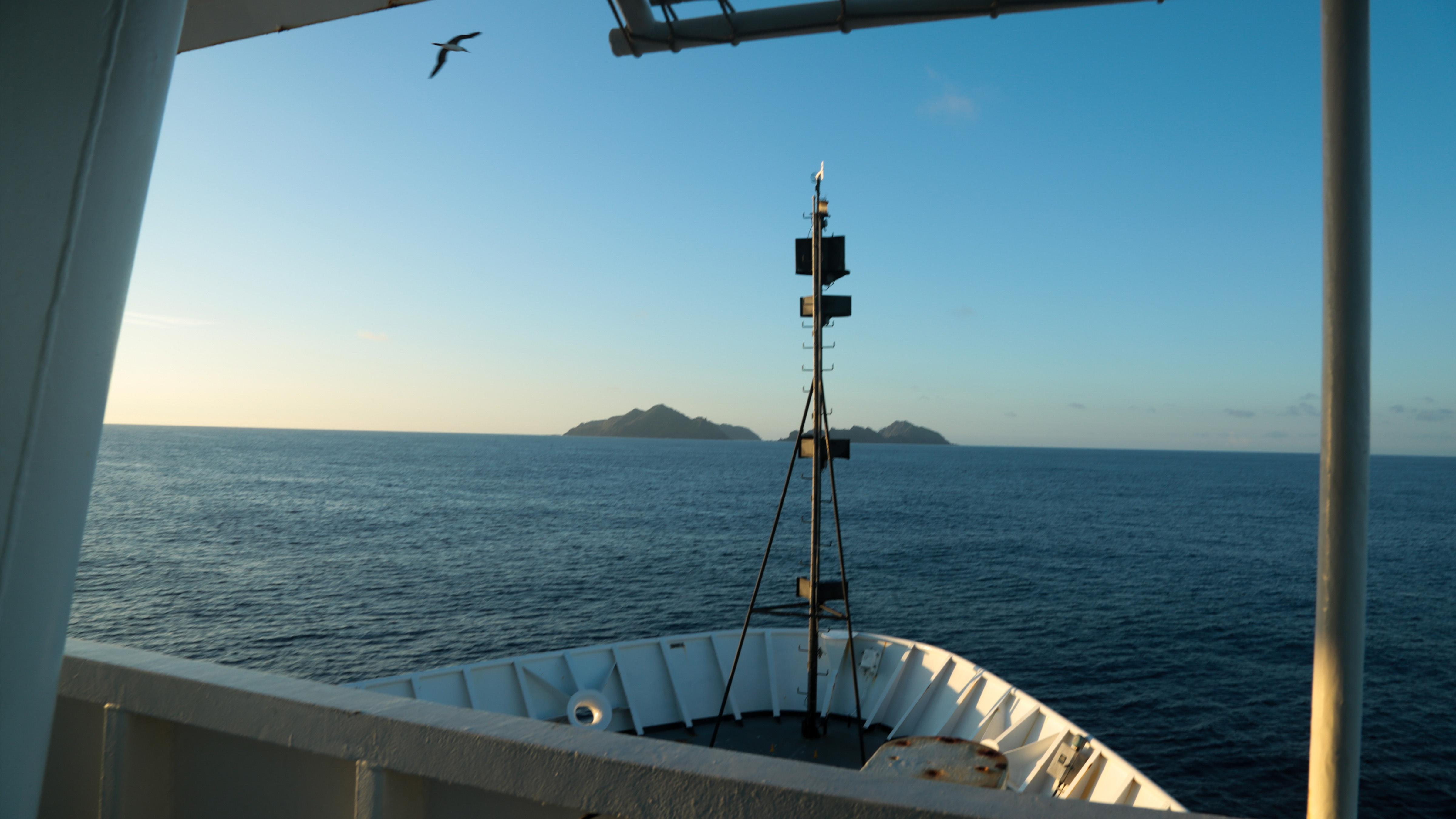
The three islands of Maug are visible off the bow of the NOAA Ship Hi’ialakai as the ship approaches the caldera.
Stephani Gordon/Open Boat Films
20 / 28
Share This Gallery
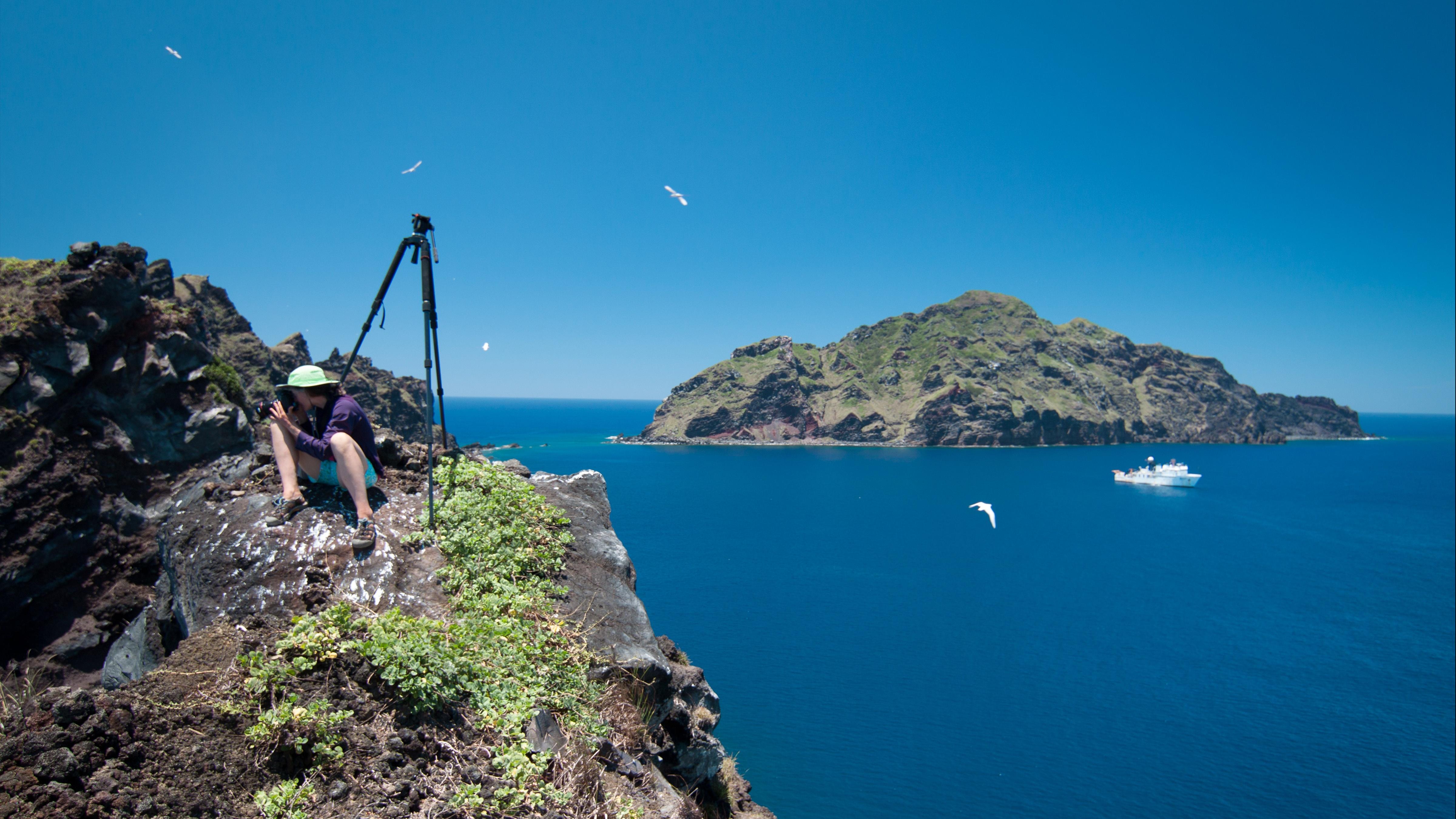
After obtaining special permission from the CNMI government, filmmaker Stephani Gordon scaled the ridge of the west island for a shot of the caldera from the ridgeline.
Stephani Gordon/Open Boat Films
21 / 28
Share This Gallery
Divers calibrate the dual high-res camera array before swimming it over the reef to create an image mosaic and map of the coral habitat (divers Mike Fox and Clint Edwards.)
Stephani Gordon/Open Boat Films
22 / 28
Share This Gallery
A science diver swims with a dual-camera array over the reef to create a high resolution map and image mosaic of the healthy reef habitat at Maug (diver Clint Edwards.)
Stephani Gordon/Open Boat Films
23 / 28
Share This Gallery
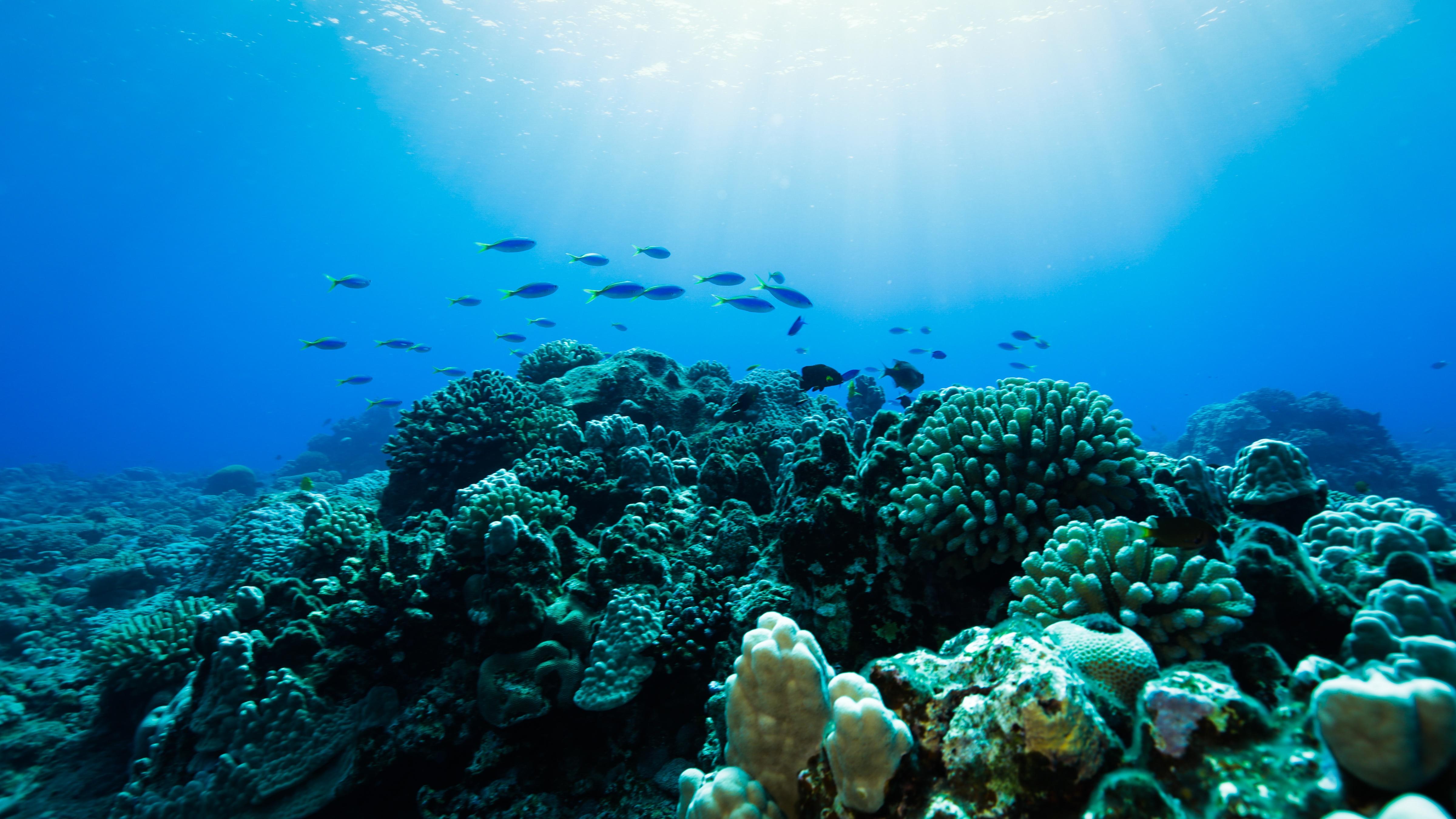
A school of fusiliers swims over the forereef habitat at Maug.
Stephani Gordon/Open Boat Films
24 / 28
Share This Gallery
A mix of hard coral, soft coral, calcareous green algae, and coralline red algae all contribute to the reef structure of healthy, robust reef habitat at Maug.
Stephani Gordon/Open Boat Films
25 / 28
Share This Gallery
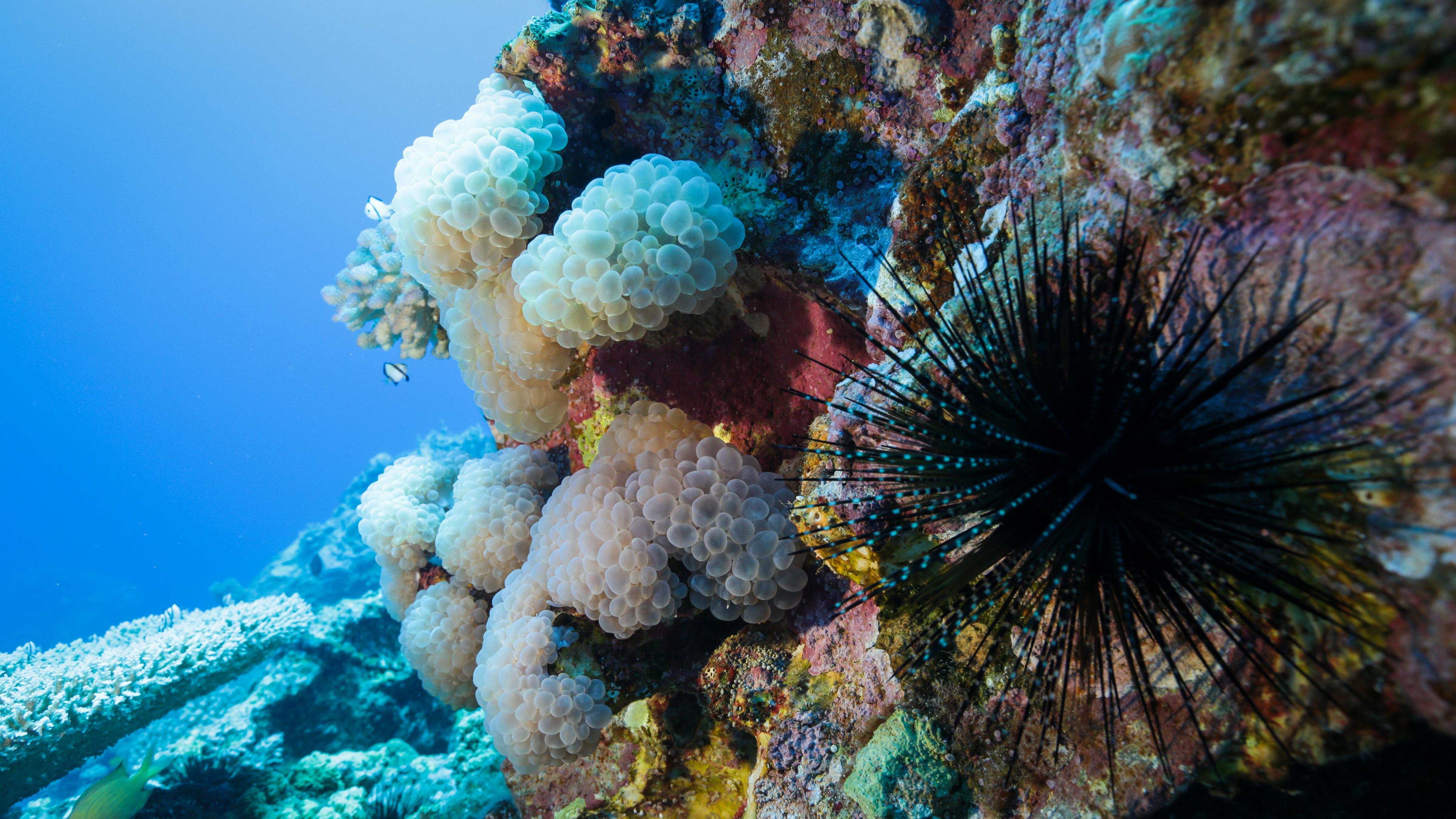
This is 35m deep on the pinnacle thatrises up in the center of the caldera, with bubble coral, a long-spined sea urchin, and Dascyllus damselfish in the background.
Stephani Gordon/Open Boat Films
26 / 28
Share This Gallery
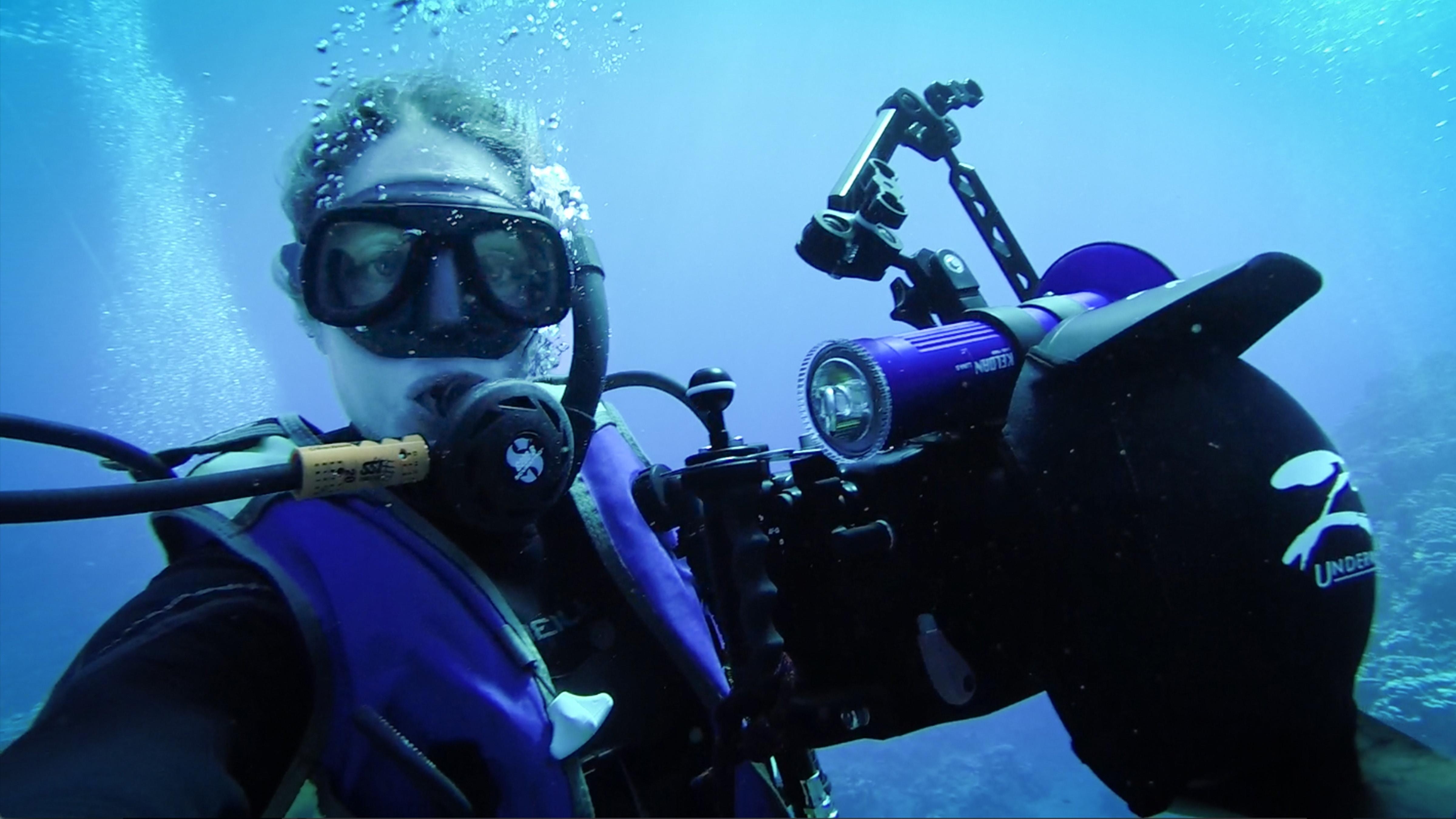
Stephani Gordon with her underwater camera kit at Maug.
Stephani Gordon/Open Boat Films
27 / 28
Share This Gallery
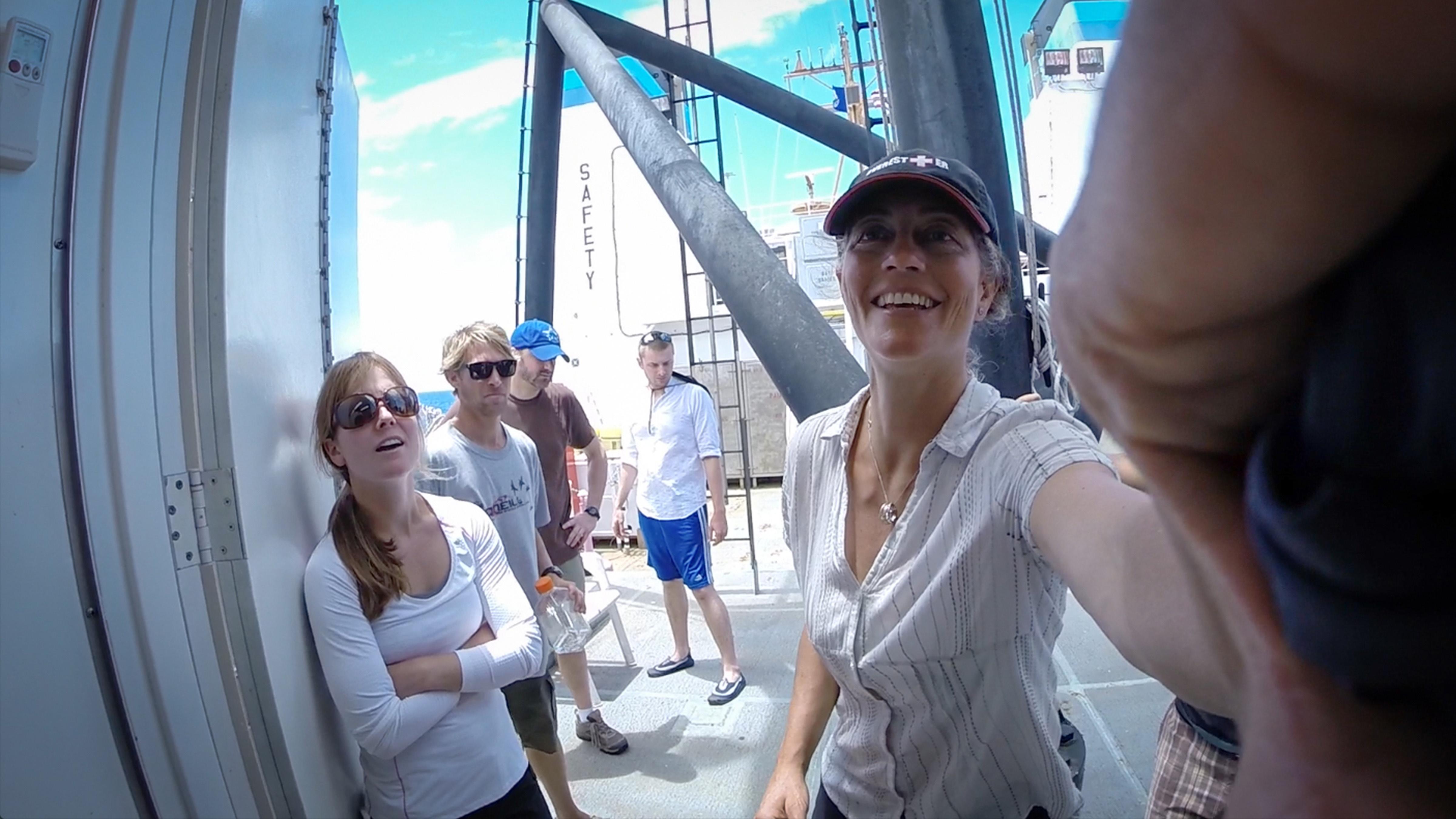
Behind-the-scenes. Cinematographer Stephani Gordon passes a GoPro camera into the diver recompression chamber during a dive safety drill on the NOAA Ship Hi’ialakai.
Noah Pomeroy
28 / 28
Share This Gallery
Stephani Gordon of Open Boat Films films from a narrow ridge on the steep West Island of Maug (land-access permit issued by CNMI Department of Land and Natural Resources.)
Changing Seas would like to thank the following individuals and institutions who kindly allowed their footage, images and other media to be used in this production: